

This coverage is made possible through a partnership between Grist and KERA, a public media organization serving the Dallas-Fort Worth metroplex.
This month’s midterm elections featured a previously unthinkable result in Texas: Democrats won every single state-wide race in the Lone Star State. Some of those newly elected Democrats have become household names, like Governor-elect Gina Hinojosa and Senator-elect James Talarico. But the list of Democratic victors also includes a centrist set to occupy a little-known office with outsize influence over the country’s oil and gas industry.
Jon Rosenthal won a contentious race for a seat on the Texas Railroad Commission against Republican Bo French, whose racist social media posts drew national bipartisan backlash. Rosenthal, the first Democrat elected to the commission since 1990, isn’t trying to usher in radical change, and his influence will be limited by the two Republicans already sitting on the commission. But he’s aiming to bring transparency, accountability, and a bigger budget to the regulatory board.
“Voters have delivered a mandate for a change,” said Rosenthal at a post-election press conference. “My top priority … is doubling the Railroad Commission’s budget. I believe the commission needs more resources to do the work they are [tasked] to do.”
The Railroad Commission was established in 1891 to regulate the rail industry. Over the years, the agency’s focus shifted to overseeing the state’s booming oil and gas industry. In 2024, Texas accounted for almost half of the country’s crude oil production. This fact makes the Railroad Commission one of the most powerful state-level regulatory agencies in the country. The commission generally takes a deregulatory approach and is widely considered friendly to the industry it regulates, especially with oil companies donating generously to the campaigns of commissioners they support.
Rosenthal describes himself as a “drill baby drill” Democrat, arguing a clean environment and good jobs can co-exist. He worked in the oil and gas industry for over 25 years as a mechanical engineer. In 2018, he was elected to the Texas House of Representatives, representing parts of Houston, and was reelected three times before running for the Railroad Commission.
Mikala Compton / Austin American-Statesman via Getty Images
His victory likely has much to do with the unpopularity of his opponent. French, a former local Republican Party chair, prompted widespread criticism when he made a racist social media post in September about South Asian students celebrating at a University of Texas football game. The race also drew attention to French’s previous offensive remarks, like posting a since-deleted online poll in 2025 asking whether “Jews” or “Muslims” pose a bigger threat to the United States. Several prominent Republican politicians denounced French’s bigoted comments, which led to a fundraising boost for Rosenthal.
Rosenthal will join Republicans Wayne Christian and Christi Craddick on a commission that has recently attempted to shield itself from public scrutiny. In August, the agency adopted a new public participation policy that does not guarantee public comments at its monthly meetings. A public comment period is now included only if a commissioner requests it on the agenda.
The far-right Christian championed the new policy, while the more moderate Craddick voted against it. Christian faced criticism from Democratic state lawmakers for not showing up to a legislative hearing that would have included discussion of that decision, and used profanity when defending the vote from Commission Shift, a nonprofit watchdog group.
In a social media post, Rosenthal called the new policy “shameful.” He campaigned on making hearings more accessible. Virginia Palacios, the executive director of Commission Shift, expressed optimism that the new commissioner can help increase transparency.
“It’s a possibility that if we have someone like Jon Rosenthal who ran his campaign on the idea that open meetings should be open, you could potentially have two commissioners that would vote for open public meeting policy,” she said.
Rosenthal could occasionally team up with Craddick to neutralize Christian on other policy questions, as well. “There are times when [Craddick and Christian] vote differently on some of these permit … or policy approvals, even though the vast majority of their votes tend to be the same,” Palacios explained.
Palacios does not expect “drastic changes” with Rosenthal’s election, but she does believe there will be greater opportunity for public engagement. According to his campaign website, Rosenthal wants the commission to hire regional community liaisons to make it easier for Texans to offer input.
“We’ve recently heard of communities that requested the Railroad Commission to go out and visit them in person … and the Railroad Commission denied those requests,” said Palacios. “We would hope to see that this new sitting commissioner would be more responsive to the public and try to show up in person where others haven’t.”
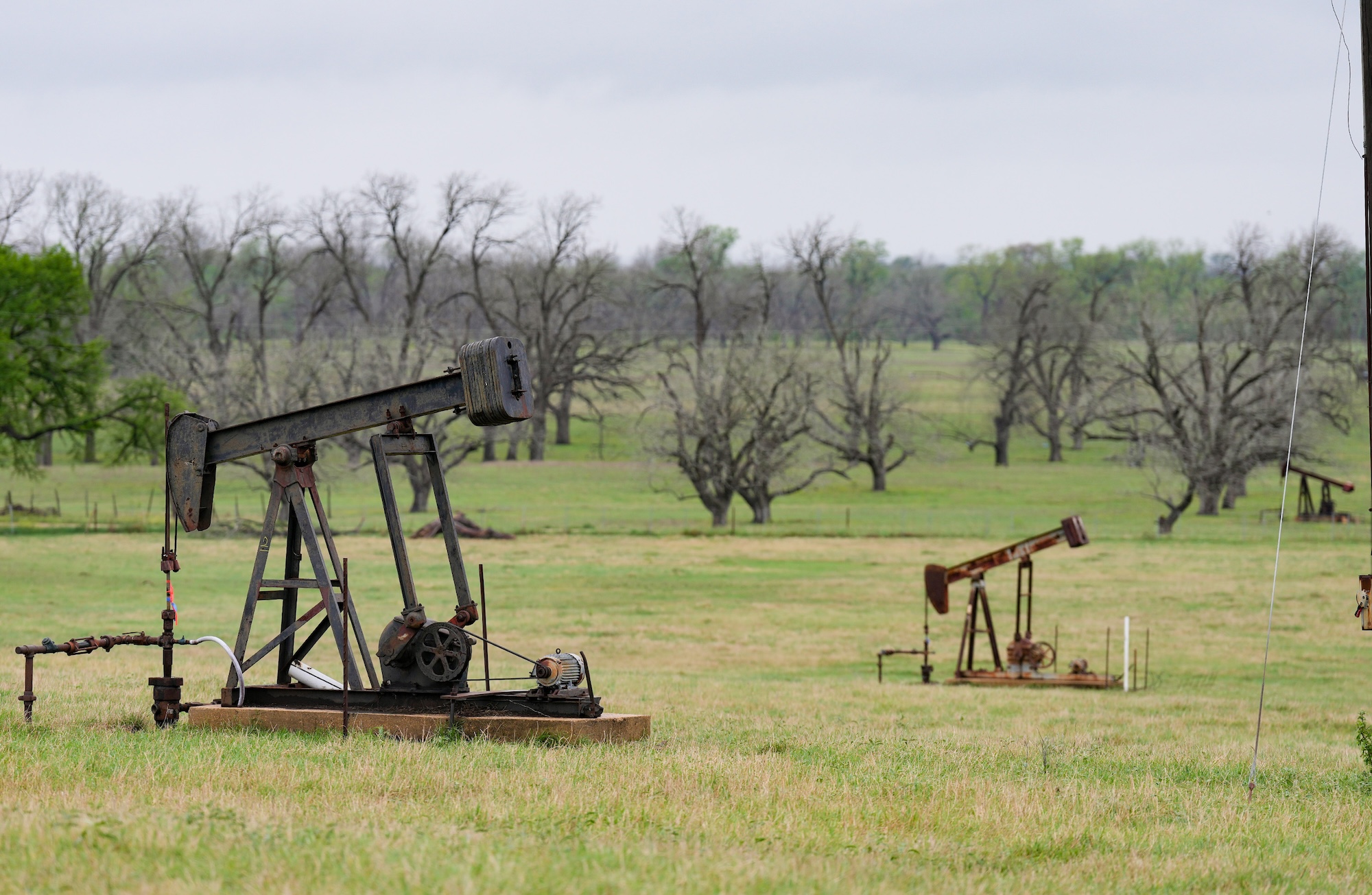
Apart from improving transparency and community relations, Rosenthal’s biggest ambition is to double the agency’s biennial budget from approximately $500 million to $1 billion. He argues this will help “turbo-charge” the plugging of orphaned oil wells, those that have been inactive for at least 12 months, and zombie wells, those whose plugs are failing.
Elizabeth Conley / Houston Chronicle via Getty Images
Thousands of these wells across Texas are leaking methane, a potent greenhouse gas that contributes to trapping heat in the atmosphere. The Railroad Commission plugged over 2,000 orphaned wells during its last fiscal year — a record number — but still ended up with more of them at the end of the year than they started off with. That’s because a large number of low-producing and inactive wells become orphaned.
“We want to enable this agency to further ramp up well-plugging operations … but also get proactive in helping to prevent future wells from being orphaned,” said Rosenthal at his post-election press conference. “If we don’t go after what causes this … we’re going to be chasing our tail forever.”
Notably, Rosenthal’s ambition to double the commission’s budget is not something the board can accomplish on its own. The Texas Legislature would have to approve such a budget increase, and Governor-elect Hinojosa would have to sign it. Democrats will have a majority in the Texas House come January, and although the Texas Senate remains in Republican hands, the Democratic lieutenant governor-elect will wield significant power in the upper chamber.
Hinojosa and the new class of Democratic state lawmakers haven’t spoken publicly on whether they’ll prioritize the Railroad Commission’s budget, but Rosenthal expressed confidence that his history as a state representative will come in handy as he seeks more money for the agency’s operations.
“In this new environment, I might be one of the Railroad Commission’s more valuable players,” said Rosenthal at the press conference. “Because some … lobbyists or agency personnel are not used to walking into a legislature controlled by the Democrats.” Meanwhile, “I know how to talk to Democrats because I am one. And it will be my job to help educate my former colleagues about how important this is.”