

Editor’s note: This is the second installment of a two-part series on the Amboseli ecosystem. Part one covered how a process called “subdivision” split one of Africa’s most storied landscapes into thousands of private plots. Part two follows local Maasai landowners as they restore the land by embracing an ancient herding tradition.
The lions came at night.
Joel Kutata heard them moving in the darkness. He and three other watchmen sat on the edges of a circular corral, built from stacked tree branches. More than 100 cattle were behind it, restlessly baying and bunched together — aware of a change in the air.
Kutata’s job was to protect them; To do everything he could to let the lions know that humans were near. He kept a fire burning every hour of the night and watched as a series of security lights blinked into the total dark of the savanna.
But this night, the lions pressed their luck. They stalked closer, working together to outsmart and confuse the herd. That meant choosing their steps carefully — intentionally moving upwind so that the cattle would catch their scent and panic.
“What can I say, it’s cows being cows,” said Ernest Lenkoina, a restoration expert at the conservation organization Big Life. He shrugged. “They got spooked and all broke out of the enclosure and took off.”
The herd scattered into the darkness, chased by the pride into country where buffalo and elephants roam.Kutata kept his composure.
“We knew what to do,” said Kutata. “We are Maasai. We’ve been living with wildlife for time immemorial. From growing up, herding my parents’ livestock, I have trained not to fear.”
He called Big Life’s radio room for backup. Quickly, reinforcements arrived in the form of drones and rangers, which fanned out into the bush to scare the lions away and keep the cattle safe.
“Every one of our cows is still here now,” Kutata said. “Strong and alive.”
It was possibly the most dramatic incident the team had faced during a pilot to see healthy, well managed herds returned to this land — land that Conservation International believes can still support both livestock and wildlife. Achieving that balance here — in the key Kimana wildlife corridor — could offer an alternative to the development and vegetable farming gobbling up huge swaths of the savanna and pushing elephants off their natural habitat.
“How do we make livestock — which is really part of the Maasai identity as a culture — viable as a business, for resilience,” said Jimmiel Mandima, who leads Conservation International’s Africa work. “That’s what we’re doing here.”
The idea starts with an old practice. Historically, the Maasai people embraced a way of herding that allows the land to rest and recover. By keeping cattle herds on the move, they mimic the role of the great herds of Africa— wildebeest, zebra, antelope and other herbivores, which feed together in tightly bunched herds, following seasonal rains in pursuit of fresh forage. The result is healthy grasslands. Grazers’ hooves break up hardened soil, allowing water and air to percolate through. Their urine and dung cycle nutrients back into the earth. And each bite helps deep-rooted perennial grasses grow back, maintaining a balance with faster-growing annual species.
That same equation holds true today. A recent study of Kenya’s Amboseli ecosystem found that grasslands have degraded by 50 percent in areas with sedentary land use — in other words, grazing in one place — whereas areas where nomadic herding has continued have declined by only 30 percent.
The purchase of the herd that survived the lion attack had been funded by Conservation International, then given to the community — an attempt to prove cattle and wildlife could share the same open ground.
“If this works, it’s an economic one-two punch for these communities,” said Mandima. “Land that creates double the income — tourism from wildlife, and revenue from the cattle.”
But before asking any family to risk its own herd in a landscape full of lions, Conservation International and Big Life had to prove a professional system — herders like Joel Kutata, working under a trained livestock team — could keep them safe.
“It was just a matter of time before the lions tested us and the response from the community was inspiring,” Hamisi said. “This is proof to the community that this can work. Let them come again — three, four more times, and then we will know: This land can work for cattle and wildlife.”
“Call it a grazing plan”
For Hamisi, the pilot represented a new chapter in a twenty-year journey. Years earlier a young, charismatic Maasai leader named Samuel Kaanki had come to him for help.
“This would have been maybe 2005, and I was working for African Wildlife Foundation,” said Hamisi. “Samuel and his brother were worried about what was happening to their land as it was subdivided. They were interested in bringing the people together to protect the land, as one.”
Kaanki grew up in Kimana — the former ranch that had been subdivided before all the rest and today has become a critical crossroads for wildlife.
Kaanki was raised by a single mother after his father died young. As a teenager, he left home to find opportunity on a neighboring ranch, Mbirikani. Here, he built a career in community leadership. When he finally returned, years later, he found that life had changed. The land was divided, and the people were divided about what to do next.
“Once the land was split into parcels, I could see our culture — our way of life — disappearing,” Kaanki said. “I started slowly calling people together. I wanted to see if we could do things differently.”
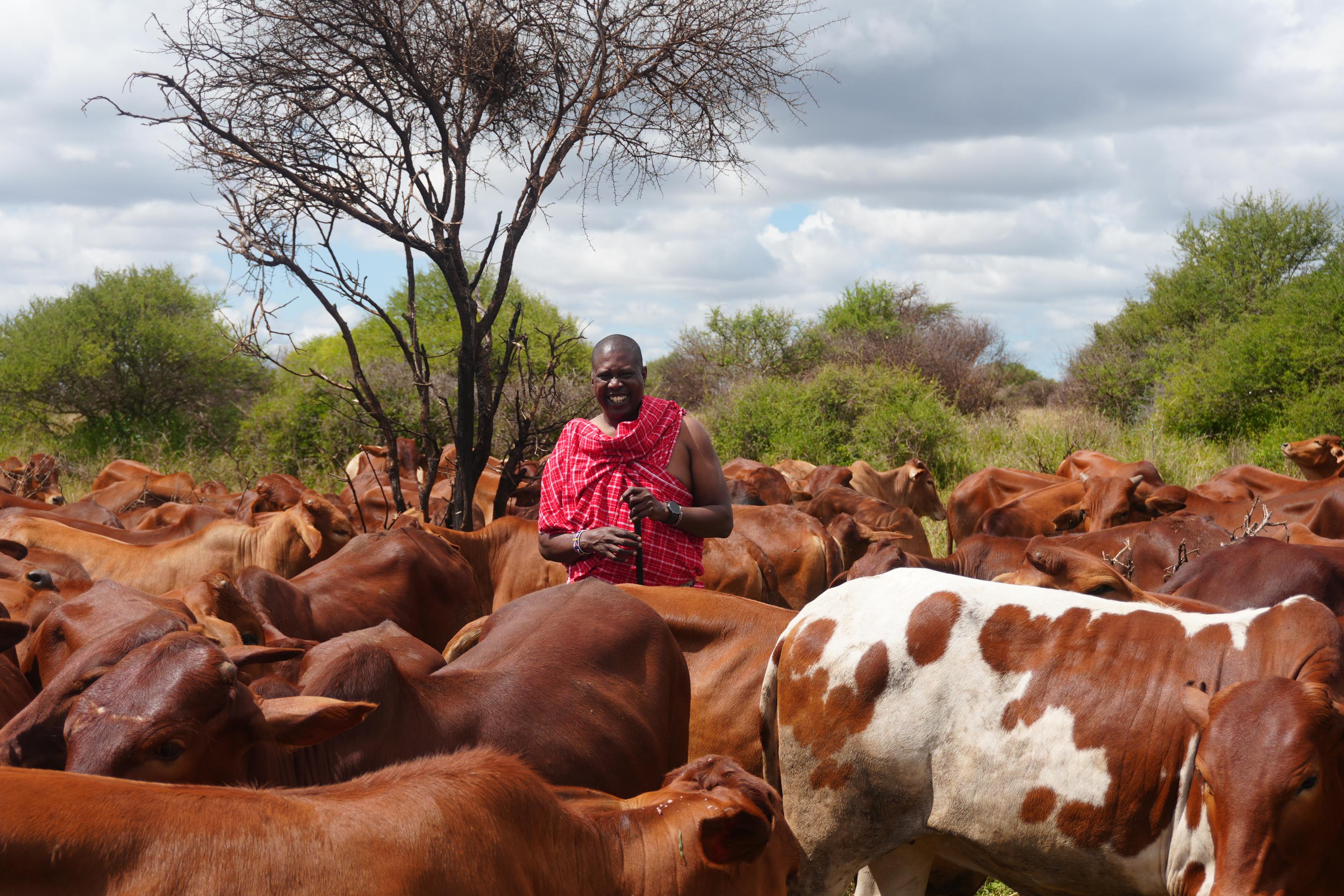
Kaanki organized. He brought together the landowners who still held their titles — who had not yet sold to developers. He explained that if they built a plan to manage the land together, as one open landscape, they could embrace a new livelihood based around tourism.
Hamisi and other conservationists helped Kaanki’s community form a wildlife conservancy — a type of protected area that allows people that live near national parks or reserves to combine their properties into large, protected areas for wildlife. These landowners can then earn income by leasing that land for safaris, lodges and other tourism activities.
The conservancy grew. What started as one man’s dream became six conservancies under a single association — 40,000 acres, eventually, still individually owned but brought back into shared management.
“This out of a total group ranch area of 62,000 acres. Such a big achievement in itself,” said Hamisi.
It wasn’t the only attempt. Across the ecosystem, ranch after ranch tried something similar as subdivision spread. Big Life and others helped them along the way.
One of those ranches was Olgulului, where Daniel Leturesh, a revered local leader and dedicated conservationist, spent six years persuading landowners to set aside land of their own. His strategy: never call it a conservancy for wildlife.
“If I try to say I’m creating a conservancy — nobody can understand that thing,” he said. “Call it a grazing plan instead. A grazing plan has cattle in it. And for my people, cattle are the reason to keep the land open.”
Luckily, Conservation International has spent the last twenty years doing just that in southern Africa.
“Let me take it up”
Conservation International invited Kaanki, Leturesh and other leaders to South Africa to see the work firsthand.
There, a program called Herding for Health, has supported more than 5,800 individual herders across 1.5 million hectares (3.7 million acres), in an effort to balance livestock herding with conservation.
“We had other chairman there, too,” said Kaanki. “They all were very impressed but left thinking it would be very difficult to implement this kind of program. I was the only one who said, let me go, let me take it up, and I’ll show you how it’s done.”
The premise of Herding for Health starts with an uncomfortable admission: If cattle are allowed to graze in one place for too long, they can wreck the land — stripping grass down to its roots and opening the soil to erosion.
Kaanki has watched it happen on his own community’s land. “Our rangelands are degrading because of the livestock,” he said. “The way we are using our pasture is having a negative impact on it.”
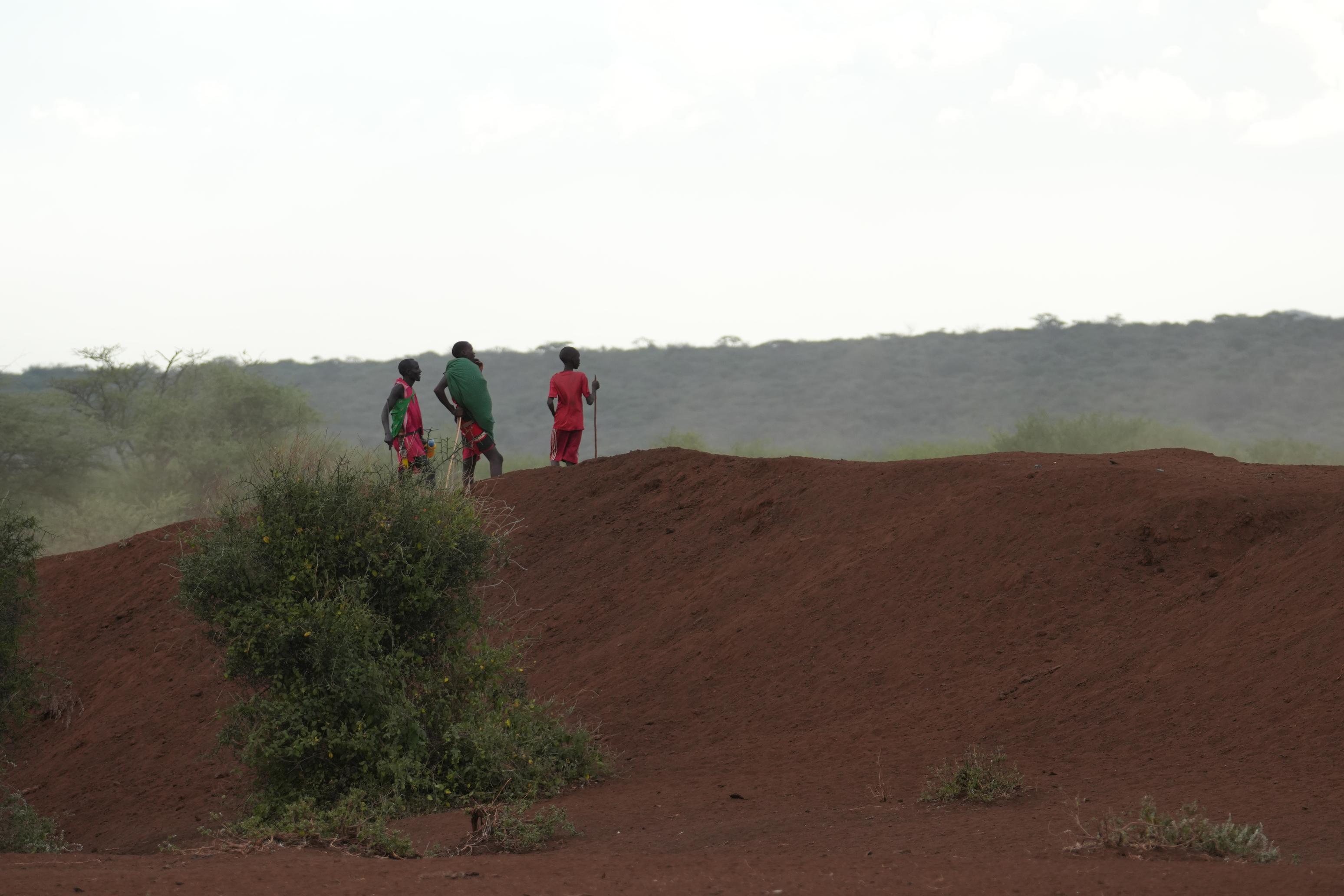
As Kenya’s grazing land has degraded, families have shifted toward livestock that can survive on less.
“Cows need grass. Sheep and goats just need trash. They’ll eat anything, even prickly shrubs, which are all that are left in many places,” said Jeremy Goss, Big Life’s head of science. “So, people are keeping sheep and goats more because those were the only things surviving bad droughts. But these smaller animals are degrading the range even further. Just furthering the need to bring the cow back to the land.”
The heart of Herding for Health is simple: let the land rest, the way it did when herders moved their cattle across it instead of settling in one place.
But the program is also about formalizing herding itself — making it an enterprise that both values nature and makes money. A grazing committee, run by the community with input from Big Life and Conservation International, sets the rules. Trained professionals handpicked from the local community handle the day-to-day work — moving cattle between parcels until the grass recovers, keeping them safe at night from predators.
It’s also about healthy cattle.
The herd is sprayed weekly against ticks, vaccinated, and grazed on abundant forage — not picked-over land near a settlement, but a wide-open grassland, shared with wildlife. “The shortage here was never buyers,” said Beatrice Lempaira, an expert at Conservation International. “It’s healthy livestock. Get that right, and the market takes care of itself.”
New bulls are already being introduced to improve the herd’s genetics — a deliberate investment in the community herd. “One thing that convinces a Maasai very quickly is a cow,” said Kaanki. “Especially a good red one.”
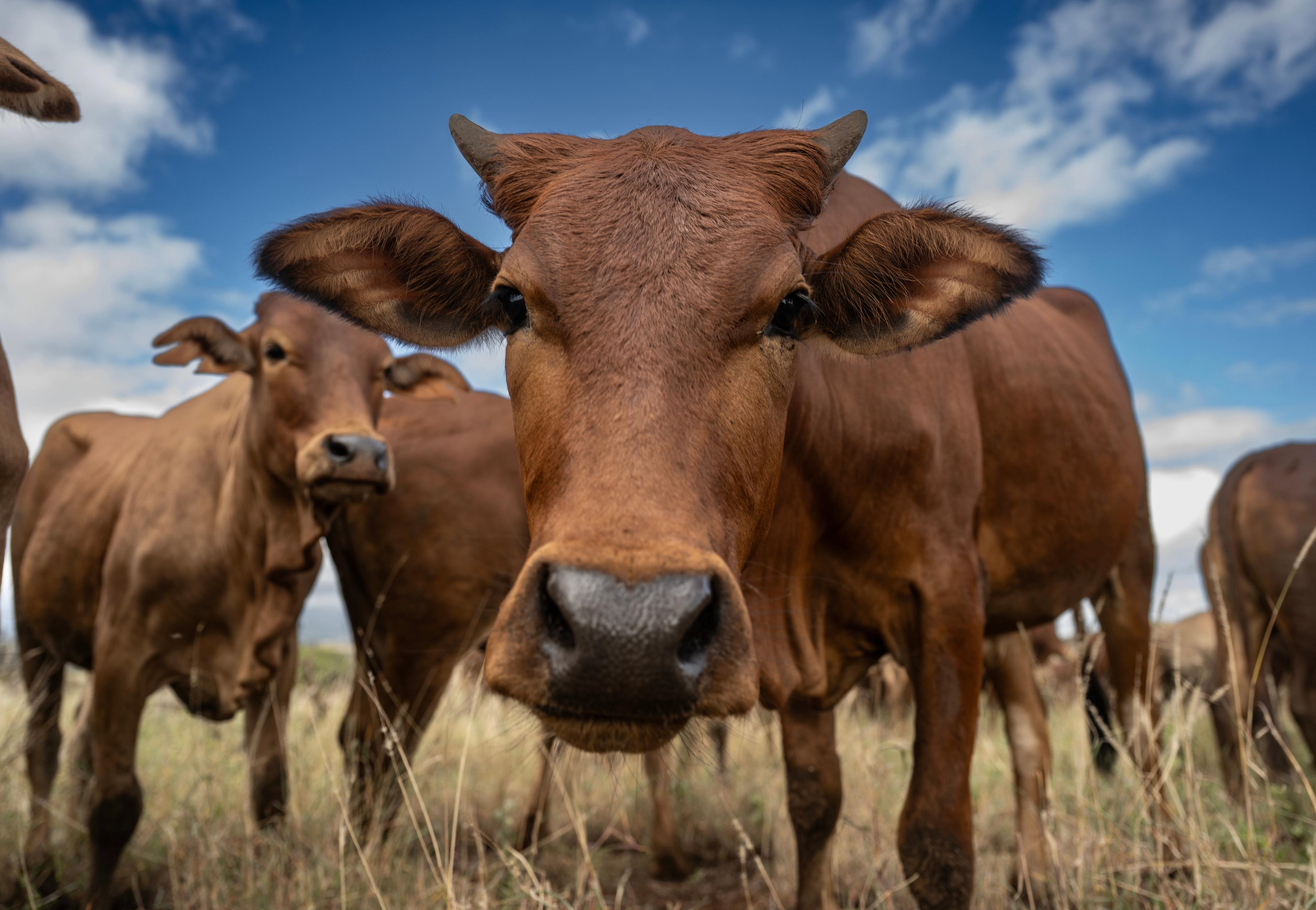
Ultimately, the pilot builds on what the people had already started.
“We were starting to give up on livestock production,” said Lenkoina, Big Life’s restoration expert. “But our people are coming back again — re-aggregating into organizations, conservancies, circles — to bind their land back together so they can graze communally, the way they used to. Herding for Health didn’t start that, but it could be the thing to make it stick.”
Making it stick will mean offering an alternative that adds up to more by holding together, rather than each family going it alone. Every member of the conservancy shares in what the land generates, from tourism and now from cattle grazed alongside wildlife.
“If we get this right, maybe some fences will come down,” said Lempaira. “Maybe enough to build a new opportunity for the Maasai, built around a very old one. Maybe enough for Kenya’s wildlife to move free again.”

