

Ahead of International Youth Day 2026, we spoke with Kadiatou Yacouba Keita, Alert’s Sahel Hub Director, and Emmy Auma, our Horn of Africa Hub Director, about what it takes to make youth engagement in peace and security meaningful – not symbolic.
Both lead projects where young people help shape and drive peace efforts in their own communities. We asked them to reflect on what’s changed in the decade since the United Nations declared young people partners, not merely beneficiaries, in peacebuilding in its 2250 resolution – and where and why that promise still falls short.
A resolution that changed language, not decisions
Between 1990 and 2022, only 12% of all peace agreements even mentioned young people. Kadiatou has seen the cost of that exclusion up close in Mali, where examples of young people disengaging from peace efforts are abundant.
“People didn’t recognise themselves in the document and proposed solution. It did not speak to their needs and challenges around building a meaningful and peaceful life,” she says of a peace agreement that ultimately unravelled.
Organisations want to engage young people, but it is often about making the indicators look good, rather than meaningfully involving them in programme design and implementation.
Institutional structures and norms can also be barriers. In Kenya, the Youth, Peace and Security agenda sits across parallel institutions – a directorate for youth on one side, separate bodies for security and peace on the other, with no clarity on who is responsible for creating practical solutions for better youth engagement. “For every ministry, it becomes an add-on,” Emmy says, “something layered onto an existing mandate that then shapes how it plays out.”
As a result, youth engagement stays a tick-box exercise in far too many cases. “It has been so much easier to recognise young people at a more rhetorical stage than to redistribute power and change who controls decisions, budgets, and access at a more institutional level,” admits Kadiatou.
A self-fulfilling assumption
Both Kadiatou and Emmy raise that the assumption about young people lacking the wisdom and skills to lead is one of the hardest-to-dismantle barriers. It is a catch-22 with few avenues to gain leadership skills or prove the value of their meaningful involvement.
Research our Sahel team conducted with project participants about their earlier experiences found that young people are often only considered in project communications or outreach – and are not integrated into governance, programme design, negotiations, or budget decisions.
Emmy sees this pattern in Kenya, too, where peacebuilding was long associated with rural, vulnerable communities led by elders considered wise. Young people operate differently, and their decisions “…get frowned upon for not aligning with how people think change should happen” because the power and governance systems around them still expect hierarchy and propriety.
Participation does not equal ‘inclusion’
“Urban and rural young people may not have the same priorities, opportunities, or access,” says Kadiatou. A challenge for peacebuilding programmes is that they often treat “youth” as one homogenous group while gender, class, disability, and other lines differentiate them like every other demographic.
As a result, in conflict contexts this may lead to consulting only one narrow cohort of young people – those who are mostly urban, formally educated, and already accustomed to what works for influencing decision-making. While their perspectives matter, too, real impact becomes possible when interventions build on diverse experiences.
“The young people who get invited into peacebuilding spaces are disproportionately from this first group – meaning their presence doesn’t fix the underlying problem,” warns Emmy.
The majority of young people most affected by conflict, insecurity or violence may not be seen as “cultured enough” and therefore become invisible.
Case study: Kenya
In Alert’s ‘Powering peace through climate action’ project, young applicants could apply for small grants for their initiatives in whatever format – spoken, translated from a local language, even performed as a skit. That way, literacy, language, and bureaucratic fluency were no longer barriers. “We wanted to engage those with real ideas but no experience navigating these processes,” Emmy explains.
That approach delivered in places like West Pokot and Baringo, where communities are clashing over land, water, and livestock more often. When floods hit and pasture shrinks, it is young people fighting over what is left. And they rarely get a say in designing climate adaptation.
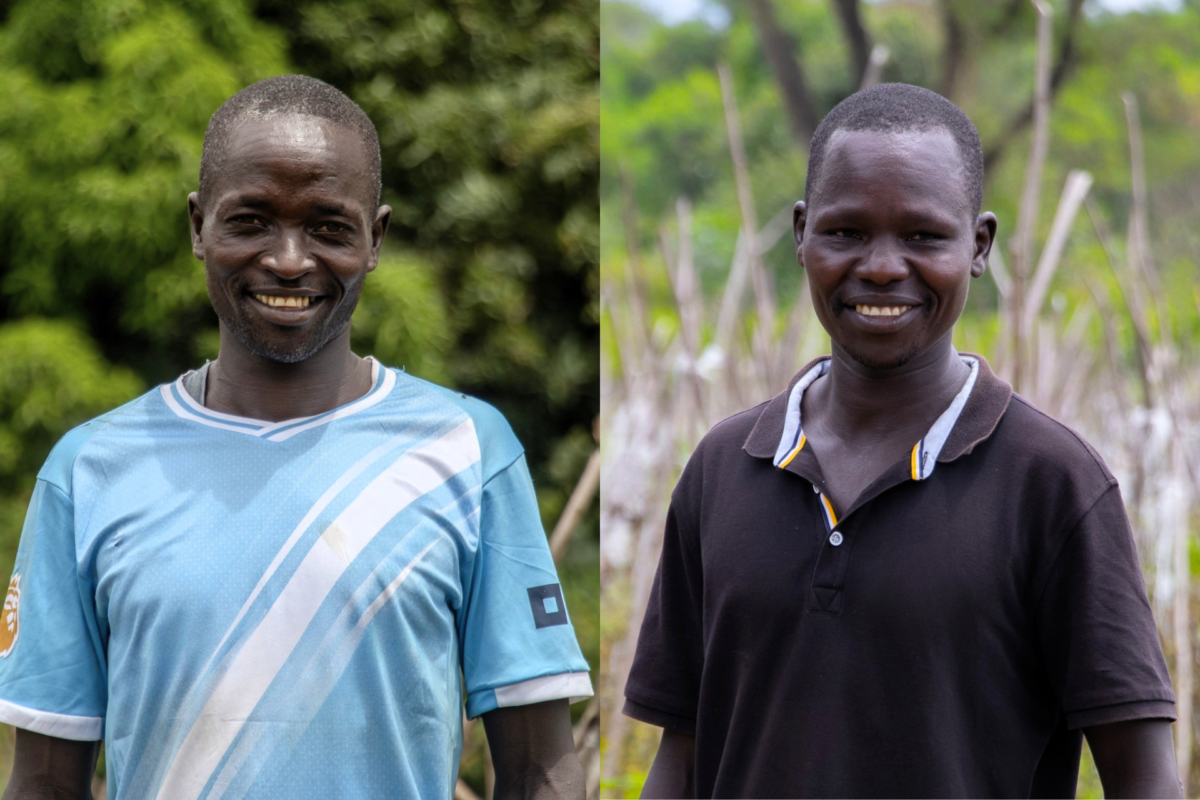
Because the process was inclusive, young people managed to implement one of the project’s most striking initiatives: a joint tomato farm, run by former warriors from communities on opposite sides of the same violent conflict.
When people have a shared stake in something real, they start seeing each other differently – not through old stories about “the other side,” but through the work itself.
Employment alone is not the solution
Failing to engage young people meaningfully in their diversity can curdle into grievance, and grievance looks for an outlet. This dynamic is acute in the Sahel, where 80% of the population are under 35 but they lack representation in decision-making.
This demographic is also facing the highest unemployment. “25% of people mention it as a reason for joining, for instance, jihadist groups,” Kadiatou notes, citing UNDP research – evidence that economic exclusion and political exclusion reinforce each other.
Having a job doesn’t mean your voice matters…it doesn’t repair the perception of injustice.
Kadiatou continues: “When you look at the conflict causes in Mali, frustration against those who hold power but don’t share it is central – as is the general lack of inclusivity across processes.” A more practical approach instead combines employment support with action to transform systems by giving diverse groups a real voice and rebuild trust between young people, the state, and other citizens.
Case study: Mali
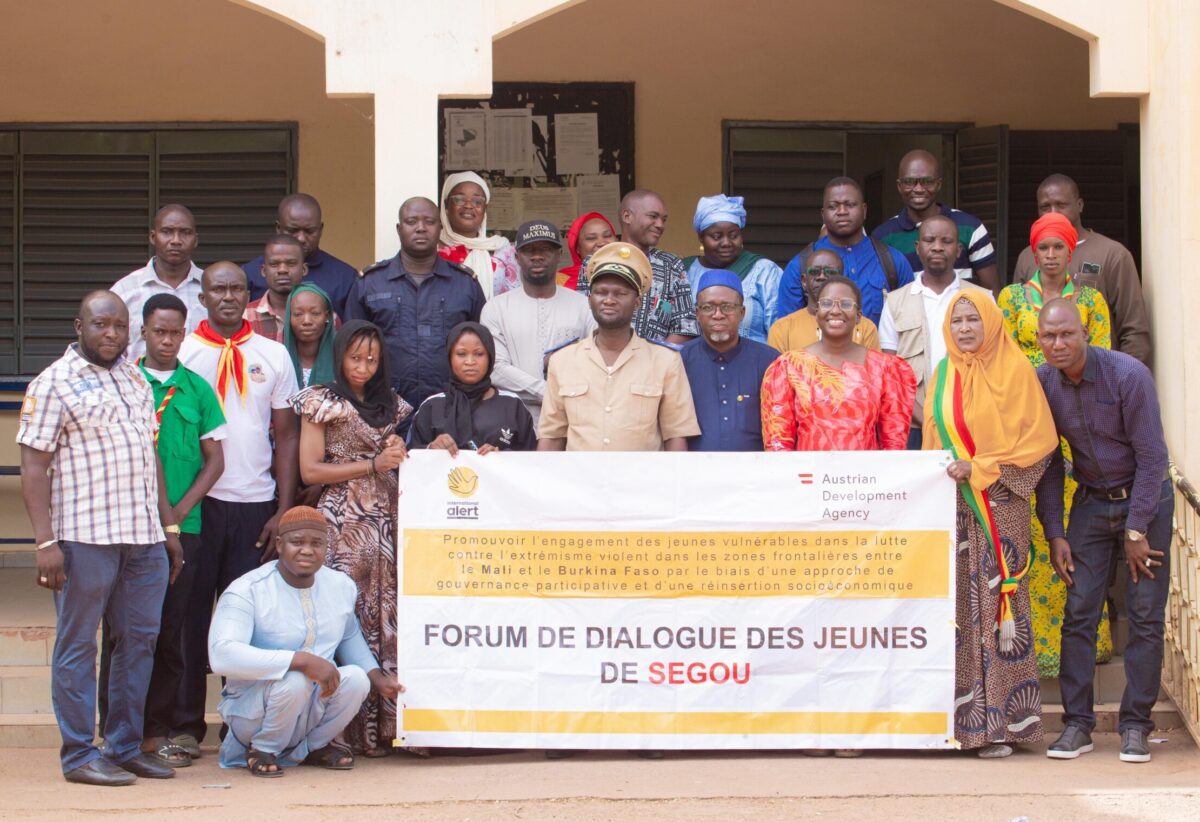
In a project to prevent violent extremism, Alert’s Sahel team refused to treat “youth” as one voice, holding separate conversations with young people living under armed group control and those in safer areas, and reaching out to young women, displaced people, and those with disabilities. This approach brought a deeper understanding of local dynamics and issues and built a sense of common purpose between young people and authorities.
Advocating for young people to become more than “intelligence sources” took continued efforts working with with security forces to make space for them – in mindset, practice, and policy. Youth-led monitoring, flexible funding for their own initiatives, and a genuine role in grant decisions in coordination with local authorities enabled this shift. Eventually, young representatives won seats on the national steering committee against violent extremism where they could track progress and flag problems directly.
A step towards real influence
There is still a long learning journey for the sector to develop solutions that take young people’s ideas on board – even when these ideas seem bold and challenging. “If you ask the question and you don’t like the answer, are you going to take it up?,” Emmy wonders.
“That’s a huge barrier to engaging young people meaningfully,” she argues. Real partnership requires funders “willing to take the risk, to put in the resources that let young people work differently,” not just adding youth consultation as a line item in a proposal.
A shift the sector has been slow to embrace
Today’s young people no longer rely on others for information and mobilise through technology in ways “very different from how security institutions think.” This shift is something those working in peacebuilding – historically rooted in people-to-people contact or high-level Track One negotiations – have been slow to embrace.
Kenya’s leaderless Gen Z protests against the Finance Bill in 2024 revealed that young people’s collective voice can influence specific, tangible concessions, even where they do not yet translate into lasting institutional access. This was a rare case of sustained, digitally organised public pressure reversing government policy.
It also showed that mobilisation, especially for young people, does not need to happen in a structured way – it can be organic. “This movement acts very fast…What works for them often challenges established norms,” adds Emmy.
Young people’s agility is an asset going largely untapped. “Youth-led groups remain connected across communities and can identify emerging tensions early,” Kadiatou says. Even where Internet access is limited, local youth representatives are sometimes seen as a form of local authority, more accessible than national structures. “They carry real credibility, even where trust in government has collapsed.”
Rewiring approaches
What Emmy’s and Kadiatou’s work shows is that meaningful youth engagement can bring about real, positive impact for communities – but only if there’s conscious investment in redesigning who holds power at every stage. It is not accidental – but it does not happen quickly.
Finding effective, locally relevant ways of working with young people as real partners, to Emmy and Kadiatou, is exactly that intersectional lens the sector needs to start applying by default as soon as possible. This is what conflict- and gender-sensitive programming that puts communities at the centre can help achieve.
The future of Mali and the Sahel will be shaped by the opportunities we create for young people today. Investing in their skills, leadership and aspirations is an investment in peace, resilience and a more prosperous future for the entire region, says Kadiatou.
I hope the world eventually gets to a point where it doesn’t see young people as a problem to be fixed, but as those who can genuinely co-create solutions. We’ve seen a lot of potential there. I hope we get there, as a people, concludes Emmy.
Peace is stronger and more sustainable when young people can meaningfully participate in building it.

