

If you’ve ever had a room full of kids arguing over whose turn it is, you already know why teaching kindness and friendship matters, and why it’s harder than it sounds. That’s where Bluey comes in. Like most teachers, I knew it as a popular show that kids love so much, but once I started paying attention, I got it. In 2025, it was the most‑watched show in the United States, streamed nearly 40 billion times, and it’s easy to find on Disney+, Bluey TV, and YouTube. What surprised me, too, wasn’t just how entertaining it is, but how naturally it shows kids things we’re constantly trying to teach: empathy, cooperation, repairing mistakes, and being a good friend.
Bluey understands what we teachers already know to be true: Play matters, imagination matters, and big feelings matter. Bluey, a female blue heeler dog, navigates everyday family life with a sense of honesty and deep familiarity. Ordinary moments turn into extraordinary adventures, and kids see their own experiences reflected back at them with warmth and care. As an elementary teacher, I am always looking for ways to protect play while still giving kids something to build from. That’s why I was so excited when the BBC Learning Hub and We Are Teachers asked me to to review and try lessons from the Learning Hub’s new Bluey collection. There are 15 free episodes, each with activities that help foster kids’ thinking and feelings.
5 Great Episodes of Bluey I’ve Used in the Classroom, Plus Activities To Go With Them
1. Watch the “Seesaw” episode to teach about imaginative play.
What it teaches: One thing I notice is that many of my kindergartners want to play imaginatively, but they aren’t always sure how to begin or how to keep a game going once it starts. In kindergarten, free play can feel overwhelming without a shared idea to anchor it. I think a great place to start is the “Seesaw” episode of Bluey. You can find the activities that go with this episode on the BBC Learning Hub, making it easy to watch the episode and then move directly into play. In the episode, Bluey and Bingo experiment with balance, fall down, laugh, and keep trying until they figure it out together.
After watching: Kids can explore balance and movement through the paired activity, adjusting and trying again just like they saw onscreen. Seeing play unfold imperfectly helps kids feel comfortable jumping in and giving it a try.
Bluey touches on almost all of the core elements of resilience: trusting relationships, emotional communication, problem-solving, self-regulation, empathy. (Science Alert)
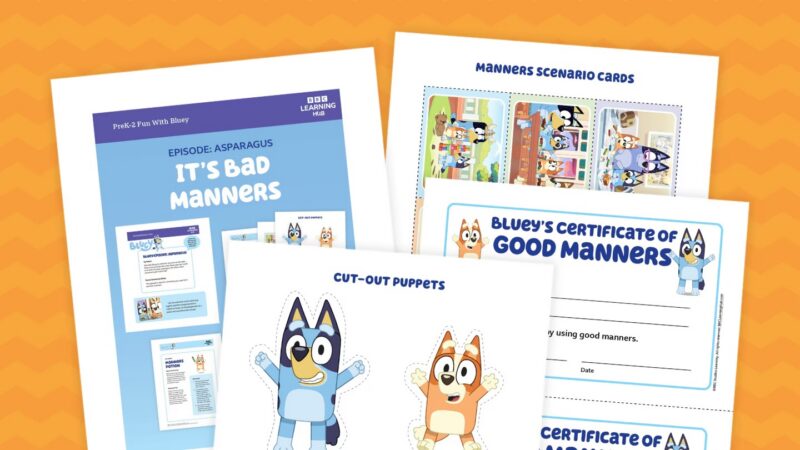
2. Try the “Asparagus” episode to get kids talking about manners and why they matter.
What it teaches: Another reason Bluey fits so naturally into the school day is the length of the episodes. They are short enough to hold attention but meaningful enough to stay with kids after the episode is over. The “Asparagus” episode is a strong example. Bluey knows she should use her manners, but when magic asparagus enters the picture, everything quickly turns silly and chaotic. Kids recognize that feeling right away.
After watching: This activity gives kids a playful way to practice good manners and think about how their choices affect others. Activities like pretending to be manners detectives or acting out different responses give kids space to explore kindness and patience through play.
3. Share the “Let’s Get Ice Cream” episode for teaching about managing let-downs.
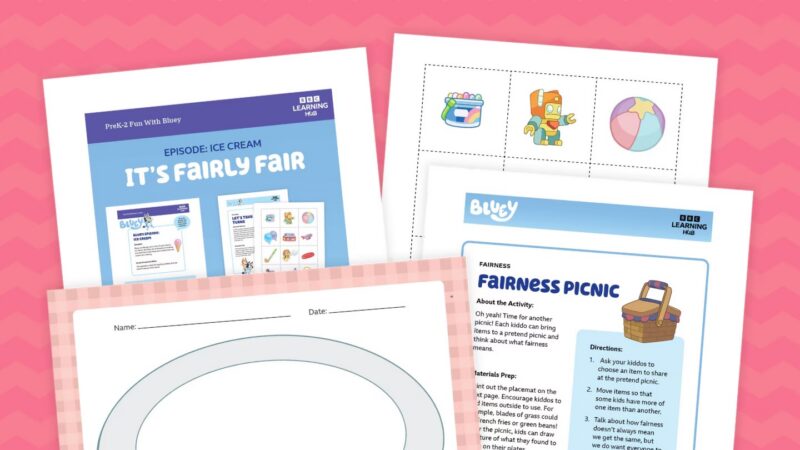
What it teaches: Sometimes play does not go exactly as planned, and that can be hard for young kids. In the “Let’s Get Ice Cream” episode, Bluey and Bingo are so focused on making things fair that they spend all their time circling each other instead of enjoying their ice cream. Before they realize it, both ice creams have completely melted. Dad refuses to buy them new ones, and when he finally shares his own, there is only one spoon left. Kids immediately understand this situation. They recognize the frustration, the disappointment, and the feeling of wanting things to be fair.
After watching: Kids can work on fairness and taking turns through playful sharing and simple decision-making. Sharing materials, waiting, and talking about fair versus equal gives kids a safe way to work through big feelings while staying connected to one another.
Play can facilitate genuine growth—socially, emotionally, developmentally. (The Guardian)
4. Check out the “Faceytalk” episode for talking about patience and growth mindset.
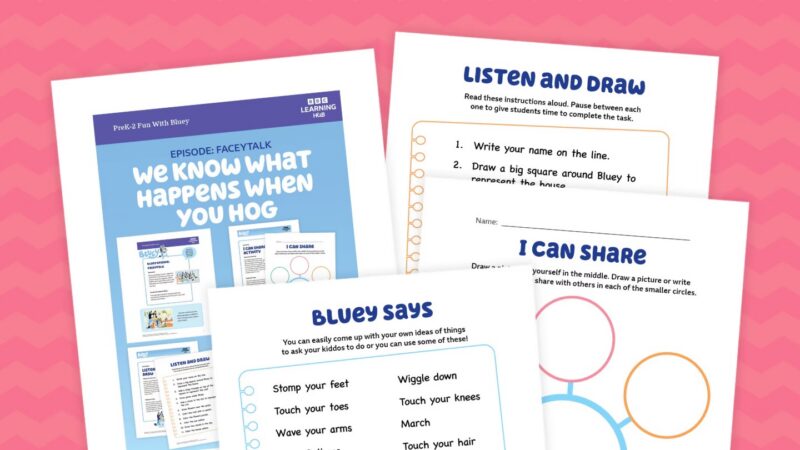
What it teaches: Free play can be challenging for kids who want clear directions or immediate success. When something does not work right away, it is easy to feel stuck. The “Faceytalk” episode reflects this in a way kids recognize instantly. Muffin wants to stay on the screen and finish drawing her cowboy hat, and she refuses to give Socks a turn. What starts as excitement becomes frustrating as Muffin takes up more and more space.
After watching: The “Faceytalk” activity gives kids a chance to practice sharing and taking turns through play. Drawing together, passing control, and making sure everyone gets a chance to participate helps kids see how kindness and consideration keep play moving forward.
5. Teaching about effort and self-acceptance is easier with the “It’s a Baby Race” episode.
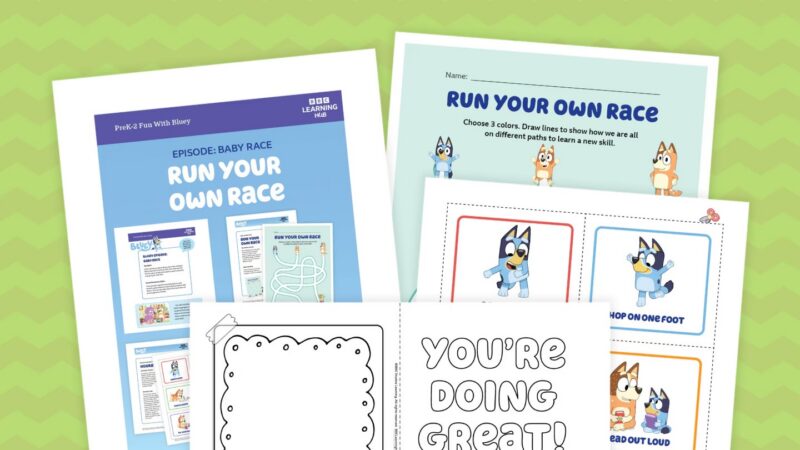
What it teaches: It is so easy for kids to compare themselves to others, even at a young age. Who is faster? Will I finish first? Who can do something better? I see this come up all the time in kindergarten. The “It’s a Baby Race” Bluey episode captures that feeling in a gentle, reassuring way. Bluey wonders if she is better than the others. Mum reminds her to “run your own race.” As Mum looks back on Bluey and Judo as babies, we see how differently they each develop. Bluey rolls, bum shuffles, crawls backwards, and tries everything except what Mum is expecting. Then, Bluey moves from crawling backwards to walking straight toward Mum in the kitchen. Everyone gets there in their own way and in their own time. Kids connect to this episode immediately. They recognize the pressure to keep up and the comfort that comes from realizing they do not have to move at the same pace as everyone else.
After watching: The “Baby Race” activity helps kids explore the idea of effort, encouragement, and moving at their own pace. Moving along different paths, tracing lines, and cheering each other on helps kids support one another rather than compete. It creates space for kids to talk about growth and celebrating progress in a supportive way.
Why Bluey Belongs in Classrooms
At the end of the day, what makes Bluey so useful in the classroom isn’t just that kids love it, it’s that the lessons are already there. The episodes give students a shared story to talk about, a character to relate to, and a low‑stakes way to explore big ideas like fairness, empathy, frustration, and making things right after you mess up. Instead of starting from scratch or lecturing about “being kind,” you can point to a moment in an episode and ask, What would you do? Suddenly the conversation feels real.
The activities that go with these episodes make it even easier to build on what kids see. They turn short, familiar stories into meaningful discussions, play, and reflection without taking the joy out of learning. When teaching friendship and kindness can feel overwhelming or abstract, Bluey helps make those skills visible, concrete, and doable.
If Bluey already has a place in your classroom conversations and play, the BBC Learning Hub is the natural next stop. It brings together Bluey activities, ideas, and playful experiences designed to fit the way young kids learn best. Whether you are looking for a spark for imaginative play, a shared experience to talk about feelings, or a gentle way to build connection through play, the Bluey partner site on the BBC Learning Hub makes it easy.

