

On the first day of his presidency back in 2021, Joe Biden revoked a key permit for the Keystone XL pipeline, which would have brought oil from Canada’s tar sands into the U.S. The decision to kill Keystone XL was perhaps Biden’s clearest gift to the environmental movement.
But now, five years later, a family of Wyoming oil tycoons is bringing the Keystone concept back from the dead — and the Trump administration is signaling its support. Last week, President Trump signed a presidential permit for the so-called Bridger expansion pipeline, which would likely deliver oil from the carbon-intensive Alberta tar sands to a pipeline hub in central Wyoming, 647 miles away. From there, the oil could move through other pipelines to key refineries as far south as the Gulf of Mexico.
“Slightly different than the last administration,” Trump said at the White House last Thursday when he signed the presidential permit. “They wouldn’t sign a pipeline deal, and we have pipelines going up.”
The presidential permit gives the project the green light to transport oil across international borders, and it’s only the latest step in what appears to be a fast-tracked timeline for the revived tar sands pipeline. Last month, the federal Bureau of Land Management announced that it would begin conducting an environmental review of the project on an expedited schedule. (The Trump administration has shortened many of the environmental review processes required for pipeline construction.) Bridger Pipeline, the company behind the project, says it wants to begin construction next year and start moving oil in 2028.
The pipeline would carry at least 550,000 barrels of crude oil per day. That’s only about two-thirds of what Keystone XL would have carried, but it could expand to a peak capacity even larger than what was originally planned — more than 1 million barrels a day. The similarity between the new pipeline’s path and Keystone’s has led some opponents to call the successor “Keystone Light.” The Canadian portion of the new pipeline would be built by a company called South Bow, which was spun off from TC Energy, the company behind the original Keystone XL line.
Andrew Burton / Getty Images
The proposed pipeline would be one of the biggest new fossil fuel developments of Donald Trump’s second presidency. It comes at a time of growing oil production in Alberta and skyrocketing global crude prices due to the war the president is waging in Iran. The project is being pushed by the True family, a clan of oilmen with a long history of drilling in the Rockies — and a history of oil spills from pipelines across the region.
“We know that there is limited pipeline capacity to move Canadian crude oil, and we have extensive experience in the Rocky Mountains,” said Bill Salvin, a spokesperson for Bridger Pipeline, the True family pipeline company proposing the project.
The True business empire dates back to the 1940s, when a wildcatter named Henry Alphonso “Dave” True Jr. began exploring for oil in Wyoming. He and his three sons expanded their company into a network of almost a dozen corporations that includes a drilling company, a network of local oil pipelines, a trucking company, an oil trading company, an oil equipment company, a geothermal energy firm, and a real estate company called Brick & Bond, according to a Grist review of corporate records. They also invested in cattle ranching, becoming some of the state’s largest landowners. One of True’s sons, Diemer True, served for two decades in the Wyoming legislature.
This corporate expansion has given the four-generation True family outsize influence in a state that doesn’t produce much oil but neighbors the massive Bakken shale formation of North Dakota, which is served by some of the True family pipelines. The family name is synonymous with oil in Wyoming, and True family members have become prominent donors to the University of Wyoming and to a conservative legal foundation in the region. The Trues have also run afoul of the federal government: Several members of the family engaged in a 10-year dispute with the Internal Revenue Service over what the government said was a strategy to evade some taxes by shuttling ranchland purchases between different companies. (The case ended in a multimillion-dollar fine against the Trues, which was upheld by an appellate court in 2004.)
“They’re very prominent, and their business interests have spread all around the West,” said Phil Roberts, an emeritus professor of history at the University of Wyoming and an expert on the state’s oil industry. He noted that families like the Trues have shifted away from oil production as the state’s fields have declined, investing in pipelines and oilfield services to maintain their revenue.
“Those fields have gotten really worn out, so they’ve had to diversify,” said Roberts.
Mark Wilson / Getty Images
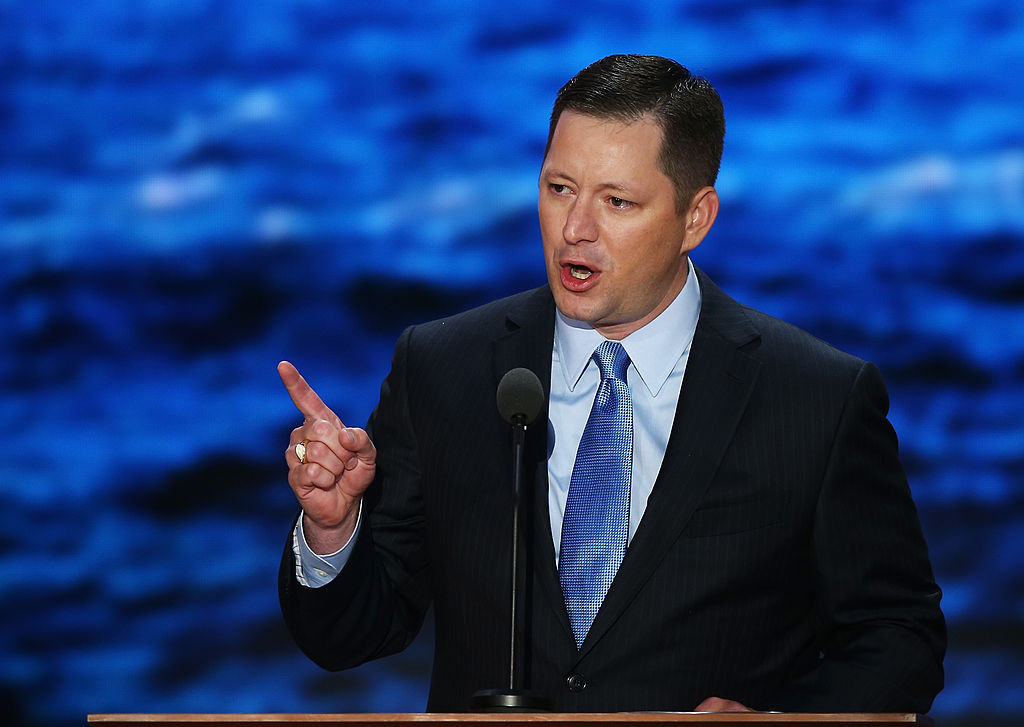
Tad True, the grandson of the True who first struck oil in Wyoming, has led the family’s pipeline business for most of this century, expanding its network to more than 4,000 miles across Wyoming, Montana, and North Dakota. He argued as early as 2006 that more pipeline development was needed in order for regional oil producers to remain competitive, and in a 2012 testimony before the House of Representatives he said that the Obama administration’s regulations were blocking the pipelines needed for the fracking boom that was then in full swing. True spoke at the Republican National Convention the same year, accusing Obama of “playing politics” with the Keystone XL pipeline, which the then-president had rejected the previous year. (While the pipeline was primarily intended to carry Canadian shale oil to American markets, it would also have included an “on ramp” for crude from True’s part of the country.)
True’s company, Bridger Pipeline, has a history of oil spills. In 2015, one of the pipelines it operated ruptured underneath the Yellowstone River after fast-moving waters eroded sediment and rock from the riverbed. At least 30,000 gallons of crude oil streamed into the river, contaminating the water supplies of Glendive, Montana. The town had to truck in bottles of drinking water after some residents noticed an odor in their tap water. Then, just a year later, another pipeline operated by one of the company’s subsidiaries leaked 600,000 gallons into a stream in North Dakota — almost enough oil to fill an Olympic-sized pool. Another pipeline broke several years later, dumping 45,000 gallons of oil onto ranchland in Wyoming. The company ultimately paid $1 million in fines to the Montana Department of Environmental Quality for the 2015 spill and $12.5 million for the 2016 spill.
In total, there have been at least 42 spills as a result of pipeline operations by True subsidiaries since 2010. According to data collected by the federal Pipeline and Hazardous Materials Safety Administration, more than a third of those spills had detrimental effects on the environment or people. The data shows that the Bridger Pipeline company alone is responsible for seven of those spills in just the last three years. The most recent spill took place in March near Guernsey, Wyoming.
“That definitely sets off some alarm bells,” said Kenneth Clarkson, communications director with the nonprofit Pipeline Safety Trust. “It’s not acceptable to have one incident, and when we have this quantity, it’s definitely troubling.”
If the expanded Bridger pipeline ultimately carries tar sands oil from Canada, as appears likely, the environmental consequences of a spill could be dire. Given the thick, viscous nature of tar sands, operators mix a type of thinner — called a “diluent” in technical parlance — to help it flow through pipelines. In the event of a rupture, the diluent can easily evaporate, leaving behind a heavy, tar-like substance that sinks to the bottom of rivers and other waterways. That particular property of tar sands made cleanup of the Kalamazoo River particularly complicated after a different company’s pipeline burst in southwestern Michigan in 2010.
“We regret any spill from our pipelines,” said Salvin, the Bridger spokesperson. “Anytime oil gets out of the line, that’s unacceptable to us, so we do everything possible to keep the oil in the line.” He said that Bridger will employ “horizontal drilling” to tunnel under rivers and streams, which he said would reduce the risk of ruptures. Salvin did not say what type of oil the pipeline would carry, but confirmed it would be engineered for “mostly heavy crude” from Alberta; the Canadian portion of the pipeline will begin in the town of Hardisty, in the heart of Alberta’s oil sands.
He also said the company would use advanced technology to monitor for leaks. In the aftermath of the 2015 spill, when North Dakota’s then-governor Doug Burgum challenged Tad True to prevent leaks, True created an artificial-intelligence software called Flowstate that analyzes pipelines for potential ruptures. Salvin said the company now uses the software on all its pipelines and markets it to other operators as well.
Even though the new proposed pipeline is similar to Keystone XL in length and size, it will only cost $2 billion, far less than Keystone’s $8 billion price tag. That’s because its route will largely follow existing infrastructure and rights-of-way established by True Companies pipelines. Salvin said that the company has held a dozen landowner meetings and has secured surveying easements, or allowances to scout the land for construction, from 374 of the 376 private landowners along the pipeline route. Unlike Keystone XL, the route does not cross any federally recognized tribal lands.
“We’re very familiar with what happened with the previous project,” said Salvin. “Given that we have existing pipeline corridors that we have access to, that’s one of the reasons why this makes such commercial sense to us.” Salvin declined to offer details about the financing of the project, and such details are not publicly available because Bridger is a privately held company.
The project must still secure a number of state and local permits, but so far it isn’t having any trouble with the Trump administration, which has been aggressive in supporting new oil and gas development. The line cuts through Montana and Wyoming, including public land overseen by the Bureau of Land Management, which is leading the federal government’s review of the project under the National Environmental Policy Act. Although the law typically requires the preparation of a detailed assessment of the project’s impact on wildlife and waterways, the bureau has suggested it might fast-track the pipeline’s review.
Past studies have found that it typically takes federal agencies more than two years to complete an environmental impact statement, but the Bureau has indicated in public filings that it intends to publish a final impact statement by next May and make a decision on the project, allowing the company to begin construction by July.
Though True family members do not appear to be particularly close allies of Trump himself, they have given more than $4 million to Republican candidates and political action committees since 1977, according to federal records. A combined $12,000 went to Trump’s unsuccessful reelection campaign in 2020, the only apparent record of True financial support for the president. Furthermore, six members of the True family appeared on a 2022 endorsement list for Liz Cheney, the Wyoming politician who lost her reelection bid after she voted to impeach Trump.
The business case for the new pipeline rests on a number of big assumptions. The existing pipelines from the tar sands are running near capacity, but the Bridger proposal assumes that production in Canada’s oil hub will continue to increase. Many forecasters aren’t so sure; even with prices high, current projections show that production growth is slowing and may peak in 2030 at around 3.5 million barrels a day, well under what the proponents of Keystone XL anticipated.
Second, the pipeline would only carry oil to central Wyoming, not all the way to the Nebraska refinery hub targeted by the original Keystone XL pipeline. Another company would need to build another pipeline across Nebraska in order for the crude to reach the major oil refineries on the Gulf Coast. (Salvin said Bridger is “exploring options” for that segment.) Third, it’s unclear if those refiners will even want as much of the heavy Canadian crude oil that the pipeline would offer, since imports of similar oil from Venezuela have started to tick up following Trump’s kidnapping of Venezuelan leader Nicolás Maduro and subsequent negotiations with the country’s new leadership.
“To call this plan half-baked would be an insult to baking,” wrote energy lawyer and anti-pipeline advocate Paul Blackburn in a blog post last month. Blackburn is an advisor to Bold Alliance, the activist network that opposed the last Keystone XL proposal.
Many of the same activist groups that opposed the prior pipeline are getting ready to oppose this one as well. The Bold Alliance, which organized tribes and rural landowners against Keystone, has said it will litigate any attempt to extend a pipeline into Nebraska. Jenny Harbine, a managing attorney with the nonprofit Earthjustice, said her group is “keeping a close eye” to ensure federal and state agencies adequately consider environmental and safety concerns. The Bureau of Land Management and the Montana Department of Environmental Quality, which is coordinating its review with that of the federal government, closed an initial public comment period last week.

