

Even if you don’t like eating mushrooms, you’re in debt to fungi. One group of them, known as arbuscular mycorrhizal fungi, form vast subterranean networks of tubes called hyphae, hooking up with the roots of plants to exchange nutrients. Earth is so verdant in large part thanks to these partnerships, as this expansive infrastructure is associated with nearly three-quarters of all plant species. But because the network sprawls underground, it’s been difficult for scientists to determine just how much arbuscular mycorrhizal fungi is out there. (Good luck digging everywhere on the planet and taking samples.)
Scientists have developed a workaround, which has produced some astonishing numbers. Using machine learning models, they’ve estimated that worldwide, the arbuscular mycorrhizal network stretches for 110 quadrillion kilometers, almost a billion times the distance from Earth to the sun. (Scoop up just a teaspoon of soil and you might find 10 meters of fungal strands.) Every year, these fungi shuttle around 4 billion metric tons of carbon, equal to 11 percent of humanity’s CO2 emissions.
Because scientists have already taken thousands upon thousands of samples around the world, the researchers could train the models to build maps (you can play with them here) that predict where these fungi are more or less concentrated, even in the most remote environments. “We have started to have a clear picture of the full extent of these hidden living infrastructures that circulate carbon and nutrients in the soils beneath our feet,” said Toby Kiers, executive director of the Society for the Protection of Underground Networks and coauthor of the new paper, which published today in the journal Science.
Courtesy of the Society for the Protection of Underground Networks
There are two major classes of mycorrhizal species. The ectomycorrhizal fungi grow as sheaths around a plant’s roots, especially conifer trees, whereas the arbuscular ones in this new paper penetrate them. Either way, these fungi act as an extension of the roots, helping them absorb more water and nutrients. “Just as a circulatory system moves resources through a body, these sort of microscopic fungal pipes are connected to plants,” Kiers said.
In exchange, mycorrhizal species get energy in the form of carbon that the plants have drawn from the atmosphere. They help the plants grow to sequester still more carbon, a mutually beneficial partnership that benefits humans, too, as it keeps the planet from warming even further.
However, the density of arbuscular mycorrhizal fungi isn’t uniform across the planet’s biomes. You might assume that it would be highest in tropical rainforests, but in fact grasslands account for 40 percent of the predicted global arbuscular biomass, the study found. That might be because herbaceous plants like grasses tend to allocate more carbon to their symbiotic fungi than trees do. You can’t see it, but grasslands have vast root systems, meaning there’s loads of hidden biomass. “Even if grasslands get burned above ground, that carbon tends to remain underground, and they can come back again, which is different than forests,” Kiers said.
Yet, Kiers added, just 5 percent of arbuscular mycorrhizal fungal biodiversity hot spots lie in environmentally protected areas. The idea with these new maps is for scientists and policymakers to identify where fungi might be thriving, and protect them. That will simultaneously support plant life and biodiversity overall — all kinds of birds, insects, and herbivores depend on this vegetation, too — and capture still more carbon in the soil. (Some savannas, like Brazil’s cerrado, also store enormous amounts of carbon underground in peat, or dead plant material that resists decay and accumulates over centuries.)
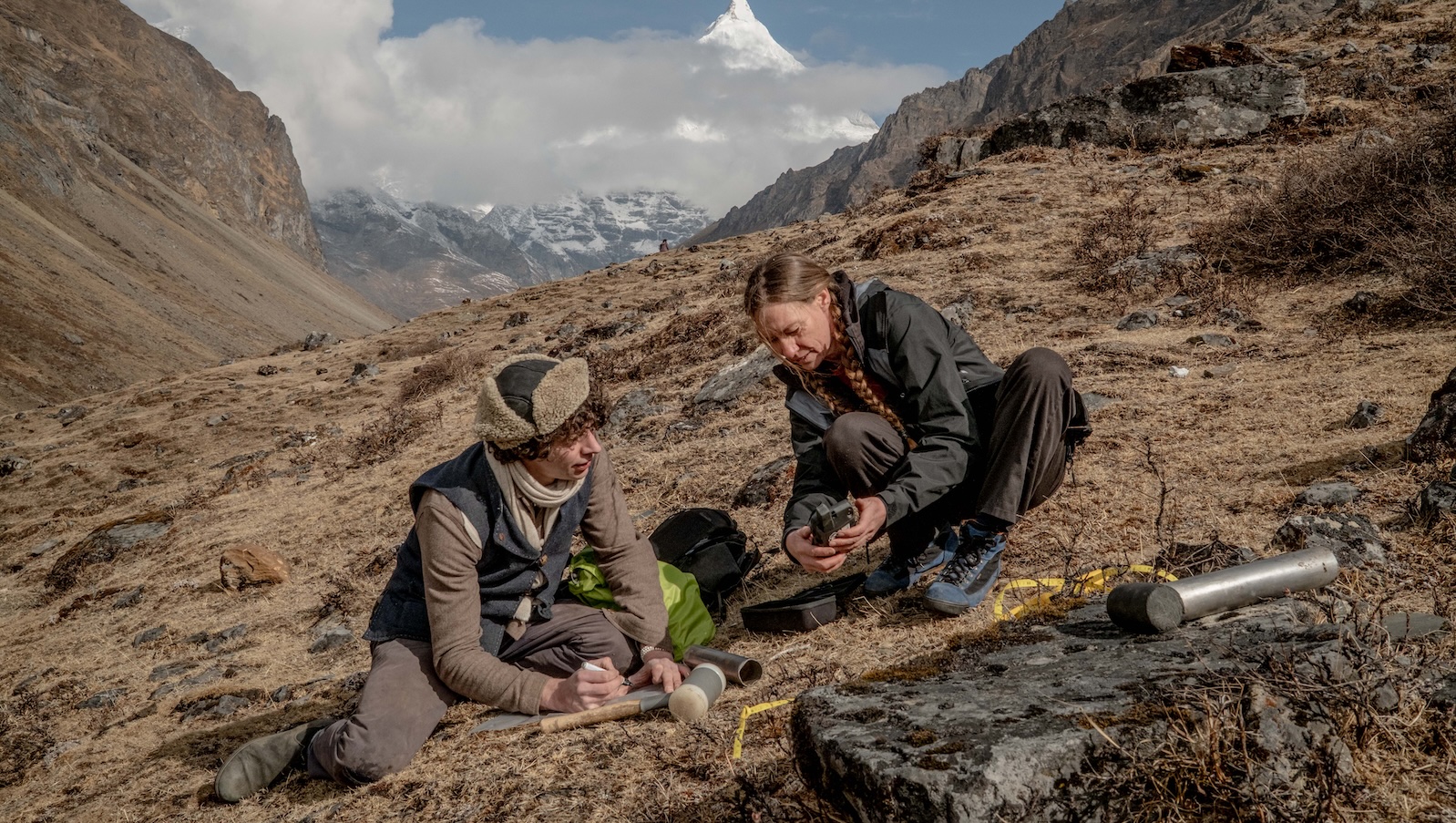
Courtesy Tomás Munita
At the other end of the spectrum, the study found that in areas with large-scale agriculture, fungal network densities are about 50 percent lower on average. That may be because synthetic fertilizers provide crops all the nutrients they need, easing their reliance on arbuscular mycorrhizal fungi. Tillage also tears fungal networks apart at the end of a growing season. (Other research has found that tilling also disrupts soil’s ability to retain water.) “Maybe we can do better to have more fungal biomass in our agricultural systems, and in our terrestrial ecosystem as a whole, and capture more carbon dioxide,” said ecologist Smriti Pehim Limbu, who studies mycorrhizal fungi at Dartmouth College but wasn’t involved in the new paper.
Humanity has to feed itself, of course. But with this new data in hand, it can also take steps to protect these critical species hidden underground. “This map is for mycorrhizal fungi what the first detailed maps were for, I don’t know, ocean currents or river systems,” Kiers said. “Where you go from knowing a system exists to knowing where it is, how dense it is, and where it’s threatened.”

