

When war broke out in Sudan on 15 April 2023, few could have anticipated how profoundly it would reshape daily life. Three years later, ‘hunger’ no longer captures the scale of what people are facing.
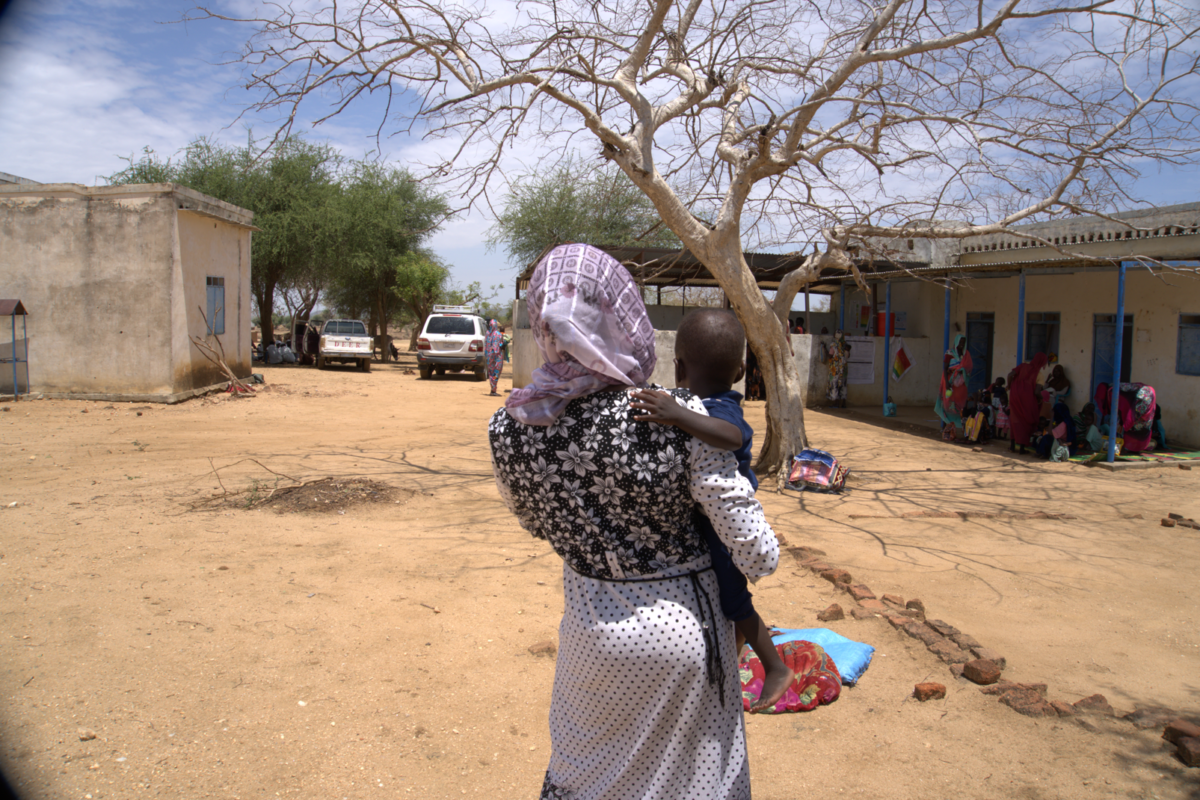
I have worked in humanitarian response for many years, across a number of different contexts. What is happening in Sudan is not a food shortage in the conventional sense. It is the progressive dismantling of an entire food system, including farms, markets, trade routes, and community networks, by an ongoing conflict that has received nowhere near the international attention it warrants.
Sudan is now home to the world’s worst humanitarian crisis. More than 33 million people – over half the country’s population – depend on humanitarian aid just to survive. Of the three famines declared anywhere in the world right now, two are in Sudan. And yet the crisis continues to receive a fraction of the attention or the funding it demands.
Getting food is dangerous
Speaking with the communities we work with, what comes through most clearly is not just that people are hungry, but the risks they have to take simply to survive.
Farmers plant their fields knowing they may be killed or displaced before harvest comes. Traders navigate checkpoints, active gunfire, and exploitative taxation just to move food from one place to another. Mothers leave their children at home and walk into the middle of firefights to find something to bring back. As one woman in North Darfur told us for our report: ‘You are a mother. You leave your children in the house. You go out in the middle of gunfire. You risk your life just to bring them something to eat.’
A recently released report found that in many conflict-affected areas, food only reaches families after crossing active frontlines. Families are surviving on one meal a day, or less. Some go days without eating. In the worst conditions, people have resorted to eating leaves, animal feed, and porridge so diluted with water that it barely sustains life. ‘We no longer ask what we will eat,’ one displaced woman told our teams. ‘We ask who will eat.’
Hunger as a weapon
Meanwhile, around 80 per cent of health centres and 60 per cent of water systems in conflict zones are no longer functioning. Sudan is also experiencing the world’s largest displacement crisis: nearly 14 million people have fled their homes, more than double the displacement figures of Syria, the DRC, and Yemen combined.
This crisis did not emerge from drought or misfortune alone. It is being deliberately driven by the parties to this conflict. Markets have been bombed. Farms have been destroyed. Supply routes have been blocked. Humanitarian access is routinely denied through active fighting and administrative obstruction.
The UN’s Independent International Fact-Finding Mission has documented a ‘war of atrocities’ against civilians – including the use of starvation and sexual violence as weapons of war. Women and girls have been hit hardest. Female-headed households are three times more likely to face food insecurity than male-headed ones, with fewer than 2 percent considered food-secure. Gender-based violence restricts women’s movement, cuts them off from markets and services, and compounds an already serious vulnerability.
Local networks are overstretched
Throughout all of this, communities in Sudan have found ways to cope. Community kitchens, women’s groups, local mutual aid networks, and traders are collectively holding together what remains of the food system. Farmers are planting fields knowing they might not live to see the harvest. As one told us, ‘Not planting was also death.’
These networks are doing essential work, yet they are running out of capacity. Community kitchens across the country are closing or cutting meal provision by 50 per cent or more as funding dries up. The 2025 humanitarian response plan was only 40 per cent funded. The current response requires US$2.87 billion and has only received 16 per cent of the funding requested. The request likely falls short of what people actually need. The gap between what is needed and what is being provided translates directly into closed community kitchens, suspended nutrition programmes, and families going without food.
What needs to change
Three years in, the situation is getting worse. Global pressures such as rising fuel costs, fertilizer price increases, and disrupted supply chains are adding to a food system that was already under severe strain.
The international community needs to treat Sudan as a priority. That means pressing the parties to the conflict to stop actions that drive hunger and violate international humanitarian law – blocking supply routes, destroying farmland and markets, using starvation as a tactic. Safe, sustained humanitarian and commercial access needs to be guaranteed. UN Security Council Resolutions 2417 and 2573, which prohibit the use of starvation as a method of warfare, need to be enforced with real consequences.
It also means properly funding the humanitarian response. The kitchens, the women’s groups, the traders, and other local networks that are keeping people alive must be properly resourced.
The people I meet in Sudan are not asking for sympathy. They are asking to be able to farm their land, sell their goods, and feed their families without risking their lives to do it. That is not unreasonable. But right now, in much of Sudan, it remains out of reach, and the decisions that could change that are being made, or not made, far from here.

