

Kendra Jarvis demonstrates how teachers can use live global webcams to spark small observation routines that slow the pace, build attention, and promote global awareness.
By Kendra Cameron-Jarvis
 A few days ago, I took my daughter out to dinner, hoping for a quiet moment to talk about her plans for college. I imagined a conversation that might wander, uncertain and thoughtful. But as soon as the conversation lulled, she reached for her phone and began scrolling.
This wasn’t new. I see it happen while we’re standing in line at the store, riding in the car, or sitting together in the family room. And it isn’t just my 17-year-old daughter. It’s all of us. The moment boredom appears, we reach for something to fill the space.
I don’t share this as a criticism of teenagers or technology. Phones have become our default way of managing downtime. They offer instant stimulation and an easy escape from silence or waiting. The issue is not that we use our phones, but that we have fewer opportunities to slow down, notice, and engage with the world around us.
We Teach in Short-Attention Classrooms
As an educator, I see this same pattern clearly in middle school classrooms. Middle school students move quickly from one task to the next, often without being asked to linger or observe closely.
Many have limited opportunities to travel beyond their county or state, let alone outside the country. Yet we ask them to understand global issues, unfamiliar cultures, and complex systems, often beginning with abstract information disconnected from lived experience.
Middle school is a pivotal moment for learning how to attend. Students are developmentally ready to move beyond purely concrete experiences, but they still need structured support to slow down, observe carefully, and connect new ideas to what they already know. When learning jumps too quickly to abstraction, many students disengage not because they are uninterested, but because they have not yet had time to look, notice, and wonder first.
Teachers feel this tension. How do we help middle school students practice attention without turning class into a lecture about phones or compliance? How do we build global awareness when travel is out of reach for so many students? What is one routine we can actually sustain with everything else on our plates?
Learning how to pause, observe, and make sense of the world is a skill students need across every content area, and it is one we can intentionally teach, one window at a time.
Observation Matters in the Middle
Before students analyze, solve, or create, strong learners tend to do something similar: they pause. Across disciplines, students who learn deeply draw on what they already know so new learning has something to attach to. In the middle grades, this means giving students time to revisit ideas closely, using careful observation to form grounded conclusions.
This habit shows up everywhere. In science, it means noticing patterns before forming a hypothesis. In social studies, it means examining context before drawing conclusions. In the arts, it means attending to detail and structure. Even in mathematics, it often begins with closely examining a problem before choosing a strategy. Observation is not a separate skill. It is a foundation for thinking across disciplines.
When middle school students do not slow down, learning becomes fragmented. They rush to complete tasks, miss important details, and move on before ideas have time to connect. Practicing careful observation helps students build understanding instead of racing toward answers.
 Bourbon Street, New Orleans (2026-02-21 at 4.58 PM)
Why Live Global Feeds Work
Live global webcam feeds offer middle grades students a wide view of the world. Instead of experiencing a place from a single perspective, students can observe patterns, movement, and context all at once, almost like stepping into the role of an omniscient narrator.
The power of these webcam feeds lies in the ordinary. They show people commuting, gathering in public spaces, responding to weather, and moving through daily routines. A live camera overlooking a city square during the morning commute, for example, can prompt students to notice time of day, patterns of movement, and how people use shared spaces.
Live Global Feeds to Get Started
These free livestreams work well for short observation routines, discussion starters, and inquiry in middle school classrooms.
Teacher note: Preview livestreams in advance to ensure the content and timing fit your instructional goals.
For students who may never have the opportunity to travel beyond their region, these moments offer access to the wider world that might otherwise remain abstract. Because the feeds are live, students are not consuming a polished narrative. They are witnessing the world as it exists in real time, which invites them to slow down, notice, and ask meaningful questions.
As students observe, teachers can name a simple norm that supports respectful learning: we practice curiosity with care, and we distinguish between what we can see and what we assume.
5 High-Impact, Low-Lift Observation Routines for Middle School Classrooms
These routines are intentionally small and sustainable. Teachers do not need to do all of them. Starting with one is enough. While these routines can be adapted across grade levels, they are especially powerful for middle school students who are navigating increased screen use at the same time they are beginning to make sense of abstract global ideas.
► 1. World Windows Bell Ringer
At the start of class, middle school students watch a live global feed for 60 to 90 seconds, long enough to notice patterns, but short enough to maintain focus. Phones are put away, and the room is quiet. Students write one precise observation and one genuine question. Once a week, the class selects a question to explore more deeply through brief research or discussion.
Shibuya Scramble Crossing: Watch the famous, orderly chaos of thousands of people crossing at once from this Skyline Webcams link or YouTube. (Tokyo)
► 2. Observation and Inference Sorting
After viewing a live feed, students share short statements such as “I see,” “I think,” or “I wonder.” Together, the class sorts these statements into observations, inferences, and questions. The teacher guides the discussion by asking whether each statement is something that can be directly seen, a reasonable guess, or something that would require more information to confirm.

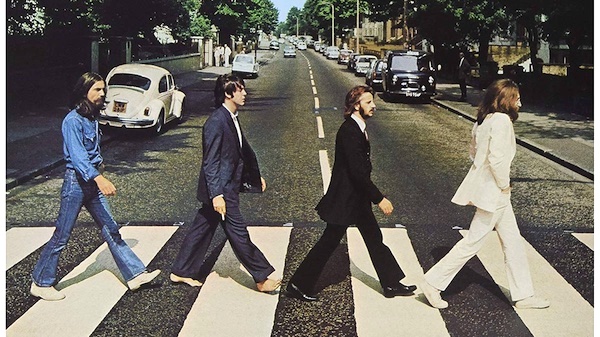
The famous Abbey Road zebra crossing is located in northwest London, directly outside the former EMI Studios where the Beatles recorded most of their music. Here you see a live cam capture of Abby Road today, above the iconic 1969 Abbey Road album cover.
► 3. Global Compare and Connect
Students observe two live feeds and reflect on what feels familiar, what feels new, and how what they see connects to content they are studying or experiences in their own communities. The goal is connection, not judgment.
► 4. One Question Worth Answering
Students work with a partner to refine one question they are curious about, revising it to make it more specific and researchable. With younger middle school students, the class may co-construct a shared question. Older middle school students can pursue individual questions and share what they learn.
► 5. Sensemaking Reflection
Students begin with a short individual reflection using optional sentence starters, then share with a partner and briefly with the class. This sequence ensures every student participates and helps them notice how their thinking is evolving.
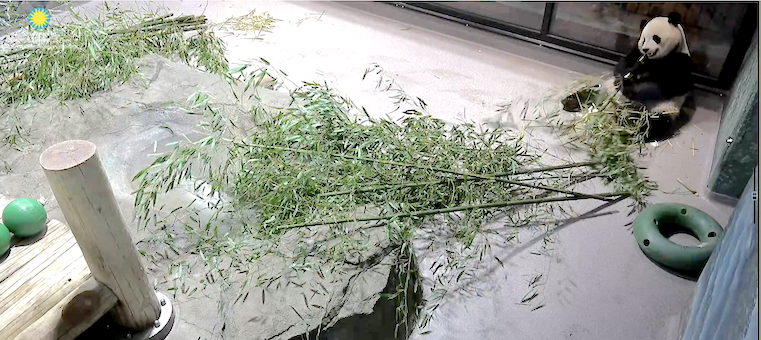 Screenshot from the Smithsonian National Zoo’s live Giant Panda Cam
Try This Tomorrow
Choose one live camera. Watch for one minute. Ask students to write “I see” and “I wonder.” Share three responses. Repeat the next day. Small routines build habits. One window at a time.
Helping Middle School Students Learn How to Look
What I hope most is that students learn how to slow down and notice the world around them, not just dramatic moments but everyday life. Through that noticing, middle school students can develop an appreciation for cultures beyond their own and a sense of connection rather than distance.
Phones are not going away, and they do not need to. Middle school classrooms can model a different relationship with technology, one where tools help students engage more deeply with the real world instead of pulling them away from it.
In a world where attention is constantly pulled in different directions, helping middle school students learn how to slow down, notice, and wonder may be one of the most important things we do. Even a single minute of intentional observation can begin to change how students relate to learning and to the world beyond the classroom.
Kendra Cameron-Jarvis is the Senior Literacy Specialist at the North Carolina Center for the Advancement of Teaching (NCCAT). She began her career in education in 2004 and has served in a variety of roles, including middle and high school ELA teacher, secondary literacy coach, and instructional technologist with Buncombe County (NC) Schools.
Kendra has contributed to state-level initiatives with the North Carolina Department of Public Instruction, including leading the western region North Carolina Coaching Cohort and the AI Collaborative. She regularly leads professional learning, keynote sessions, and conference presentations for educators across North Carolina. She has also served as an adjunct professor in UNC Asheville’s Education Department and has published in Edutopia, ASCD, and the North Carolina Middle Level Journal.

