

Residents have the right to live in a city that meets their desires, and urban spaces should be designed to provide healthy, safe, and equitable circumstances for residents.
As cities expand, urban inequalities become more pronounced. In many cases, cities fall short of serving the needs of residents. Youth have unique experiences of these shortcomings as they occupy and rely on urban spaces they had little to no say in creating. However, they will soon be the inheritors and stewards of these spaces, and it is vital to consider their perspectives in creating cities that serve the generations of tomorrow. In order to build more sustainable and equitable urban areas that meet the needs of their residents, it is important to create platforms that can amplify the voices of groups, such as youth, which are often left out of the conversation.
In the spring of 2025, we came together as three NATURA Early-Career Fellows to design an educational workshop to encourage young people to share their experiences growing up in the greater metropolitan area of San Juan, Puerto Rico. As the capital city of a small island nation, San Juan is experiencing firsthand the pressures of climate change and extreme weather events, along with social and economic shifts. Over the past decades, many working-age Puerto Ricans have moved to the continental USA due to climate impacts and in search of economic opportunities.
This workshop took place in the wake of the release of the enormously successful studio album Debí Tirar Más Fotos (I should have taken more photos) by Puerto Rican artist Bad Bunny. This album is a political commentary on processes of gentrification, colonial history, and cultural identity of the island – a call to action to recognize what is treasured and what is at risk of being lost. Fueled by the desire to document their present lives, seventeen (15-17 year old) high school students from the Academia Bautista in San Juan participated in the workshop. Over the span of three weeks, students were guided through the process of multi-media storytelling by interweaving photography and written prose. They were prompted to critically explore their relationship with the natural and built environment of the San Juan metropolitan area and develop a personal narrative to share with a broader audience. We asked youth to share their views on their surroundings, using photography to document what is, but also to reimagine what it could be.
“It helped me think and reflect on topics that no one talks about.” – student photographer.
Photography can be a powerful tool to help transmit ideas, feelings, and stories that are difficult to solely describe with words. Through the exercise of photographing our surroundings, we become critical observers of the objects we interact with and the spaces we inhabit. As stated in a TNOC article where fourteen photographers explored urban nature, photography makes us “better at looking” at a world we often take for granted. By documenting our surroundings, we can position ourselves as active players in the creation of urban spaces. We are faced with questions such as what do we value? What is at risk of disappearing that should be preserved? What needs to change?
“I feel more connected to my neighborhood and city when I go out and explore and truly observe things that are happening.” – student photographer
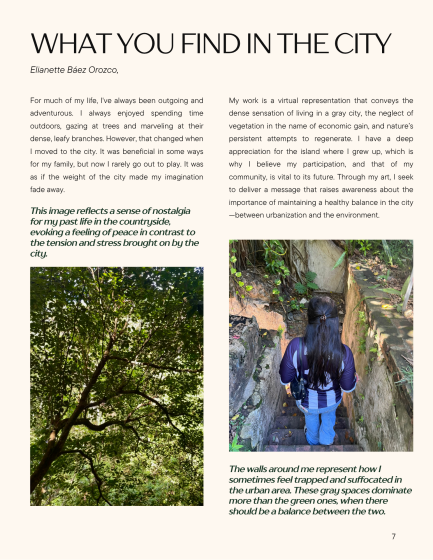
We have published the students’ photo essays in a digital book titled Framing the Future: Voices and Visions of Youth in San Juan, Puerto Rico, on the NATURA Network website.
The goal of the workshop was to help youth critically examine their experiences living in a city undergoing change and their relationship with urban nature. We challenged students to think about cities as not only the hard gray infrastructure by which they are commonly characterized, but as a complex interaction between the people who live there, the natural vegetation and animals, and the urban infrastructure. We emphasized the idea that residents have the right to live in a city that meets their desires, and that urban spaces should be designed to provide healthy, safe, and equitable circumstances for residents.
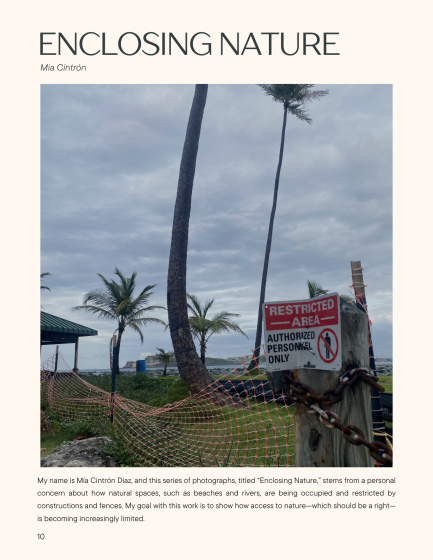
Students were able to refine skills in developing a compelling narrative and transmitting their ideas through a creative medium. We prompted the students to ponder questions such as: “what is important to you?”, “what is something you notice but others ignore?”, “if you say something to a decision-maker in power, what would it be?”. They each developed their own topic for their photo essays, focusing on themes including environmental contamination, barriers to accessing nature, the potential to incorporate green spaces back into the city, tensions between urban growth and conservation, and the pervasiveness of abandoned and inadequate infrastructure.
Interactive Photo Exhibit:
In addition to the published book, the students’ final work was presented at a community photo exhibit that took place during the First Annual Eco-Festivalito of Puerto Nuevo. The festival was organized by the Amigos de Puerto Nuevo por la Cuenca, featuring local community groups to discuss environmental organizing in their neighborhoods. The event was created in collaboration with Alianza, a multi-sectoral coalition dedicated to holistic management of urban watershed issues, and Para la Naturaleza, a nonprofit dedicated to integrating society in the conservation of natural ecosystems.
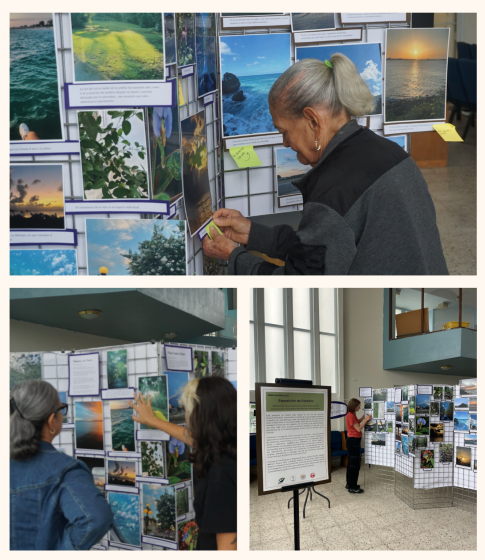
During the exhibit, attendees were encouraged to interact with the photos by writing their reactions to the students’ stories and images on post-it notes. This event created the opportunity for intergenerational discussions, linking youth to family members and community elders working towards a common goal of protecting the spaces they value within San Juan.
Our Partners:
We carried out this work as the first team project to be conducted by Early-Career Fellows supported by NATURA, a network of networks dedicated to exploring Nature-based Solutions for urban resiliency in the anthropocene. Our project built upon previous research and existing relationships with local academics and community groups in San Juan, established through the NATURA network. Our fellowship host organizations, the Tropical Plant and Urban Systems Lab at the University of Puerto Rico ― Río Piedras and the U.S. Forest Service International Institute of Tropical Forestry, have been working to support a holistic management approach of the Río Piedras watershed. The tension between community visions, urban nature, and engineered flood solutions was the focus of a NATURA Early-Career network workshop held in 2023 (read more here).
Resident-led photography for Community Organizing:
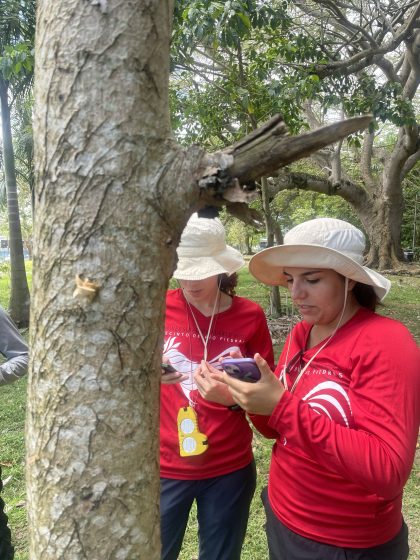
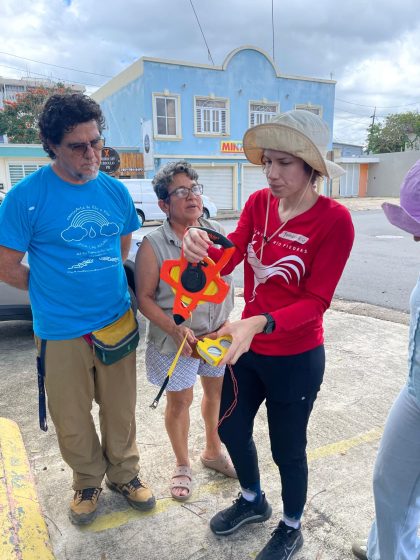
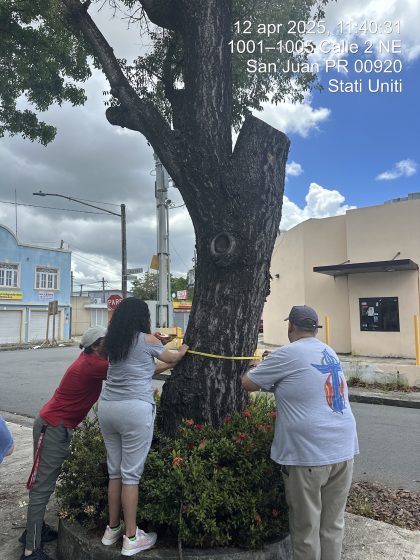
The community photo exhibition showcased the student submissions and acted as a catalyst to launch an extended photo documentation project led by our host organizations. This larger project hopes to inspire residents to document assets and challenges in their urban surroundings. It involves taking georeferenced photographs to create a community-led repository of photographic information about assets and hazards. The goal is to amplify the voices of residents and empower them to have accessible data to bring to decision-making spaces. One example of this was hosting workshops on assessing the ecosystem services of urban trees in parks that are at risk of being demolished for flood mitigation projects.
This final book format was inspired by the UNICEF publication The Green Rising Through A Fresh Lens, which demonstrates how youth photographers capture the impacts of climate change and environmental hazards on their personal lives and communities. Our hope is that this book can highlight the work of the students and provide an example of how artistic methods can be used to share the values and opinions of young people.
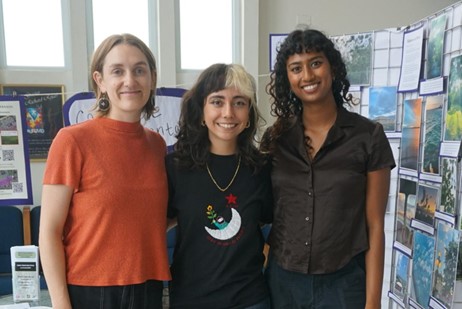
Margot Mattson, Isabella Pacenza, and Shruti Jadala
New York City, Brooklyn, and Miami

