

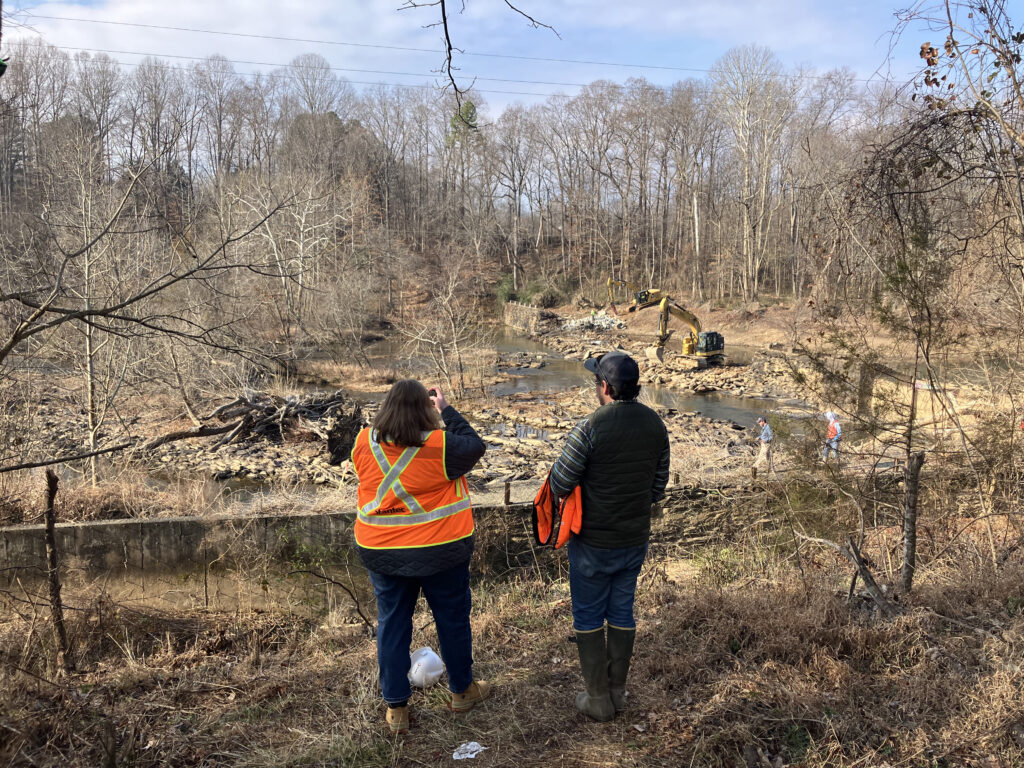
I first visited the town of Ramseur, North Carolina, two years ago as part of a river restoration effort focused on removing an outdated and unsafe dam that had blocked the town’s otherwise vibrant Deep River. I was new to my role at American Rivers but had a strong connection to the state’s rivers and unique freshwater ecology, having spent the prior decade as an aquatic scientist. I understood the importance of interconnected rivers for the health of native fish, aquatic salamanders, and freshwater mussels. But in the city with the apt slogan “Where Family and Friends Meet,” I soon came to understand how deeply passionate people – and their connection to place – can shape the success of complex and transformative river restoration efforts such as dam removal.
Dam removal is one of the most powerful tools we have to restore the health of rivers. A free-flowing river supports biodiversity, clean water supplies, and recreation. Sadly, the state of North Carolina has an astonishing 28,000 inventoried dams on its landscape, and many of them are obsolete. Flowing through the heart of Ramseur, the Deep River is one of two major tributaries to the Cape Fear River, together comprising the Cape Fear River Basin, which provides drinking water to nearly a quarter of a million people. This major river is severely fragmented by several major dams that disrupt its natural flow and block species movement.
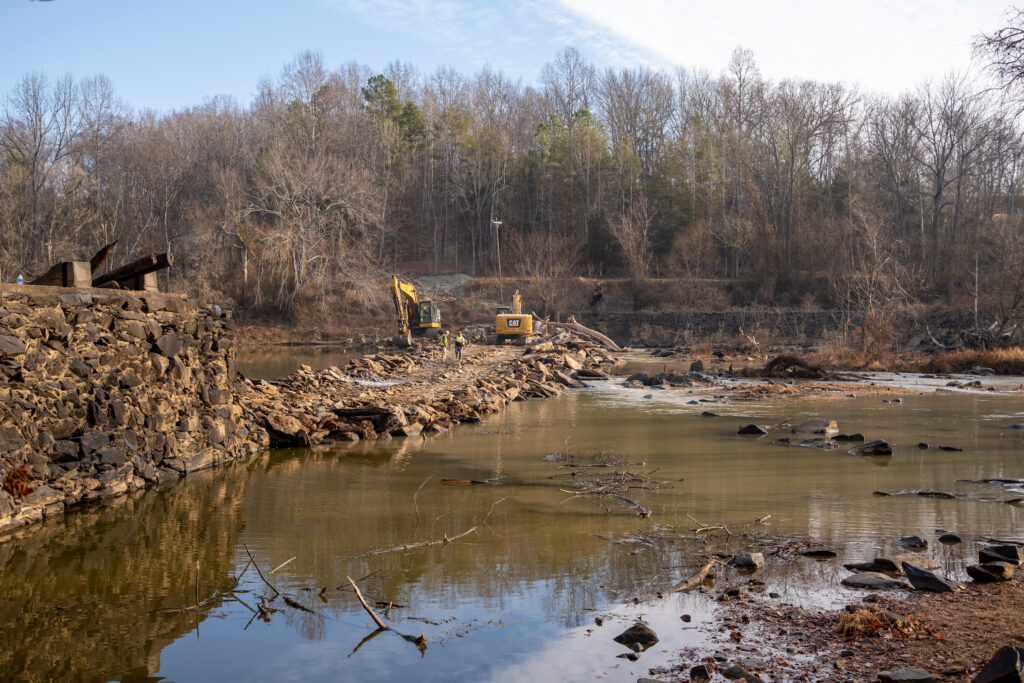
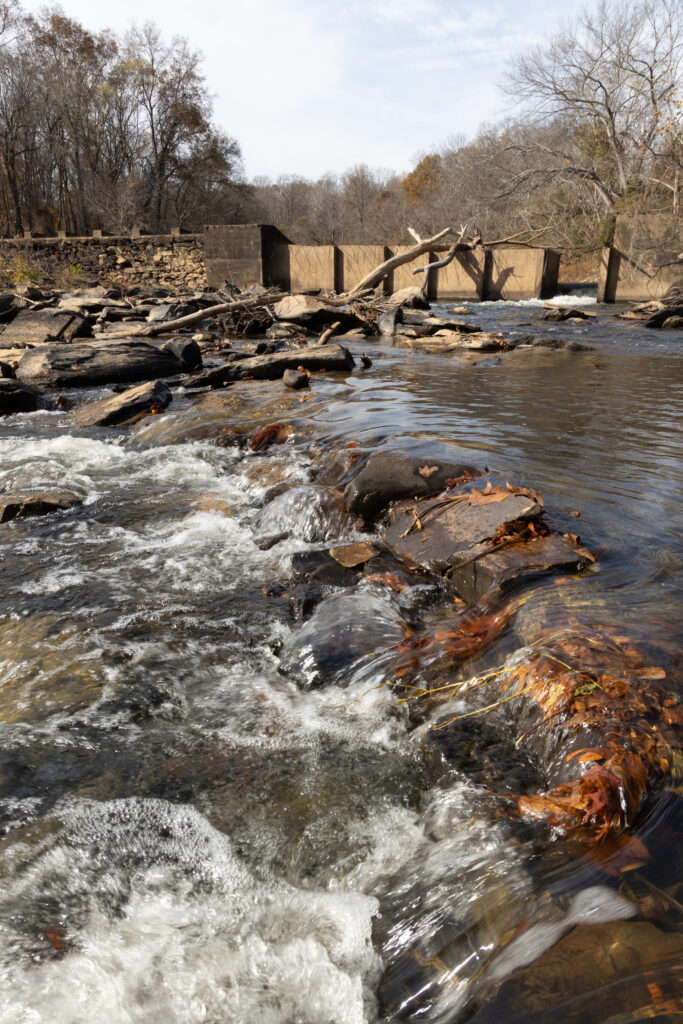
The Ramseur Dam, originally constructed in the early 1900s to power a sawmill and later the Columbia Manufacturing Company, is one such structure. It no longer produces hydropower or supports manufacturing. Built largely of river rock, time has taken its toll: the gates are broken, water seeps through the structure, and rebar juts out in places.
With more than half a million dams obstructing rivers across the country, this isn’t a scenario unique to North Carolina, but it is a hazard felt deeply by the residents of our state. Storms now known as household names—Helene, Florence, and Matthew—reveal how aging infrastructure combined with extreme weather endangers people, wildlife, and our clean water supply. Dams that no longer serve a purpose are creating unsafe conditions, needlessly degrading water quality, and burdening city leaders and private owners with liability risks should they fail in the next major storm or from sheer old age.
Let’s Stay in touch!
We’re hard at work in the Mid-Atlantic for rivers and clean water. Sign up to get the most important news affecting your water and rivers delivered right to your inbox.
Dam removal confronts these immense challenges with a solution – reconnecting our rivers. Removing a dam can be a big step for a town. A river restoration project requires vision, courage, and partnership. The Ramseur dam removal is an act of optimism – local leaders asking: how can we improve this amazing resource for both people and nature? The leadership and community of Ramseur chose to envision a place where children can safely wade into the cool waters, anglers fish for native species, and the river flows freely, tumbling over rocks as it moves downstream.
With respect and full understanding of the benefits they once served, more and more outdated dams are being removed to advance a future of ecological restoration, expanded recreation, economic opportunity, and community connection. Local leaders in Ramseur have embraced a future provided by a free-flowing river.
Plans for a state trail along the Deep River envision a continuous walking trail, termed greenway, winding alongside the river and a designated paddle trail, or blueway, stretching the length of the Deep River, reconnecting communities to the water and to each other. New trailheads and river access points tied directly to the restoration are designed to bring people back to the river—not as a backdrop, but as a centerpiece of community life.
While Ramseur’s story is its own, it is also part of something much larger. Restoring natural flow in the Deep River strengthens the health of the entire Cape Fear River system, from piedmont headwaters to coastal estuaries. The benefits are cumulative. Reconnecting even a single stretch of river contributes to a larger vision: a continuous, free-flowing river system where people can paddle from the Deep River toward the coast, where fish and other migratory species can move freely, and where communities along the way are linked by shared stewardship of a healthy watershed for people and for nature.
As the Ramseur Dam comes down, the Deep River will flow freely for the first time in more than a century. The water will find its natural rhythm again, carving new paths, supporting wildlife, and inviting people back to its banks. This transformation is possible because people, working together with care and vision, choose restoration and resilience.
Ramseur’s next chapter is about reconnecting—to the river, to each other, and to a broader vision of a restored Deep and Cape Fear River system flowing forward together. Which North Carolina town wants to add to the story?

