

By Kelly Owens
That segment of time in the middle of your class period is tough. The long stretch of sedentary seatwork leads to Wanderers, Wigglers, and the Worn Out.
If you struggle with this slump, break the monotony with movement. It’s simple! Swap passive assignments with action activities. Recharge learners with the focus and energy they need.
Two optimal learning windows bookend a class period – the beginning and the end. That leaves the middle. Chances are, students are applying, practicing, and exploring new concepts. This is prime time for kinesthetic learning.
According to researchers Paula Schwenke and Michaela Coenen, children spend over 70% of their school day sitting, mostly in the classroom. Being inactive so long leads to physical and mental sluggishness.
Brain breaks are one solution. But the clock keeps ticking, and you need to get through content. It’s hard to stop instruction. Why not blend movement and learning together?
I know what you’re thinking. Won’t moving around invite more off-task behaviors?
Quite the opposite! The release of productive energy reduces classroom management issues. Movement is a proactive strategy. And it’s easy to pair with lessons you already have.
Here are 10 activities you can substitute for seatwork:
1. Four Corners (or 2!)
Classroom corners make great meeting spaces.
The Secret: Students get a change of scenery.
How to do it: Label corners to represent positions or answers. For opinion polling, labels range from strongly agree to strongly disagree. Pre- or post-lesson comprehension checks need concept corner labels. Students walk to corners representing their thinking. Corner-mates talk before a whole class discussion or debate.
2. Move with Sticky Notes
Enjoy whimsical uses of these square wonders, as shared in a past MiddleWeb post.


The Secret: Both students and teachers can label sticky notes on the fly.
How to do it: Students walk to contribute to graphic displays such as parking lot posters, exit slip boards, and class graphs. Dial up the energy level with sticky notes on the floor. Use hopscotch moves for syllables, steps in a process, or sequenced writing ideas.
3. Silent Movements
Movement doesn’t mean noise.
The Secret: Even the quietest students are involved … and in their element!
How to do it: Small groups stand and move themselves into lines, all while silent. Communicate nonverbally to do “Stand If You…” polling, or “Show a Sequence” (e.g., order a group by birthdays, show steps in a process, standing scales/ranges, semantic gradients.)
4. Paper Snowball Fight
I used to think high-energy activities like this would derail students’ concentration.
The Secret: Something so out-of-the-box livens up the room with an energetic buzz.
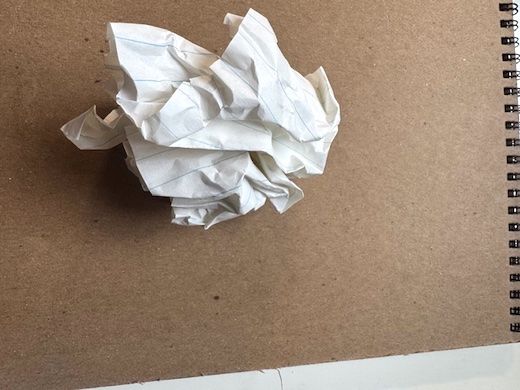
How to do it: Provide pre-written snowball papers or have each student write ideas before everyone crumbles, throws, and reads them. Repeat, so each student reads multiple snowballs. Super fun for repetitively reviewing concepts.
5. Walk and Talk
If you already have a worksheet, transform stationary into multi-sensory.
The Secret: Physical movement increases blood flow to the brain. Rhythmic walking motions help with focus and retention.
How to do it: Partners walk shoulder-to-shoulder while reading or discussing task cards, worksheets, review questions, lab findings, chapter reflections, homework learning, lesson takeaways, and more. Switch speaker and listener roles halfway through.
6. Guess What’s on My Back
The wearable clue-giving game market has soared in popularity!
The Secret: A take on 20 Questions, this high-energy activity motivates students to guess correctly.
How to do it: Each student wears a sign with a word or topic taped to their back or hung backwards on a lanyard. Students move around asking others yes and no questions about the sign on their back in an attempt to discover what it is. Works great with vocabulary terms or “who/what am I” content area topics.
7. Yarn Web
I used to pull out yarn just for art projects. Then I discovered this tactile way to make thinking visible.
The Secret: Students truly feel connections between concepts.
How to do it: Form a circle. Each student receives a card containing a vocabulary term, statement, or concept. A student reads the first card, holds one end of yarn, and tosses the yarn ball to a student holding a related card. Continue forming a web. Use across content areas: food chains, summary creation, synonyms and antonyms, storytelling sequencing, steps in a process, and more. (Here’s a video example.) (Here are some applications in different subjects.)
8. Gallery Walk
Like a visit to a museum … but in your very own room!

The Secret: Similar to stations or centers. Students enjoy independence and active collaboration.
How to do it: Display multiple exhibitions, which may include artifacts, in-process writing drafts, project ideas, quotations, work for peer review, and brainstorming prompts. Students (and the teacher) spend time at a station, leave feedback, and then move on to another exhibit.
9. Carousel
Tired of restless students spinning like tops? Parlay energy into these productive rotations.
The Secret: All it takes is some large blank papers posted around the room.
How to do it: Add prompts for review, reflection, or brainstorming. Send small groups to each station for conversation and contributions to charts. Groups rotate, read previously-written notes, then add their own.
10. Find Someone Who
Traditionally an ice breaker, this mid-class slump-breaker gets students circulating and communicating with peers.
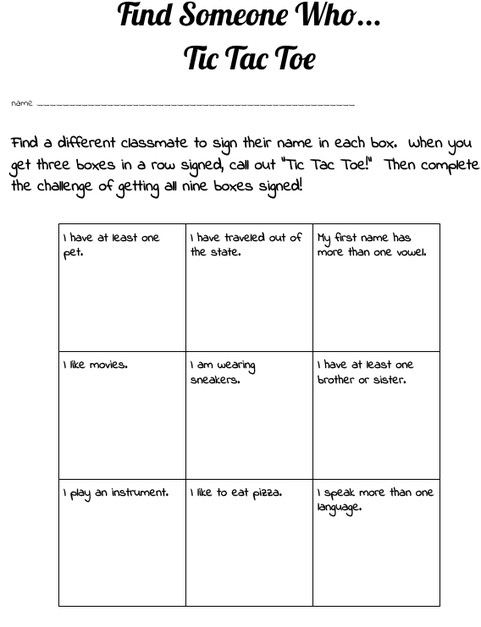 The Secret: BINGO meets scavenger hunt.
How to do it: Create a grid, with each box containing a characteristic or question. Students move around the room, finding peers who know and can share answers to the prompts. Interact about background knowledge, review or introduce new concepts, vocabulary, equations, and more.
Managing Mobility
Still worried about students regaining focus for the rest of class? Model and teach clear protocols for activity expectations and pre- and post-movement transitions. Use a timer to stick to a firm schedule. And, most important, include an accountability element to ensure learning is occurring.
Amp Up Active Engagement
Prevent a mid-class energy dip with movement. Re-energize all students – from the quiet to the restless – to be their best all class long. Move to learn!
Reference:
Schwenke, P., & Coenen, M. (2022, May 31). Influence of Sit-Stand Tables in Classrooms on Children’s Sedentary Behavior and Teacher’s Acceptance and Feasibility: A Mixed-Methods Study. International Journal of Environmental Research and Public Health, 19(11), 6727, 10.3390/ijerph19116727
Kelly Owens is a literacy interventionist who helps middle graders overcome past literacy struggles by building stamina, confidence, and a greater love of learning. A teacher with over 30 years of experience, she has represented Hillsborough Township Public Schools as a NJ Governor’s Teacher of the Year.
Kelly also co-created Buddies for the Birds, which was featured on Emmy Award-winning Classroom Close-up NJ. Kelly earned her Ed.M. from Rutgers University and her Reading Interventionist and Wilson Ⓡ Dyslexia Practitioner Certifications through Saint Joseph’s University. Additional writing credits include published work with The King School Series (Townsend Press), The Mailbox magazine, and MiddleWeb.

