

Brain breaks are an essential classroom tool, ideal for helping your students regulate their energy and focus it where you need it to be: on learning. But many brain break ideas involve noisy activities like dancing to music, and that’s not always an option. Fortunately, we’ve found a collection of silent brain breaks you can use anytime, anywhere—without creating a distraction to others around you.
Jump to:
Why Brain Breaks Are Important
First, it’s important to consider why teachers should use brain breaks at all. Claire English, founder of The Unteachables Academy, says brain breaks are about helping students reset so they’re ready to learn, not just filling extra time in the day.
“I think one of the biggest misconceptions is that brain breaks are simply a fun extra, a reward, or something you throw in when you’ve got five spare minutes at the end of a lesson,” Claire says. “In reality, they’re one of the most effective regulation and classroom management tools we have.”
Brain breaks aren’t about filling time. They’re about bridging the gap between where students are and where you need them to be.
—Claire English, The Unteachables Academy (@the.unteachables)
“When we hear the word ‘regulation,’ we tend to think ‘calm students down.’ But regulation works less like an on/off switch and more like a pendulum,” Claire adds.
“On one end, you’ve got students who are highly activated: loud, social, buzzing, distracted, and difficult to redirect. On the other end, you’ve got students who are flat, disengaged, checked out, and struggling to participate. In the middle sits the sweet spot: the zone where optimal learning can actually happen.”
And that’s the key takeaway, according to Claire: “Brain breaks are effective because they activate the prefrontal cortex, moving students back toward the learning zone. They help students reconnect with the thinking part of the brain and can genuinely save 20 minutes of ‘I’ll just wait’ teaching time.”
Top Silent Brain Break: Beat the Buzzer
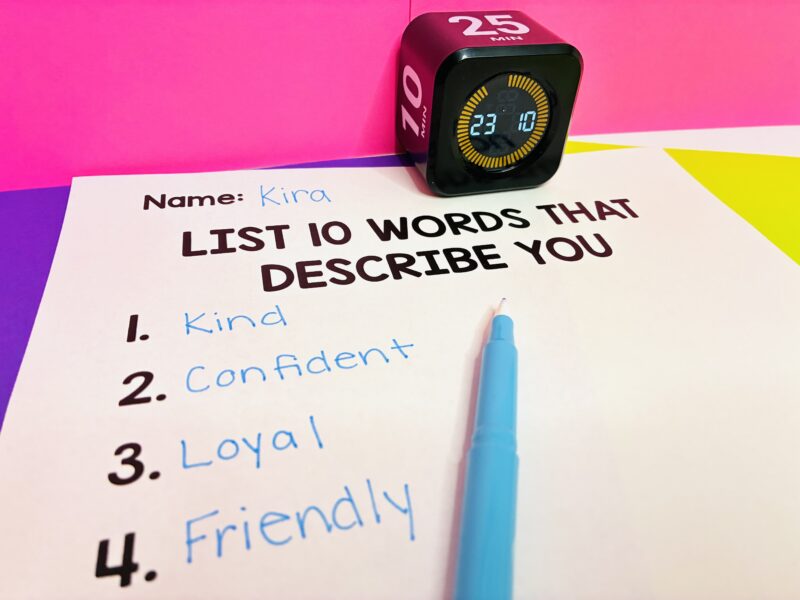
“When the energy needs to come right down, I often reach for silent pen-to-paper activities,” explains Claire. Beat the Buzzer is one of her top picks.
How it works: Give kids one to two minutes to write a list of items (e.g., 10 animals with scales, 10 excuses for being late, 10 words with exactly five letters, etc.). Set the timer and watch them rack their brains and race to finish!
Why it works: “It’s independent. It’s engaging. It requires pen to paper. It gets students turning on their thinking brains. You can then transition to quiet, teacher-led instruction,” Claire promises.
Follow Claire on Instagram (@the.unteachables) for more terrific learning ideas. Then, check out the rest of our silent brain breaks, with options for calming and energizing.
Calming Silent Brain Breaks
Use these quick and easy activities when your class is overexcited and needs a few minutes to calm down, reset, and get ready to focus on learning again.
Listening Lists
Students need paper and pencil for this one. First, set a timer for one minute and have students close their eyes and listen to all the sounds around them. When the timer goes off, give them another minute or two to write down all the sounds they heard. Compare lists to see whose ears are the sharpest.
Quiet Minute
All students close their eyes and put their heads down on their desks, sitting quietly. When they think one full minute (60 seconds) has passed, they raise their hand but keep their head down and eyes closed. When the minute is up, congratulate the student who was closest. (You can extend this for up to five minutes if you want a longer brain break.)
Dandelion Blow
Invite all students to stand up and lead them through this brief meditative exercise. Bend down and pick an imaginary dandelion from the ground. Stand up slowly and hold the dandelion out in front of you, admiring it for a moment. Now, bring it close to your mouth and blow out a long slow breath, sending the make-believe dandelion seeds flying. Watch them go, and make a quiet wish as they do. Repeat this as many times as you like.
Tense and Relax
In this mindfulness brain break, students tense their bodies for 10 seconds, holding their breath. Tell them to squeeze all their muscles as tightly as they can, including their face. When you quietly say “Relax,” students relax all their muscles at once, blowing out a long slow breath. They can imagine all their stress and worries flowing out of their bodies as the muscles release. Repeat three times.
Fill the Page
Give each student a piece of scrap paper and a pen or pencil. Choose a simple shape (circle, triangle, etc.), and set a timer for two minutes. Students work quietly to fill in their page with the shape in variety of sizes, focusing on fitting them in closely and creating a unique pattern.
Coloring Break

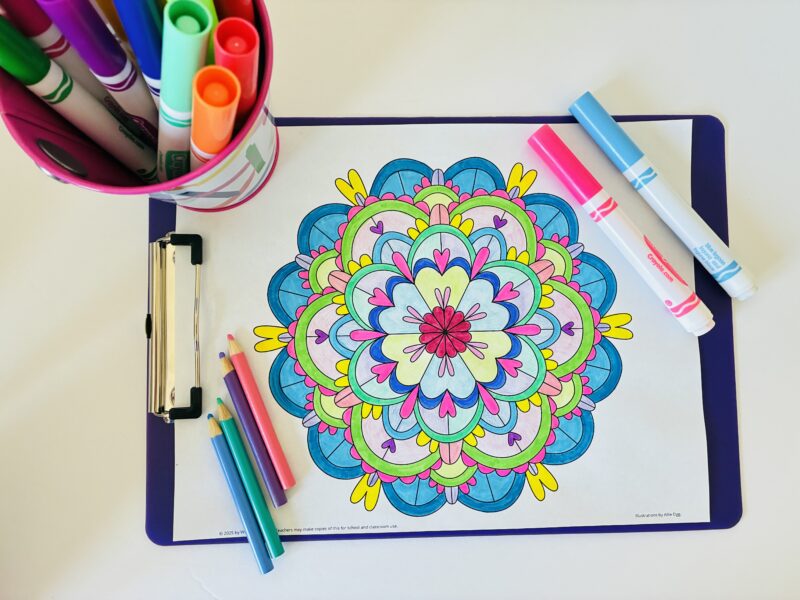
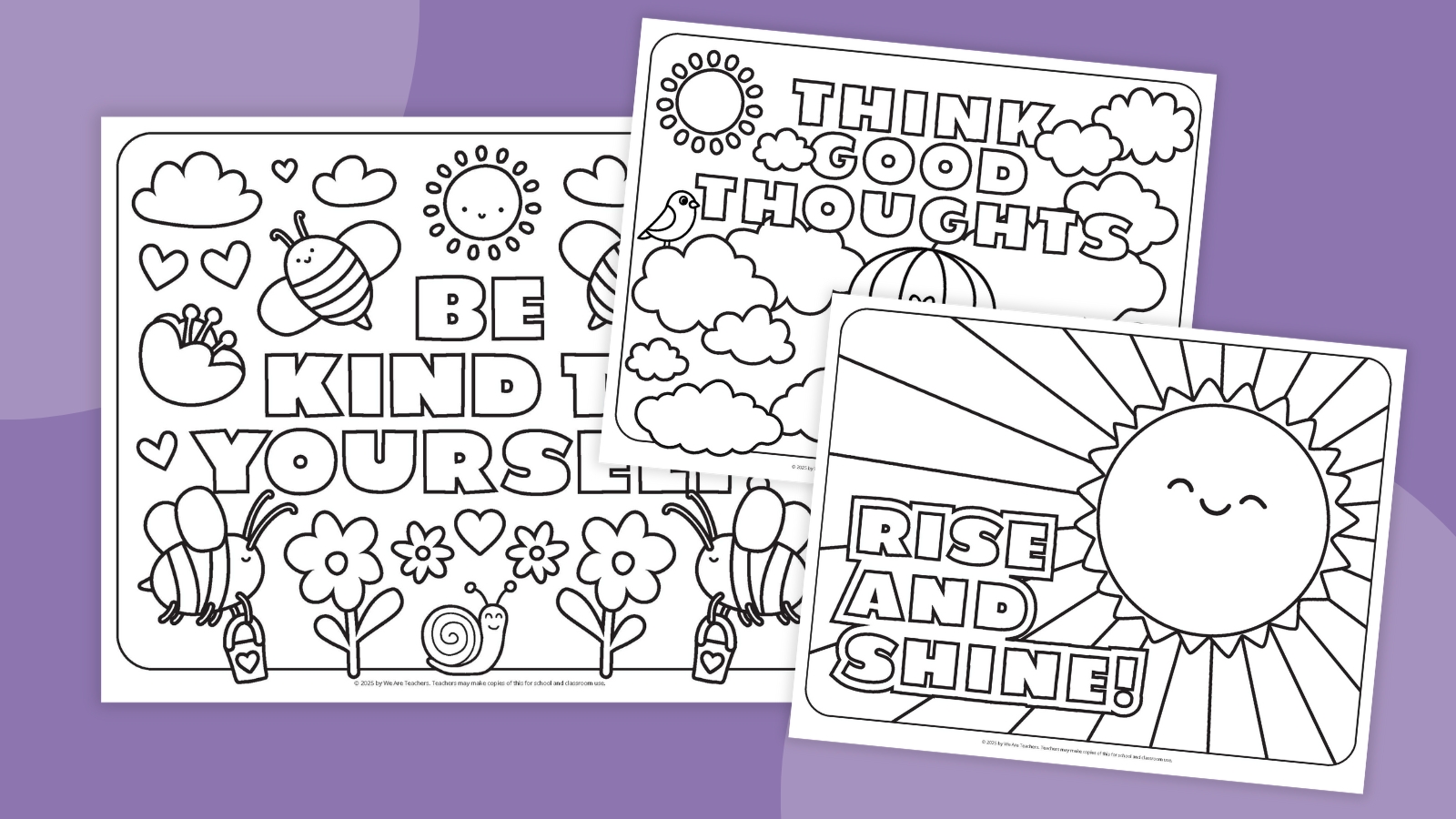
Filling in a coloring page is a wonderful, calming activity at any age. Keep a stack of coloring pages on hand, and spend 5 to 10 minutes working on them when kids need a quiet brain break. Encourage them to color slowly and deliberately, taking time to watch the colors fill the page as they work. Tip: Have them color in the shapes they created during Fill the Page (above)!
Fly Like a Bird
Lead kids through this exercise: Start by squatting on the ground like a bird in its nest. Now, slowly stand up and spread your arms like wings, stretching them nice and wide. Begin flapping your wings gently, building up speed for “liftoff.” Once you’re “in the air,” alternate between flapping and soaring, leaning your body from side to side. Finally, slow your flapping down so you can “land,” finishing by squatting down in your nest again.
Box Breathing
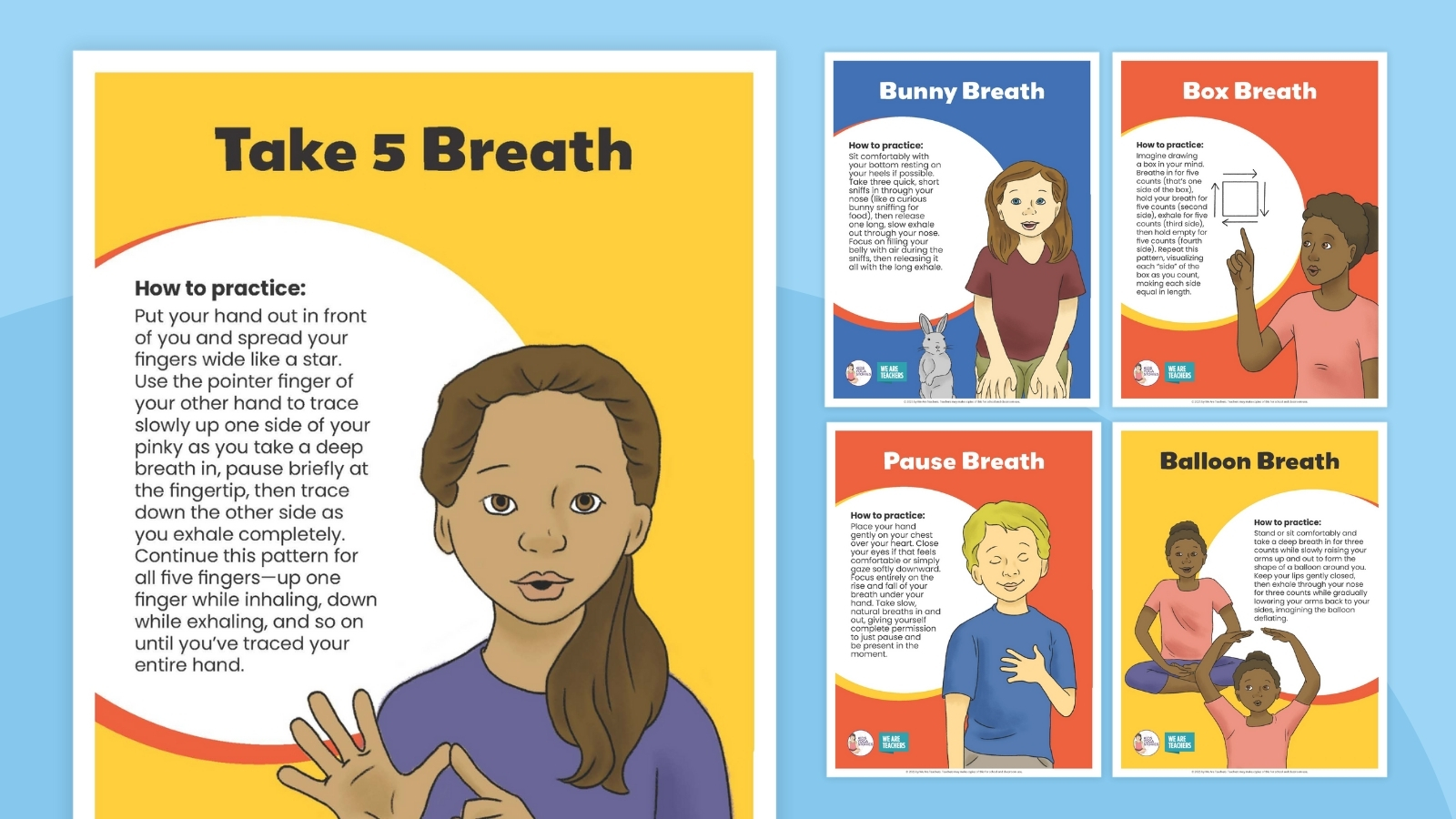
Teach students to use mindful box breathing when they need a quiet, calming moment. As they trace the four sides of a square or rectangle, they breathe in (side 1), hold their breath (side 2), breathe out (side 3), and hold empty (side 4). Tip: Have students trace their desktop to make the visualization easier.
Doodle Pass
Each student starts by drawing a simple doodle on a piece of paper. After about 30 seconds, students pass their paper to another student, who adds to their doodle. Continue this for as long as you like, then make sure everyone gets their original paper back so they can see the end result.
First and Last Letter
Students start their list with any word they like (give them a set number of required letters like three, four, or five). Then, each word in their list must start with the last letter of the previous word. For example, they might write “sing, girl, lake, easy, yuck, king …” and so on. Give students a few quiet minutes to work, and see who can come up with the longest list.
Energizing Silent Brain Breaks
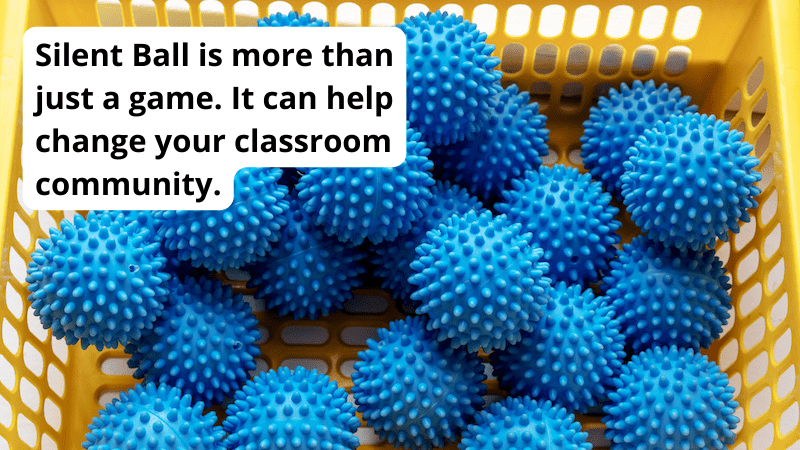
Silent Ball
This one is so simple but so effective. Kids toss a ball around the classroom, and there are only two rules: 1. If you drop the ball, you’re out of the game. 2. NO NOISE. If you talk or otherwise break the silence, you’re out. Keep playing until only one player remains. Students will beg to play this one again and again!
Learn more: Is Silent Ball the Best Classroom Management Tool You Never Knew Existed?
Silent Cheer
Celebration doesn’t have to be loud! Invite kids to stand up and cheer—without making a sound! They can jump around, wave their arms, and show their excitement any way they want, but they must stay completely quiet. This is a real energizer that’s perfect when you need to keep the noise levels down.
Mirror Mirror
Students find a partner and stand facing each other. In the first round, one student is the leader and the other the follower. The leader moves their body around, and the follower mirrors their movements as best as they can. After about a minute, switch roles and keep on going. Challenge kids to stay completely quiet—after all, reflections can’t talk!
Silent Dance Party
Who says you need music to dance? Invite kids to imagine their favorite songs, then show off their moves in total quiet. This is another terrific way to work out the wiggles without causing a ruckus.
Rock, Paper, Scissors Battle
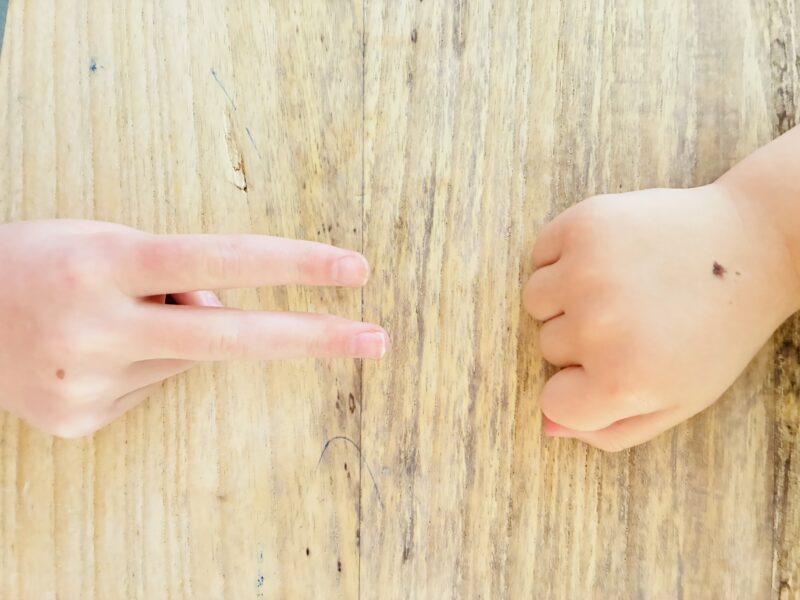
Students stand, then pair up and face off in a silent game of Rock, Paper, Scissors. The loser of each battle sits down, while the winners find a new opponent and battle it out again. Continue until one student is the final victor. (You can even celebrate them with a silent cheer!). “This brain break is particularly useful when students are restless and won’t sit in their chairs,” Claire notes. “It gets them up and moving, and then without saying a word, you will have them back in their seats to transition to calm, teacher-led instruction.”
Whiteboard Write-Up
Write a simple prompt on the whiteboard or a piece of chart paper. Have your class line up, then take turns going up to the board in silence to write a very short response (just a word or two) to the prompt. Make it more challenging by requiring each student to write something different. Possible prompts:
- What are you thankful for today?
- Write one word that describes your best friend.
- What’s something you’re afraid of?
- What song always makes you happy?
- If you could turn into any animal, what would it be?
FREE SLIDES
Check out our free engaging writing prompts for high school students!
Silent Line-Up
Give students a specific direction for lining up, such as shortest to tallest, youngest to oldest, or by when their birthdays are. The trick is they have to figure out how to do it without saying a single word to each other. This takes some creative problem-solving skills, and it promotes cooperation and teamwork too.
Memory Mime
Students stand in a circle so everyone can see everyone else. At the word “Go,” each student mimes something they did earlier today. (Examples: walked the dog, brushed their teeth, played on the swings, etc.) As students perform their own mime, they also look around the circle to note what others are doing. After about 60 seconds, ask students to share what they think others were doing. This silent brain break strengthens memory and observation skills.
Silent Emotions
Students don’t need to stand for this one, though they can. Read them a list of emotion words one at a time (or write them on the board if you want to be completely silent). For each emotion, kids respond by making a face to represent that emotion. Encourage them to exaggerate their responses, but remind them not to make any noise!
Don’t forget to grab your free set of Brain Breaks for Kids cards!
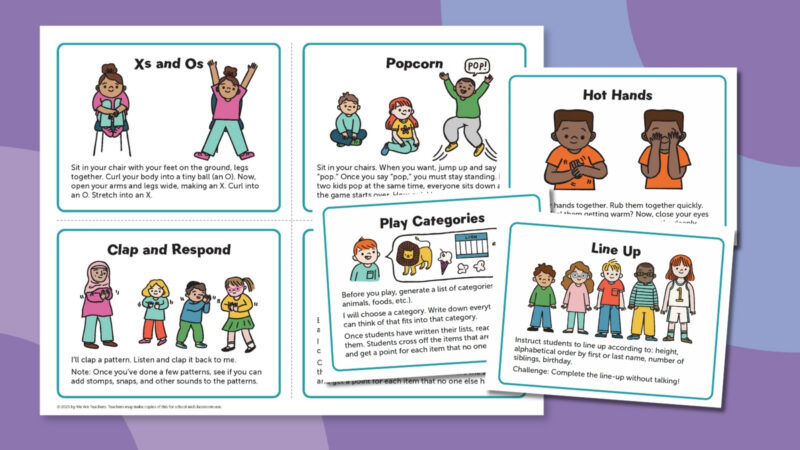
This printable set includes different brain breaks you can try with students of any age. Let students pick one at random the next time your class needs to refocus! Just follow the link below and fill out the form to get your free set.
Plus, check out these Simple Mindfulness Activities for Kids!

