

French Polynesia’s 118 islands are scattered across one of the most remote and biodiverse stretches of ocean on Earth. Its reefs shelter fish, sharks, whales and turtles, while coastal lagoons support communities that have lived along the sea for generations.
Last year, French Polynesia made a historic move to protect all of its waters — an expanse roughly the size of the European Union. Today, they went further.
The French Polynesian government announced that 520,000 square kilometers (200,000 square miles) of ocean surrounding the Austral and Marquesas Islands — two of the most biologically rich archipelagos on Earth — would receive the highest level of protection, where no mining, trawling or industrial fishing is permitted.
The move marks the single largest national contribution to the global goal of protecting 30 percent of the planet’s lands and waters by 2030, said Maël Imirizaldu, a regional lead for the Blue Nature Alliance — a global coalition co-founded by Conservation International.
“This cements French Polynesia’s place as the global leader in marine conservation,” he said. “Their determination to preserve the ocean demonstrates that it is not simply a commodity, it’s the matrix that sustains all of us.”
Momentum for the protections has been building for over a decade. Alongside the government, local fishers and conservationists, Conservation International worked to make this moment possible through the Blue Nature Alliance and in partnership with Pew Bertarelli Ocean Legacy.
What finally brought it together was a new government that reframed ocean protection not as a policy, but as a sacred duty to find common ground between conservation and sustainable development.
The new protections reflect that shift. They carry the highest level of formal conservation status — IUCN Category 1 — meaning fishing and resource exploitation are tightly controlled. Artisanal fishing, central to local food security and culture, will be preserved.
“The new protections show the country is determined,” Imirizaldu said. “Now, we must make it last.”
To fund long-term management, a group of funders, known as the Te Moana Collective — including the Blue Nature Alliance — has committed US$ 15 million in seed funding for a conservation trust fund. The goal is to give the government and local communities the resources to steward these waters autonomously for the next 15 to 20 years. The Blue Nature Alliance has further committed to establishing a long-term financing mechanism to ensure steady funds for the protections.
The Marquesas and Austral archipelagos, where the new protections lie, host marine species found nowhere else on Earth, such as the Marquesan domino damselfish. They are also critical habitat for endangered sharks, whales, dolphins, sea turtles, as well as a key spawning ground for tuna.
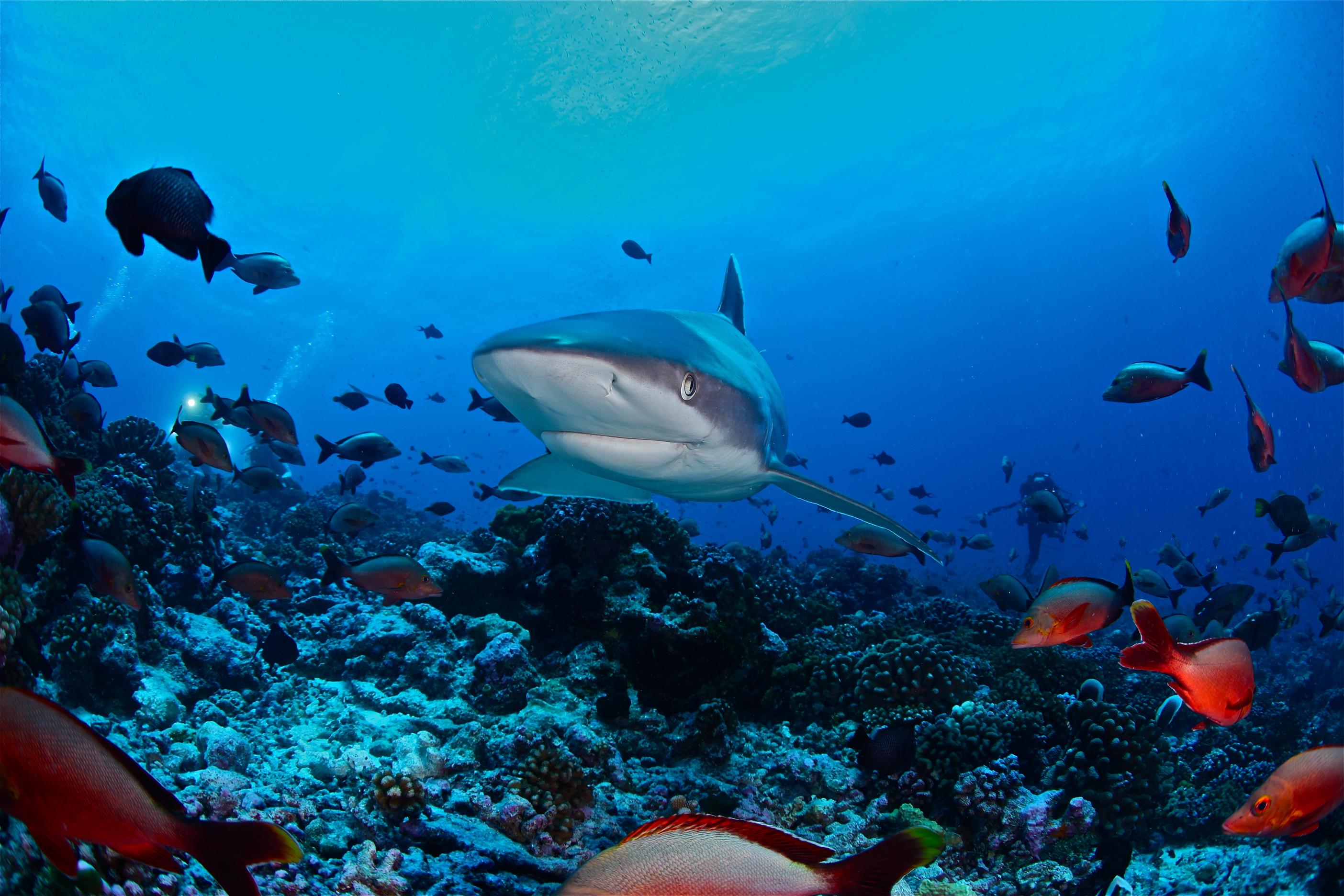
That abundance has not gone unnoticed. Foreign industrial fishing fleets have long operated just outside the island nation’s marine boundary, using fish aggregation devices that drift through protected waters, harvesting fish before the devices are collected beyond the boundary. Those same devices frequently wash ashore, polluting beaches and damaging reefs.
The biggest threat, however, is climate change. Rising seas are already polluting freshwater that islanders depend on, while salting the soil, making it nearly impossible to grow crops. Marine heatwaves, meanwhile, have led to staggering amounts of coral bleaching. And an increase in cyclones has been linked to outbreaks of the crown-of-thorns starfish, a species that feeds on coral and, when populations explode, devastates entire reef systems and the fish communities depend on.
For coastal families who rely on fishing for food, the losses are not abstract. They show up in empty nets and shrinking catches.
French Polynesia maintains what is considered one of the most sustainable fisheries model in the Pacific, Imirizaldu said, with low commercial catch volumes, rigorous monitoring and social rights for workers at sea. The new protections are designed to defend that foundation against the forces eroding it and goes alongside promises from French Polynesia to continue to improve the model and prioritize value over volume.
They also send a message. As many of the countries most responsible for climate change have been slowest to act, the island territory is making one of the most consequential conservation commitments on Earth.
“French Polynesia is showing the world what ocean stewardship actually looks like,” Imirizaldu said. “The ocean is what sustains us, connects us, makes us resilient. That’s the model.”
The new protections are possible thanks to funding and support from the Te Moana Collective, including Becht Foundation, Bezos Earth Fund, Blue Nature Alliance, Blue Marine Foundation, Bloomberg Ocean Fund, Oceans 5, Pew Bertarelli Ocean Legacy and the Wyss Foundation.

