

If you’re going to have something unhealthy, is there anything you can eat with it to help mitigate the damage it may cause?
If you compare the artery function of vegetarians and meat-eaters, the healthy ability of arteries to dilate and let more blood flow is significantly better among those eating a vegetarian diet. And not just by a little—we’re talking four times better, as you can see below and at 0:24 in my video Foods to Help Protect Your Arteries from Saturated Fat.
Vegetarians do tend to be younger, smoke less, be slimmer, and have lower rates of diabetes, high cholesterol, high blood pressure, and heart disease. But the researchers controlled for all that and only let healthy nonsmokers into the study. They also recruited a group of meat eaters who were similarly slim, with comparable blood pressure and nearly identical cholesterol levels. Yet the really healthy cohort of omnivores still got their arteries handed to them by the vegetarians, and the longer someone was meat-free, the better. The degree of superior artery function correlated with the number of years eating meat-free. Instead of their artery function worsening over time as they aged, it got better the longer they ate that way, as you can see below and at 1:03 in my video.
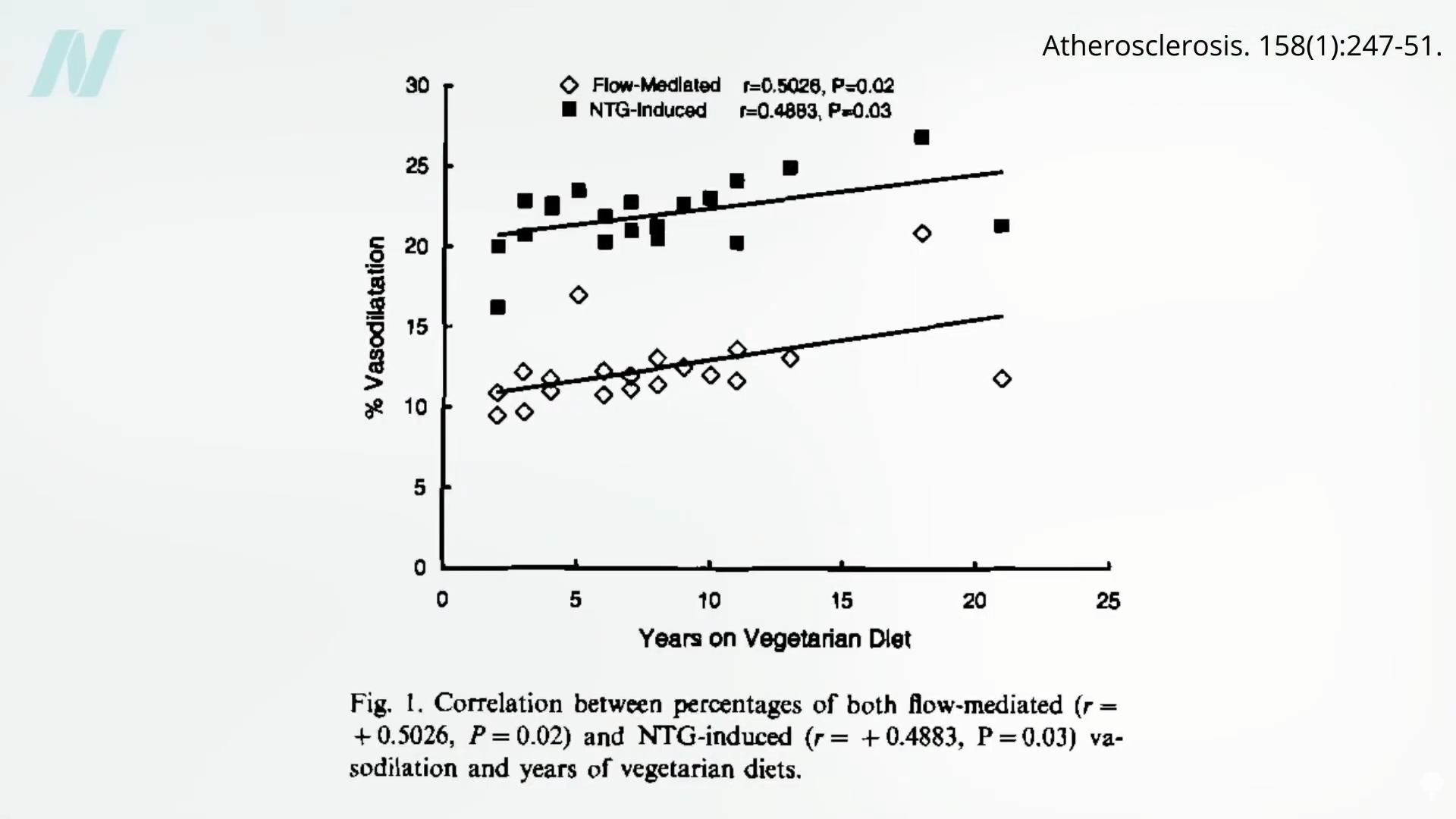
This suggests that vegetarian diets, on their own, have a direct beneficial effect on artery function and may help explain the lower rates of atherosclerosis and cardiovascular mortality.
Since researchers were able to control for other known risk factors, they figured it must be the food. But what aspect of the food? Is it simply the absence of meat’s harmful effects? Or could it also be that the vegetarians are eating more whole, healthy plant foods? For example, they could be eating up to a serving more vegetables per day.
Researchers compared two junky meals—an Egg McMuffin, Sausage McMuffin, and hash brown patties to Frosted Flakes—and found the fatty fast-food meal impaired artery function within hours, but the sugary cereal meal didn’t. They blamed the fat, but it may just be the animal fat, since high-fat whole plant foods like nuts don’t have the same effect. In fact, a systematic review of all the randomized controlled trials on the effect of nut consumption on artery function shows that nuts actually result in significant improvements over time.
Enough to counter the artery-crippling effects of a salami sandwich? The answer is yes for walnuts, but no for almonds.
Just like some fruits are better than others, like blueberries over bananas, some nuts are better than others. Walnuts appear to be the blueberries of nuts.
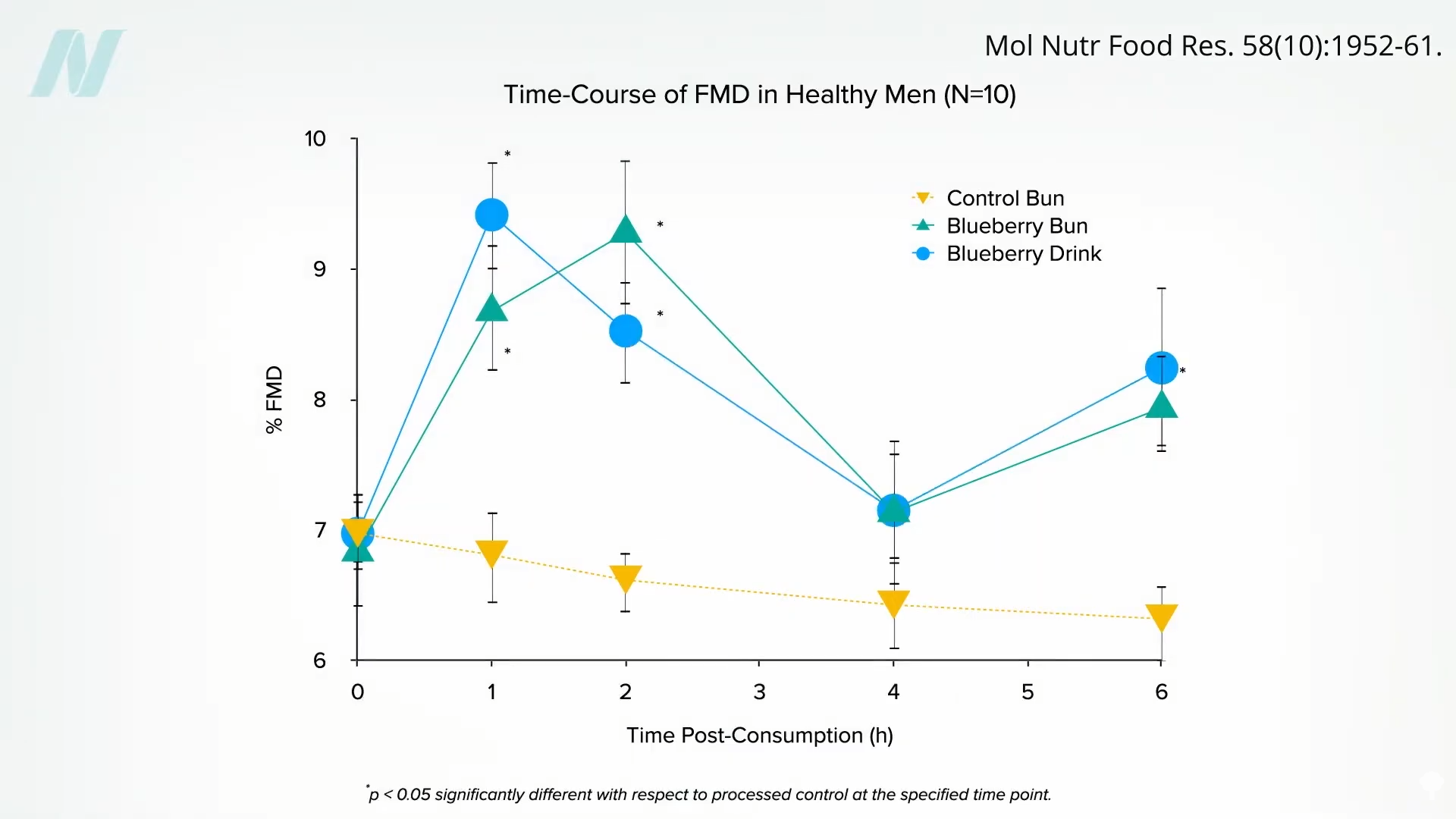
What about the blueberry of berries? That would be blueberries themselves. A randomized, controlled crossover trial tested the effects of cooked blueberries, raw blueberries, or no blueberries at all. Researchers fed people buns made out of white flour, eggs, butter, and salt—filled with mostly sugar and eggs—and saw a gradual drop in artery function over the next six hours. But when the equivalent of a cup of wild blueberries was added to that same bun, there was a big boost in artery function, almost as if the blueberries had been just mixed with water, as you can see below and at 2:57 in my video.
About the same amount of strawberries failed to rescue artery function from the likes of two cheese blintzes, whipped cream, sugary syrup, egg, and bacon, but that is quite the heavy load to bear.
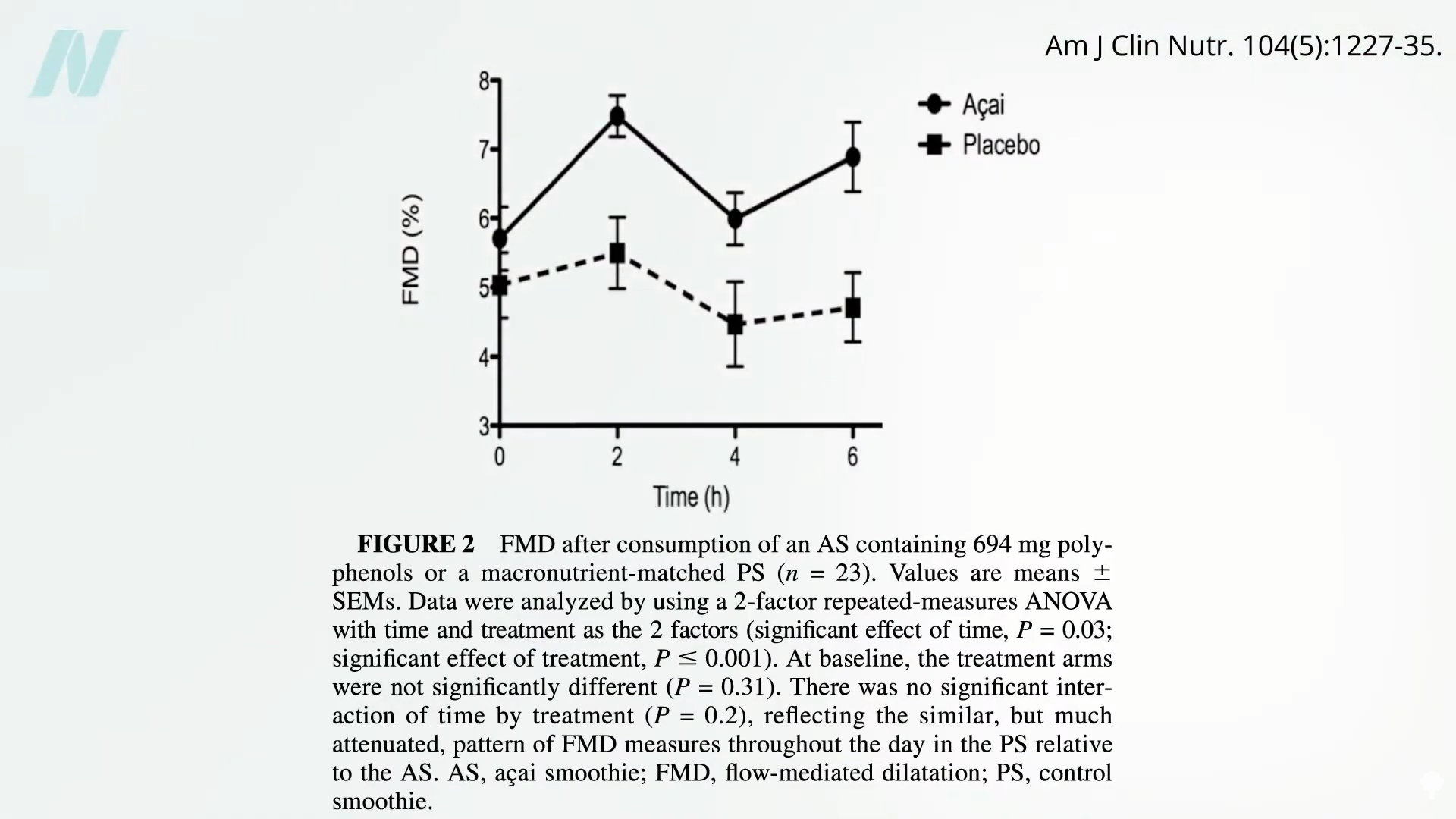
What about testing açai berries against a meal with a similar amount of fat? One and a half frozen açai smoothie packs blended with half a small banana in water significantly rehabilitated arterial function compared to a control smoothie with the same banana and water, colored to look like the açai version. (Though, obviously, it would have tasted different.) You can see the results below and at 3:20 in my video.
Another group of researchers went all out and performed a double-blind, randomized, controlled trial with raspberries. They measured artery function at 2 hours and again at 24 hours after participants drank either a smoothie made with frozen red raspberries (about ¾ cup or about 1½ cups, blended with water) or a placebo drink designed to match both color and taste. The fake berry drink had no effect on artery function, but both raspberry drinks did, as you can see below and at 3:56 in my video.
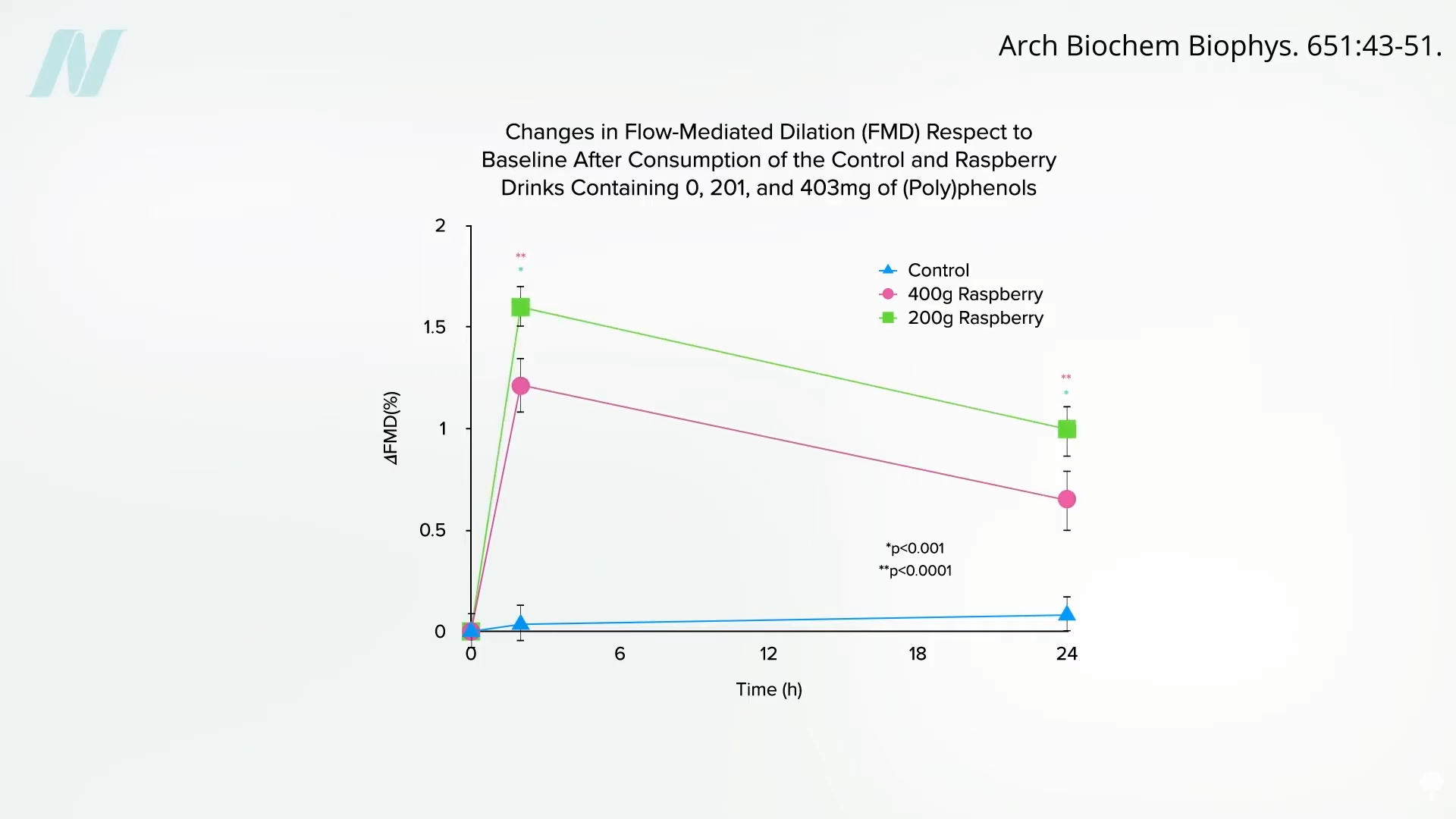
Note the ¾ cup dose seemed to work just as well as the 1½ cups dose, which is what you see with blueberries: The benefits plateau after about a cup.
The bottom line is that consuming “dietarily achievable amounts of red raspberries acutely improves” artery function for up to 24 hours. Yes, that’s true, but by the end of the day, you may only be up by about 1%. At a population level, however, each 1% increase is associated with a 12% reduction in risk of a cardiovascular event like a heart attack or stroke. All from just having a berry smoothie.
What about berry juice? Researchers tested five different concentrations of cranberry juice, along with a placebo control evidently indistinguishable in color and taste. The 25% cranberry juice drink gave a little bump to artery function at two hours; the 50% juice was still working eight hours later. The other three—the 75% juice, the one that was nearly pure juice, and the ultraconcentrated juice—also improved artery function within hours of consumption, as you can see below and at 4:52 in my video.
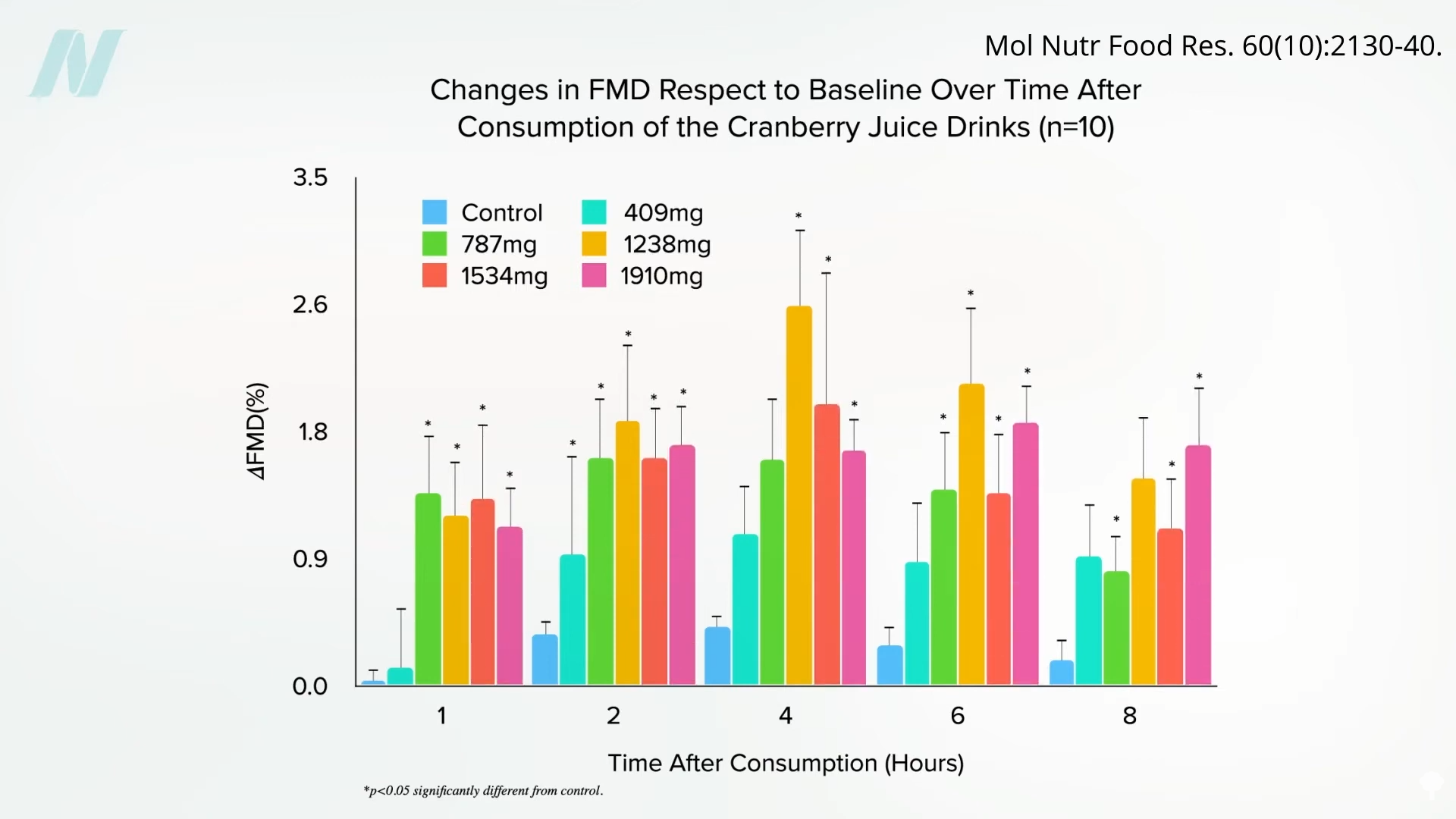
But this, like that last raspberry study, just involved straight berries without some artery-crushing meal.
Would berry juice be able to stop artery dysfunction caused by a high-fat meal, which can reduce artery function within hours? Researchers created a cocktail of grapes, blueberries, strawberries, lingonberries, and black aronia berries, but found no significant change after the high-fat meal. (Of course, drinking the berries alone would likely improve artery function, but it’s better than nothing.)
Well, what about drinking something a little less exotic than black aronia berries, like orange juice? Study participants were given a high-fat meal of ham and cheese croissants, along with either a cup of water, orange juice, green tea, or red wine. Their arteries didn’t much like the croissants, and orange juice was useless, as was a cup of green tea and the red wine, so, it’s probably best not to eat ham and cheese croissants in the first place.
In fact, drinking orange juice with a fatty meal could actually make things worse. When study participants were given bacon and cheese muffins with or without orange juice, researchers found that the orange juice led to a longer period of elevated fat levels in the blood. This may be because the body preferentially burns for energy all the rapidly absorbed free sugars in the juice—meaning sugars not encased in cell walls as they are in whole fruit.
Doctor’s Note
This is the third in a three-video series on fast food. If you missed the first two, check out How a Single Meal Can Cripple Your Arteries and Lungs and Can Exercise Counteract a High-Fat Meal?.
If you want to go deeper into the effects of specific foods, see the related posts below.

