

This story is a collaboration between Grist and 9 Millones, an independent news network that amplifies Puerto Rican voices. The videos and photography in this story were supported by the journalism nonprofit the Economic Hardship Reporting Project. Lee este artículo en español aquí.
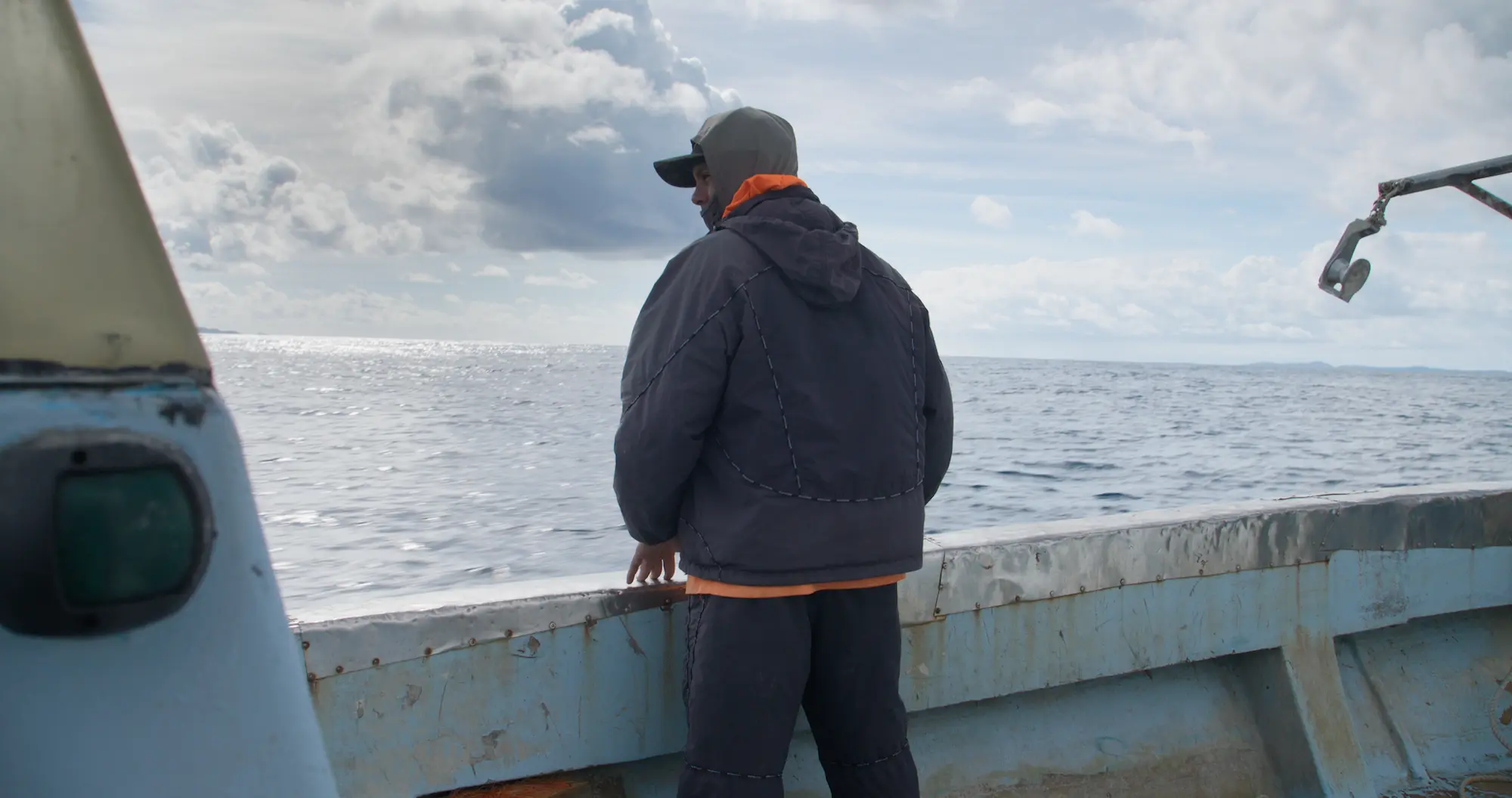
Tomás Ayala leaps off the side of a small dinghy and into the dark swell of water. His arms slice through the waves like a cutlass as he dives deep into the bay off the southeastern coast of the Puerto Rican island of Culebra. Armed with a spear gun, Ayala swims even deeper as he scans the perimeter of the reef for his target. It doesn’t take long. Mere seconds later, a cloud of blood darkens the water around a large hogfish — proof enough that he found his mark. He snatches up his catch and makes for the surface.
Back safely on his boat, Ayala drops the reef fish into a cooler, guns the motor, and heads for shore. It’s late Wednesday afternoon in mid-May. Ayala has been out since before dawn. The 50-year-old hails from a family of fishers — he started free diving for reef fish, laying lobster traps, and catching octopus when he was just eight years old, following in the footsteps of his brother and grandfather. Before long, he arrives at his destination — a concrete dock leading to a villa pesquera, a “fishing village” or “fish landing center,” a site with key infrastructure for Culebra’s community of traditional fisherfolk. Inside are cleaning stations, freezers, a saltwater tank for storing lobsters, a mélange of other equipment, and a bustling market.
The villa pesquera provides the equipment dozens of local fishers need to sustain their work, and also a space to convene: Every week, the association that co-manages the space comes together for updates and to share their challenges and successes.
Ayala is greeted by Nicolás Gómez Andújar, a marine scientist whose dad is a local fisher, and they prepare the space for their next gathering. The members will discuss the federal permits they’re hoping to get for a native oyster farm, the effort to clear droves of abandoned fishing gear from Culebra’s seabed, and anything else someone may want to bring to the group. While they talk, they’ll eat a seafood mofongo, a popular shrimp-and-plantain dish.
For decades, Culebra’s villa pesquera lay dormant, an abandoned facility shut down by the Puerto Rican government in 2002 because of political infighting, loss of government funding, and conflict between local fishers. In 2021, when Ayala and Gómez Andújar decided they wanted to resurrect it, dozens of their friends, neighbors, and local businesses donated time and labor to restore the dilapidated structure. It took roughly four years of organizing, fundraising, and securing permits for it all to come together.
Last October, they formally reopened the fish market to much fanfare. Hundreds of people, on an island home to less than 2,000, showed up to help celebrate. They ate, laughed, and danced together. “We created what we dreamed of,” said Ayala.
Hidden behind their success, however, lies a story of entrenched government divides and a growing need to rehaul how fishers are represented across the Puerto Rican government. The very survival of small-scale fishing and its unsung role in Puerto Rico’s food system depends on it — especially in the face of climate change, as rising temperatures make it harder and harder to fish for a living.
In the early to mid-1960s, amid a push to modernize commercial fishing boats and docking facilities, the Puerto Rican government formally established villas pesqueras, turning informal fishing spots into regulated, communal spaces. In 1979, Corporación para el Desarrollo y Administración de los Recursos Marinos, Lacustres, y Fluviales, or CODREMAR, the centralized agency tasked with handling all research, education, and conservation efforts related to commercial fishing, was born.
By the early ‘80s, the government began promoting the implementation of “fisher associations,” or organized local groups tasked with controlling their own seafood sales — partly to break up emerging seafood monopolies — and co-managing the villas pesqueras alongside municipalities. What happened next is not well documented. Research by University of Puerto Rico at Mayagüez social anthropologist Manuel Valdés-Pizzini has found fishers still struggled to keep control of the landing centers because of political infighting and dwindling institutional support — the same dynamics that ultimately led to the closure of Culebra’s fishing village.
“There is a lot of politics in this,” said Valdés-Pizzini. “The landing center is just one piece of infrastructure in the whole fishery, culture, and society.”
In 1990, CODREMAR was dissolved after the Puerto Rican government deemed its oversight of the fishing sector inefficient, leaving its core responsibilities to be divvied up between two agencies — Puerto Rico’s Department of Agriculture and Department of Natural and Environmental Resources. Nowadays, experts and fishers alike say the governance of the industry in Puerto Rico is little more than a patchwork, piecemeal approach splintered across just about every layer of government. Villas pesqueras are typically co-managed by local fishing associations, independent fishers or businesses, municipalities, and the Department of Agriculture. Some of the equipment inside, such as storage lockers, is overseen by the Department of Agriculture, and fishers’ licenses, boat ramps, and other permitting approvals are largely regulated by the Department of Natural and Environmental Resources.
The list of government stakeholders and regulators also includes the Puerto Rican Department of Economic Development and Commerce, the Army Corps of Engineers, the U.S. Coast Guard, the U.S. Environmental Protection Agency, the U.S. Fish and Wildlife Service, the National Oceanic and Atmospheric Administration, the Caribbean Fishery Management Council, the Puerto Rico State Historic Preservation Office, and the Puerto Rico Planning Board, among others. For the fishers who are trying to adapt to global warming, such as those in Culebra, the red tape just gets in the way.
A forthcoming analysis by The Nature Conservancy Puerto Rico, previewed exclusively by Grist and 9 Millones, found that the burdens of this existing regulatory process as it relates to marine aquaculture “can be disproportionately high for small-scale producers.” Permits and authorizations are not only notoriously unwieldy for small fishers, but can also cost hundreds to thousands of dollars, according to the report. For some, as in the case of traditional shellfish farmers, the upfront and operating costs can be far more than what their peers in other parts of the U.S. pay.
Puerto Rico’s fishing sector also differs from the rest of the U.S. in that it’s primarily made up of small-scale, artisanal fishers rather than industrial-scale operations. Fisheries account for a marginal slice of the archipelago’s economy. Commercial fishing falls within Puerto Rico’s agriculture, forestry, and fishing sector, which accounted for just 0.69 percent of Puerto Rico’s gross domestic product in 2024. Yet in the most vulnerable island communities, where food is almost exclusively imported, poverty rates are more than double the national U.S. average, and resources are scarce, the expansion of local fishing could serve as the cornerstone of long-term food security and sovereignty.
A recent report found that just 12 villas pesqueras contribute more than $3 million every year to Puerto Rico’s economy. And that contribution is poised to grow, as more fishers advocate for a streamlined permitting system, better industry and cultural valuations for small-scale operators, and a centralized regulatory landscape overseen by one government office. Without those changes, they face an uncertain future.
“Fishers are embedded in this complex web with the Department of Agriculture and Department of Natural and Environmental Resources. These different governmental institutions, they don’t seem to be talking to each other. There’s a disconnection,” said Luis Alexis Rodríguez Cruz, a food systems researcher and science communicator who works with the Caribbean Agroecology Institute on fisheries. “In Spanish we say, ‘Entre la espada y la pared’ — between the sword and the wall. It’s like, you want to do something, because this agency is requiring you to do [it], often this other agency is not requiring it, or somewhat counters it.”
Even as distrust between fishers and the government deepens, the effects of climate change are pushing fishers toward that very system for relief.
Rising seas driven by a warming planet have continued to encroach upon shorelines, wetlands, and coastal infrastructure throughout Puerto Rico. Erosion has been identified in more than a third of Puerto Rico’s beaches. The situation is so dire that in 2023, the Puerto Rican government declared a state of emergency over the issue, a move that included earmarking $105 million in federal funds to implement nearly two dozen measures to minimize the effects. Late last month, Puerto Rico’s Governor Jenniffer González-Colón declared yet another state of emergency over coastal erosion. On May 27, days before the start of the Atlantic hurricane season, González-Colón signed an executive order that described the “critical condition” of erosion as only having “accelerated” because of rising sea levels, storm surges, atmospheric phenomena, and the landscape vulnerability of several Puerto Rican coastal communities.
Since 1901, the average ocean temperature around Puerto Rico has increased by nearly 2 degrees Fahrenheit. This has scrambled the region’s marine biodiversity — killing off coral reefs and seagrass, shifting which species are more abundant, and affecting the quality of the catch. But the surging frequency of intensified hurricanes hitting the Caribbean remains the biggest climate stressor for Puerto Rico’s fishing sector.
In 2017, Hurricane Maria slammed into Puerto Rico as a Category 5 storm, devastating the archipelago and plunging parts of it into close to a year without power. The hurricane was also devastating for small fisheries, which lost an estimated $17.8 million in damaged gear, boats, and shoreside infrastructure, including villas pesqueras. Following the storm, the Puerto Rican government set out to rebuild and reconstruct the fishing hubs with funding from the Federal Emergency Management Agency and NOAA, but quickly ran into issues. Aid was repeatedly delayed. Some fisherfolk didn’t receive any federal support for years and were forced to operate in makeshift markets. Others rebuilt, bit by bit, on their own dime.
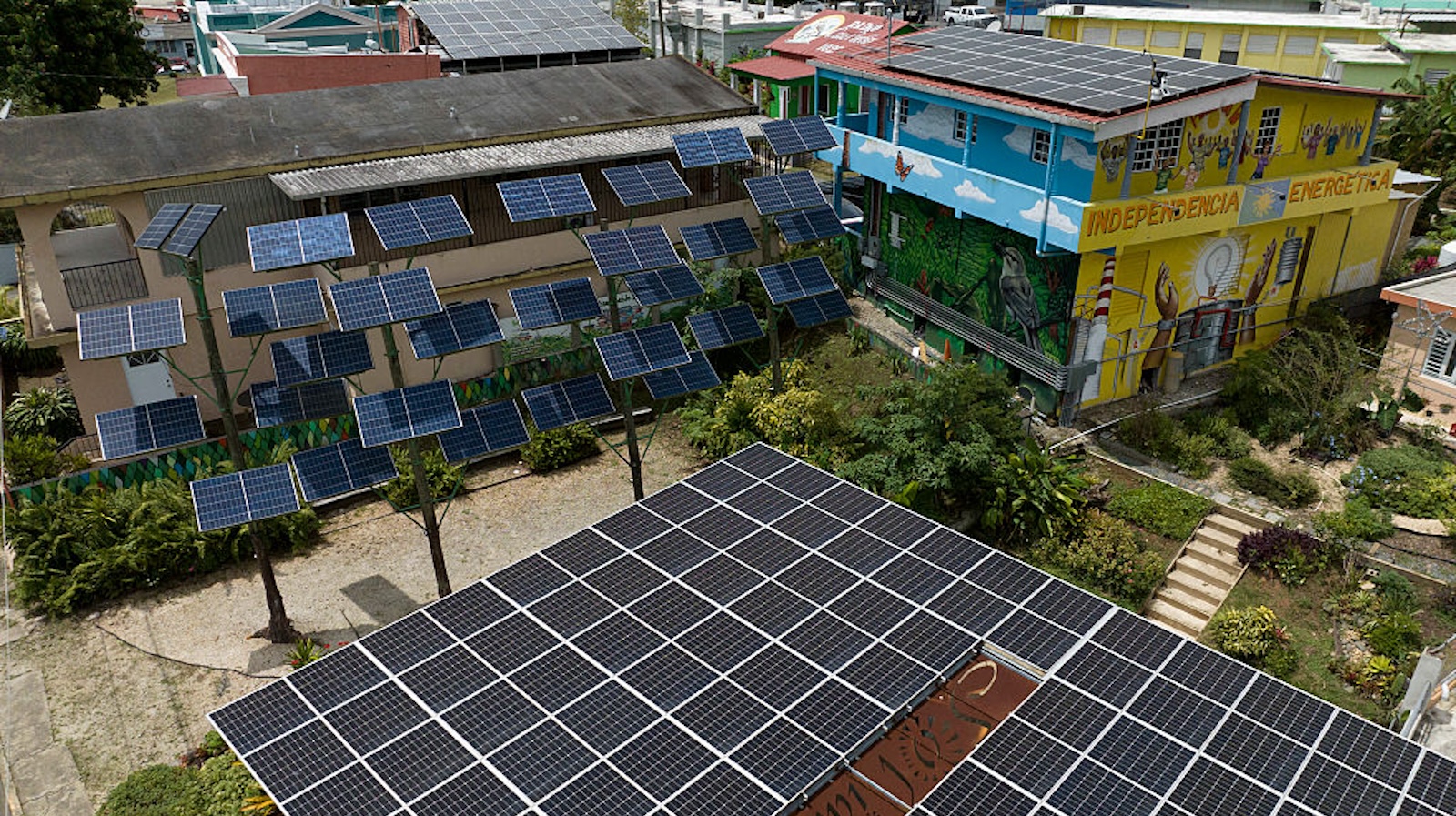
Although no official record of how many structures were lost to the storm currently exists, a 2026 survey by the nonprofit Conservación ConCiencia found that 41 villas pesqueras are actively selling seafood, down from approximately 63 in the ‘80s, and the conditions of those facilities vary widely. The number of total active villages is unknown to the Puerto Rican government. The Department of Natural and Environmental Resources told Grist in an email that the agency currently has 1,646 “bonafide and licensed fishermen on record.” However, there tends to be discrepancies between the number of fishers licensed and those that show up in government data captured by multiple agencies.
In the small beach town of Ceiba, which hugs the eastern tip of Puerto Rico’s mainland, Beverly Román Figueroa and her partner Ernesto Correa Torres have been fighting battle after battle with local authorities over their villa pesquera — battles that began when Maria hit.
After the storm severely damaged Ceiba’s fishing hub, Román Figueroa says they were told by the mayor that the municipality had been allocated a little over $124,000 of Federal Emergency Management Agency aid to pay for the repairs. But when she and Correa Torres would visit the site — even as late as 2023, after a lengthy contract dispute over the villa pesquera’s management — they found little evidence that any work had been done. Photos and videos taken in March of 2023 show destroyed pipes and waterlogged floors and walls — a largely unusable space.
“What they handed me was a neglected property,” said Correa Torres in Spanish. “This isn’t mine; this belongs to the people of Puerto Rico and to the fishermen.”
 9 Millones “/>
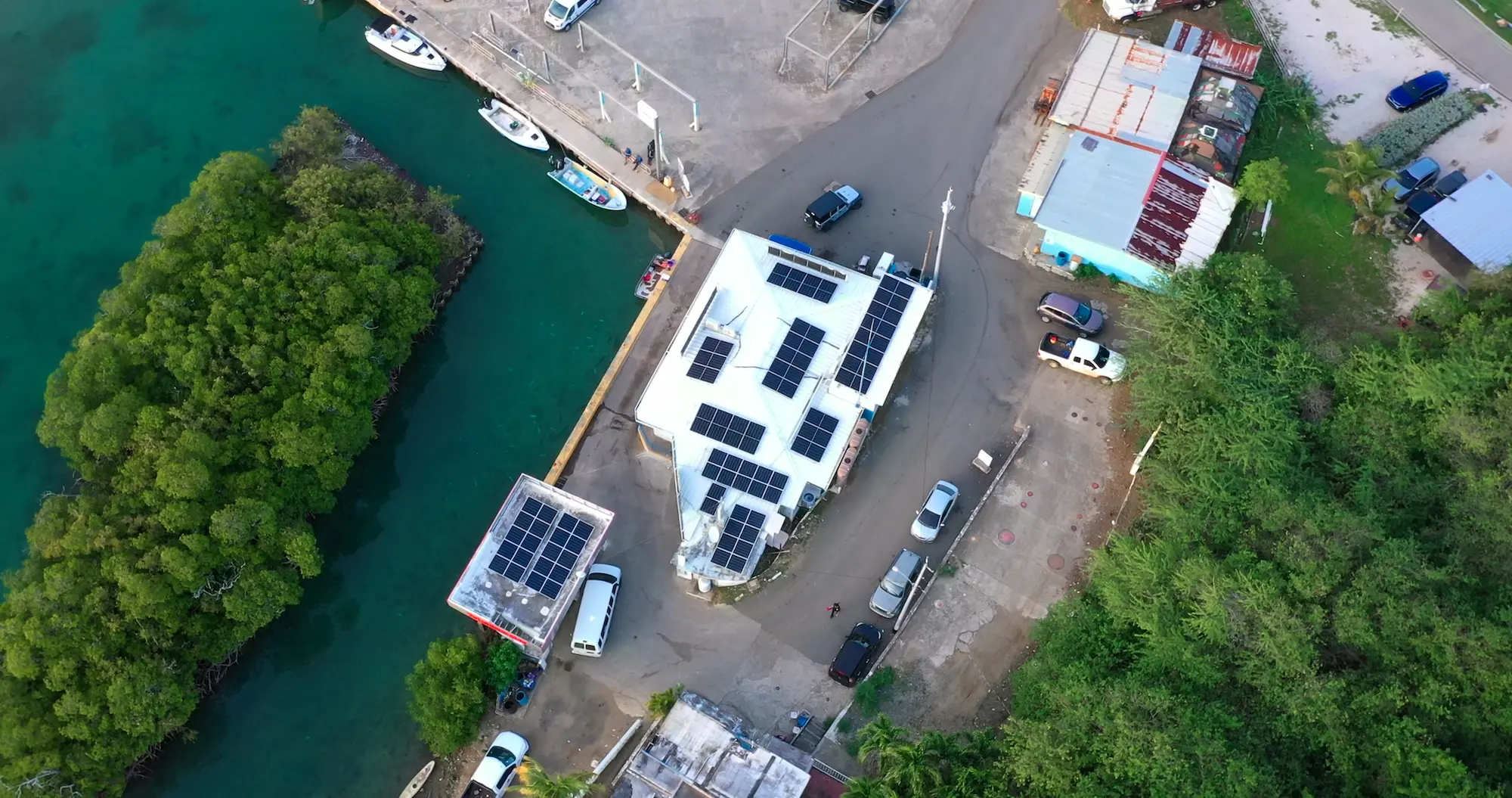
For months, their requests for repairs went unanswered by local and federal officials. (The Department of Agriculture sent representatives at one point to conduct an on-site inspection, Román Figueroa says, but the visit resulted in “no real action.”) Tired of waiting and needing to generate income, the duo invested more than $60,000 of their own money into fixing up the villa pesquera. They even collaborated with Conservación ConCiencia and Hispanic Federation to get solar panels installed on the fish market for cleaner, cheaper power.
Three years later, the structure and its facilities — storage lockers, the boat ramp, and the floating dock — are always accessible to local fishers. Its new restaurant, Pescaderia y Restaurante ANSI, is open four days a week. Román Figueroa whips up piping hot meals like sancocho de tiburón, a traditional stew made from the shark that Correa Torres hauls in from the sea. He is president of ANSI, the company made up of local fishers who manage the villa; she, the secretary and resident cook. Their children also help out — their daughter works in the market, and their son is also a fisher.
“It was a disaster … but little by little, we got it back up and running,” said Román Figueroa in Spanish. The government, she says, had no part in that. “Despite everything we have done at the villa, we have worked alone.”
Ariam Torres Cordero, an environmental planner and assistant professor at the University of Puerto Rico at Río Piedras, has visited at least 15 of the archipelago’s villas pesqueras in the last two years to begin mapping the current state of the fishing industry. Together with Valdés-Pizzini, he is setting out to change the fact that the government has no official account of the current conditions of the fishing hubs in Puerto Rico. “You can see, already, the deterioration, even despite the fact that they were reconstructed less than eight years ago. You can already see the impacts of coastal erosion,” said Torres Cordero.
Puerto Rico’s governance of the sector has made fishers more vulnerable to these threats — not less. This is most apparent in the bungled rebuilding of the dozens of villas pesqueras destroyed by Maria. Fisher communities across the archipelago still report being unable to access federal aid to repair storm-ravaged facilities and equipment.
An audit published in January 2025 by the Office of the Inspector General at the U.S. Department of Commerce found that Puerto Rico’s government had distributed only around 7 percent of the $11.4 million in disaster assistance funds earmarked for fisheries since April 2020 and had completed just 4 of 17 designated restoration projects.
Puerto Rico Secretary of the Department of Natural and Environmental Resources Waldemar Quiles Pérez did not address Grist and 9 Millones’ requests for clarification on the severe delays revealed in the audit or provide updates on the agency’s aid disbursement. “All of the fishing spaces around the Island are either privately owned or are administer[ed] by the Department of Agriculture,” Quiles Pérez said in a written statement.
Puerto Rico’s Department of Agriculture did not respond to multiple requests for comment.
Not only was the allocation of the aid itself riddled with delays and discrepancies, Torres Cordero pointed out, but what little money the federal government distributed for post-disaster rebuilding of villas pesqueras wasn’t used to rebuild in a way that accounts for the effects of climate change on fishing infrastructure. That much is obvious in how many of the facilities are already falling apart. By building back the structures just as they were designed decades ago, “we’re bound for another situation where we’re going to end up with most of this infrastructure being basically destroyed,” said Torres Cordero. “It’s not sustainable just to keep rebuilding the same.”
With this in mind, he is trying to figure out how to minimize the risk of future storm and erosion damage while still allowing the fishing facilities to remain near the sea. The answer, he believes, lies in reimagining parts of the villa pesquera design itself to be both more durable and, where it makes the most sense, even mobile.
Torres Cordero himself is recruiting the help of architecture, landscape, and social work students to come up with a new blueprint for a more “climate-proof” structure. “We need to decide, ‘What things do we need permanently placed in a location? And then what things should be mobile?’ And then design around that,” he said.
A villa pesquera isn’t a simple building, however. The freezers and areas where fish are cleaned and prepared, for example, often require heavy equipment that would be too complex to move ahead of a storm. On the other hand, a fish market or dock could be designed to be mobile. (The Puerto Rican government, for its part, did try to do some version of this following Hurricane Maria by installing temporary floating docks in a handful of locations, which Torres Cordero says have proven not to be very durable or functional.)
The pilot project is focused on the island of Vieques, another of Puerto Rico’s smaller island municipalities home to many traditional fishers. The work is in its infancy — it only started coming together last summer – and Torres Cordero hasn’t yet secured the funding and capacity needed to move it forward. Several outside factors have also contributed to grounding the project before it’s really begun. In September, the fishers they were just beginning to collaborate with in Vieques were suddenly faced with the deployment of U.S. troops to the island, which the military considered a strategic position in its tensions with Venezuela. Vieques still bears the lasting environmental toll of decades of bombing by the U.S. Navy, which used much of the island for military practice. That included the navy’s regular disposal of unknown contaminants in the waters surrounding Vieques, polluting its fishing stock and marine ecosystems. Then, in April, students at the University of Puerto Rico at Río Piedras went on strike, calling for the resignation of the university president, Zayira Jordán Conde, over her controversial decisions having to do with widespread research and staffing cuts.
“All of that fell apart,” said Torres Cordero. “Right now, we are playing the waiting game.”
The fishers in Culebra are as ready as they can be for the next calamitous storm. That’s thanks to the more than two dozen solar panels lining the villa pesquera’s roof, the hurricane-proof windows found throughout the blue-and-white building, and a rainwater harvesting system ensuring a backup water supply. These are small but mighty ways fisherfolk there have already sought to better fortify themselves against the many climate-borne stressors assailing their sector. In doing so, they’ve also bolstered their island community’s defenses against food insecurity when the next hurricane or flood tears through Puerto Rico.
Following Maria, Puerto Rico’s fishers mobilized to feed their neighbors. In Culebra, Ayala remembers how, after the hurricane left the island without electricity for half a year, the local seafood supply chain collapsed entirely. To meet the need, as fishers struggled with damaged gear and lack of power, and the community waited on external food aid that just didn’t come, Ayala organized an informal system. He collected fish from other fishermen, set up a makeshift area to clean the catch, and knocked on doors to sell directly to people. The grassroots effort underscored the need for a more resilient system, catalyzing the formation of the fishing association and restoration of their home base — the villa pesquera.
Even though fishing only makes up a marginal slice of Puerto Rico’s economy, it’s clear that Culebra is better for the work that Ayala and Gómez Andújar are doing. For a community where about a quarter of residents live below the poverty line, a primary indicator of food insecurity, building a robust local supply chain and bolstering their resilience against environmental degradation isn’t merely an aspiration, but a survival strategy. So in 2020, Gómez Andújar and local environmental scientist Megan Considine set out to create another pillar of that vision — the only permitted oyster farm in Puerto Rico.
“Climate change is, of course, this unpredictable threat. And it’s chronic, and it’s there,” Gómez Andújar said. “To a certain extent, we need to flow with it. We need to adapt. We need to mitigate.”
 9 Millones “/>
Nelson Vega Oliveras / 9 Millones
Though the oyster farm is currently grant-funded, with only research permits, local fishers like Ayala view farming native shellfish as a way to spark future generations’ interest in careers in fishing and diversify the seafood supply chain operating out of Culebra’s villa pesquera. But in order to keep it running through the next few years, they’ll need to commercialize the farm. Everything was moving in the right direction — until late last month.
Much of their farm’s federal compliance suddenly hinged on an Army Corps of Engineers permit at risk of expiring. Rather than chance violations, they made the difficult decision to, at least temporarily, shut down roughly half of their operations while awaiting that clearance. “It’s demoralizing,” said Gómez Andújar. “The main message, really, is we’re doing the best we can to do everything right, and it’s still very, very, very hard.”
After their yearslong effort to restore Culebra’s fishing village, Gómez Andújar and Ayala are buried under layers of bureaucracy, yet again. The road ahead looks much like the road behind.
“We show people how to live from the ocean, how to grow food from the ocean,” says Ayala. Fishing represents so much more to Ayala than just a job — it’s the foundation of Puerto Rico’s food-sovereign, climate-resilient future. “And the government is the biggest barrier.”
Filmmaker Nelson Vega Oliveras contributed reporting. 9 Millones’ Laura M. Quintero contributed editing.

