

To really understand what’s going on in the Nebraska Sandhills, Shelly Kelly told me, it’s helpful to see it from the air. From the window of her father’s Bonanza A36, we looked out over the heart of one of the most rural landscapes in the United States. The Sandhills are a 19,500 square-mile swath of grassy dunes embellished with grazing cattle, serpentine rivers, and sunflowers.
Kelly has spent her life on the prairies of the High Plains. As a child, she made bouquets of flowering grasses and hunted for mudpuppies in the interdunal buffalo wallows on her parents’ ranch. Now a rancher herself, she’s trying to preserve the landscape she loves against the usual suspects — overgrazing and overharvesting — and one surprising new threat: trees.
She pointed out my window to the prairie below. “You can see it there,” she said, pointing to a neat grove of Juniperus virginiana, eastern red cedar, deliberately planted by ranchers to protect calving heifers from the wind. These windbreaks are standard features on the Plains. But to the south of their orderly rows, a dozen cedars have popped up in the middle of the grass, scattering across the nearby range like race-runners breaking free of the pack.
This spreading of trees is known as woody encroachment — or the “green glacier,” as some call it, evoking the slow creep of tree species over grasslands — and it’s got ecologists and ranchers of the Plains on high alert.
“We’re losing our biodiversity,” Kelly said. “We’re losing our resiliency.”
David Madison / Getty Images
For ranchers, a woody takeover of their rangeland creates an obvious problem: less land to graze. The Texas A&M Agrilife extension estimates that woody encroachment over the 10 Great Plains states represents $4 billion in lost range production. Ecologists predict biodiversity losses would affect the insects, birds, and small mammals that populate the country’s remaining prairies. Everybody worries about what those thirsty trees will do to the already stressed water supply as the green glacier expands from the wetter climate in the eastern prairie states to the arid western regions.
Prairies — on the High Plains and around the world — thrive in cycles of stability and disruption. Fire, grazing, dry seasons, and the area’s particular mix of vegetation all play a role in preserving the healthy root systems that allow a diverse mix of grasses to continue growing year after year. Some heartier grasses with root systems 20 feet deep can keep the prairie green in a drought, while healthy soil can hold dormant seeds until the conditions are right.
Fire — both naturally-occurring and prescribed burns — has long been a feature of the prairie landscape. Suppressing it is part of what has allowed woody plants to seed, spread, and develop the thick bark that makes them more likely to then withstand future fires. Meanwhile, overgrazing reduces trees’ and shrubs’ grassy competition, allowing them to grow faster. Cattle and bison don’t eat the woody plants. Goats, sheep, elk, and other “browsing” species don’t eat enough of them to control the spread, though some are experimenting with browsers as a component of a larger management plan.
The Flint Hills of Kansas and Osage Hills of Oklahoma are home to two-thirds of the nation’s remaining tallgrass prairie, said Brian Obermeyer, The Nature Conservancy’s Great Plains grasslands strategy director. The persistence of the prairie in this region is largely because of the longstanding culture of prescribed burns, dating back to when Chisholm Trail cattle drives would divert their skinnier livestock to fatten up on the highly nutritious, tender, juicy grasses that grow back after a burn. Obermeyer even found a lease contract dating back to 1915 requiring the land to be burned regularly so that cattle would have access to the new growth. But in regions where that practice is not common, Obermeyer said, “Getting people comfortable with the culture of prescribed fire takes time.”

The Sandhills in Nebraska don’t have the fire culture, though Kelly and others are trying to change that. What they do have, Kelly said, is a culture of tree-planting.
“Most of the people that settled Nebraska came from areas that were full of trees,” she said. In fact, before it was known as the “Cornhusker State,” Nebraska’s official nickname was the “Tree Planter State.” It dates back to the Homestead Act of 1862, which required settlers to cultivate their land with crops or trees to establish ownership, and Nebraska’s Kinkaid Act of 1904, which offered free trees to help settlers cultivate 640-acre tracts in the state. The tradition has gone on for centuries now, and thanks to advances in horticulture, ranchers buy heartier and heartier red cedar saplings for their windbreaks, which then spread their juggernaut offspring across the plains.
As executive director of the Sandhills Task Force, a nonprofit established 33 years ago to promote conservation and sustainable land management in the ranching industry, Kelly knows that half the battle is changing the culture. “We’re not talking about trees being bad everywhere,” she said. “But trees are not good on a prairie, especially invasive trees.” On her water bottle I spotted a sticker: Be A Leader, Cut a Cedar.
Another cultural shift might be necessary as well, particularly for the broader conservation community. The prevailing climate wisdom has been pretty clear: Trees are good, and planting them is virtuous — the more the better. But actually, Obermeyer said, grasslands can be a more secure carbon sink than forests. A big reason for that goes back to the cycle of fire on the landscape, and the worsening threat of out-of-control wildfires that are often the result of too much fire suppression. Woody plants store most of their carbon above ground in their trunks and leaves. When they burn, all of that carbon is released, and the charred remains continue to release carbon after the initial burn. It can take years for the forest to return to its storage capacity. Grasslands store the vast majority of carbon safely underground in their deep root systems, and after a fire their stems and blades quickly rebound.
Heather Diehl / Getty Images
There is evidence that the increased atmospheric carbon may be giving another advantage to woody plants, which utilize a different carbon pathway than grasses in photosynthesis, making them more efficient photosynthesizers in carbon-soaked, warm, dry air. While this means that trees may, in the short term, capture carbon more quickly, the loss of an entire ecosystem, especially one that stores carbon more securely, isn’t a good tradeoff in the long term, said Chris Helzer, Nebraska director of science and stewardship for The Nature Conservancy.
Climate change is one of many reasons that a non-intervention strategy — letting nature take its course — won’t work on the High Plains. There are too many things in motion to simply go “hands-off.” But, really, Helzer said, grasslands as we know them have never been free of human intervention. From the time that Indigenous peoples hunted free-ranging bison, grasslands have evolved in tandem with humans, explained Helzer. The Nature Conservancy has also worked with the InterTribal Buffalo Council and Tanka Fund, to support the return of bison to the Plains along with other tribal-led efforts to restore damaged ecosystems and build management capacity.
Ranchers also have a critical role to play, Helzer said. And many are playing it with gusto. Kelly’s dad, John Taylor, has had a front-row seat to his daughter’s crusade and benefitted from her growing expertise. On his ranch the cedar is under control, but near the fenceline, a few of the evergreen treetops peeked over a neighboring dune, like Birnam Wood advancing on MacBeth’s Dunsinane Hill. These trees are prolific, spreading their seeds across a 200-foot radius. Seedlings grow at about a rate of 1 to 2 feet per year, and once they reach 5 feet tall, they start spreading seed in their own 200-foot radius. That said, the Sandhills are mostly lucky, Kelly said. Eastern red cedar is easy to kill. Cut it down to the root and it mostly doesn’t grow back.
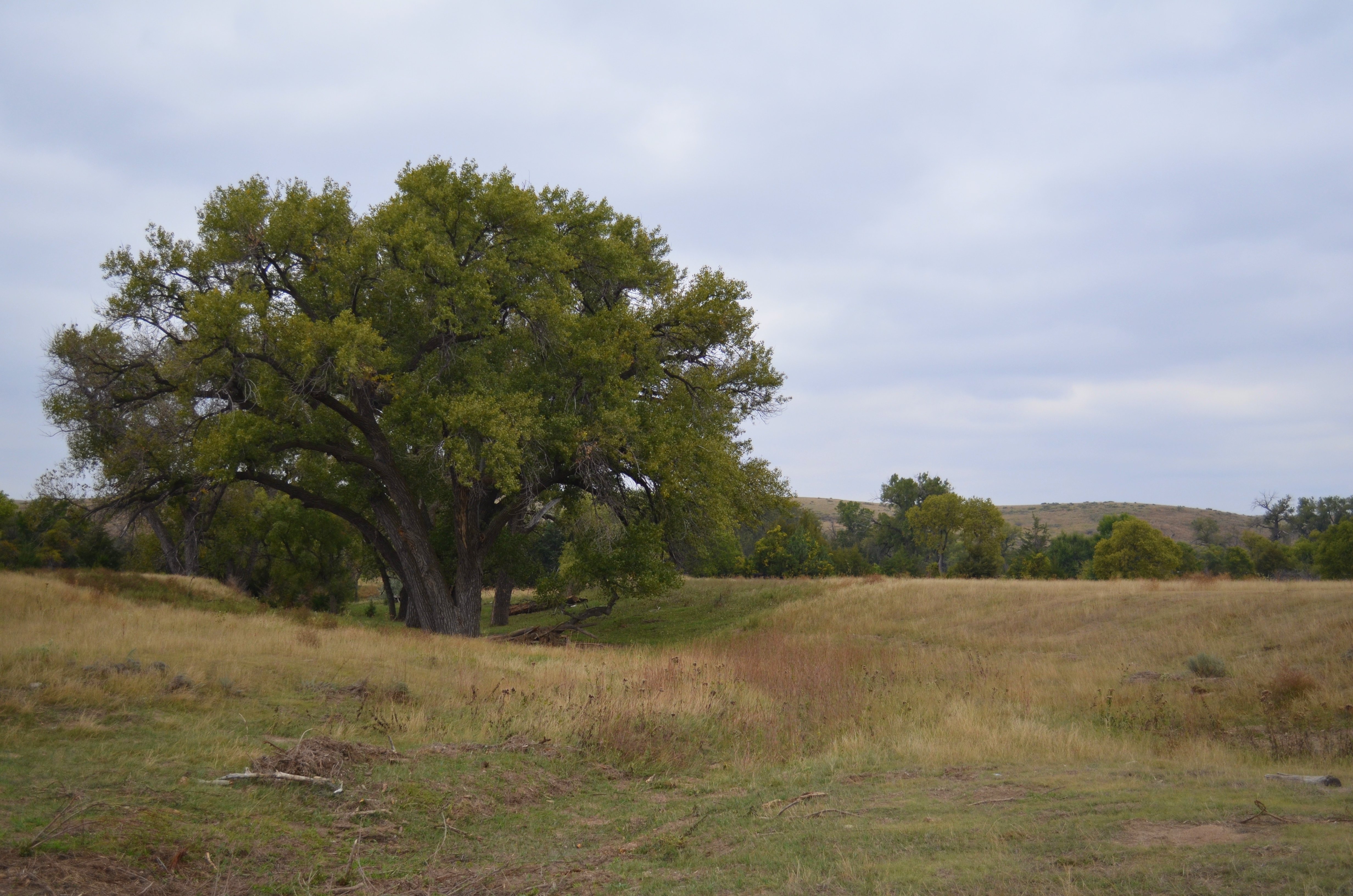
A red cedar grows near Wauneta, Nebraska.
Getty Images
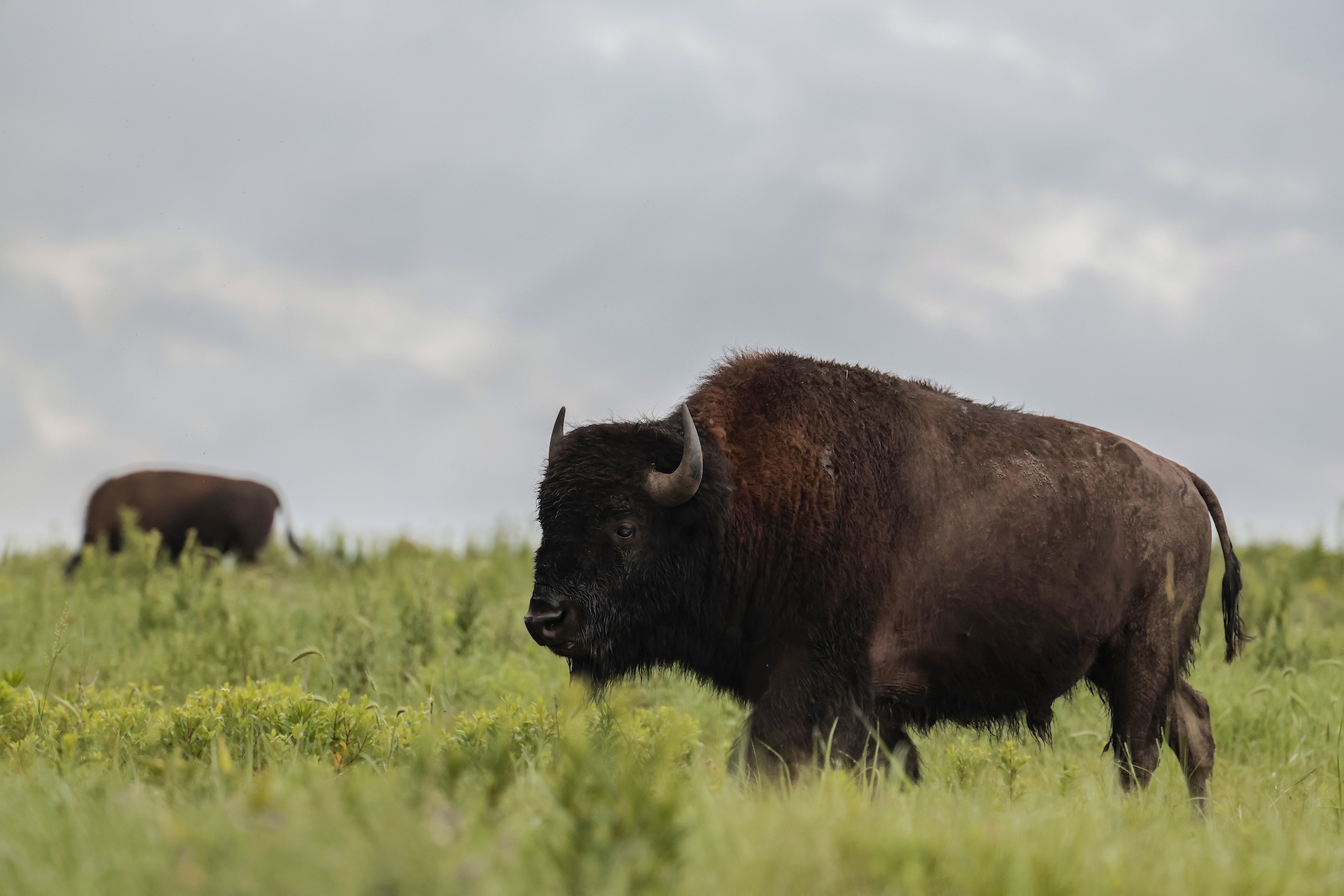
Over 2,000 bison, also known as American buffalo, roam in the Joseph H. Williams Tallgrass Prairie Preserve in Osage County in June 2026 in Pawhuska, Oklahoma.
Heather Diehl / Getty Images
Kelly has even helped Nebraskans connect to funding opportunities to clear the cedars. Through grants and fundraising, the Sandhills Task Force can help ranchers pay for up to 75 percent of cedar removal. The funds are stimulating a growing cedar removal industry in the region. State and federal programs will also help fund the removal — but, ironically, the same departments still subsidize tree-planting for windbreaks, Kelly said, though they are increasingly discouraging red cedars.
The Nature Conservancy is using its preserves to test grazing patterns, new mixes of plant species, and other mitigation techniques that can help private landowners across the High Plains find the right balance of grazing, burning, and rewilding to keep their grasslands healthy. “To some extent, you can have a prairie that has trees,” Helzer said. “But there’s a line — when you cross that line, you have a woodland with clearings, not a grassland with trees.”
Grassland prairies — short, mixed, tall, and other types — used to stretch from Texas to the Dakotas, into Kentucky and up to the foothills of the Rockies. Only 4 percent of tallgrass prairies are left, making it, Obermeyer said, “the most altered landscape in North America in terms of acres lost.” At the same time, he said, places like the Flint Hills and Sandhills give him hope. More people are recognizing the subtle beauty and ecological power of the plains. “We can’t lose sight of the fact that we have a tremendous amount that we have the chance to preserve,” Obermeyer said. “We have a lot of opportunities to get this right.”

