

Climate action may be facing headwinds right now. But the passion, courage, and creativity that defined the climate movement for decades have not gone anywhere. Doctors continue to care for the health of their patients on a changing planet. Grantmakers continue to reach for new pots of funding to enable crucial climate and justice work. Communicators continue to share information in creative ways and drive cultural change, one mind at a time.
This Earth Month, Grist reached out to climate leaders across the country, to hear about how they’re staying motivated and continuing to push forward.
Their responses remind us that wins are still happening, progress is still possible, and inspiration comes in so many forms.
[Read even more of these conversations, and find out how to see them live]
These interviews were conducted over email, and have been lightly edited for clarity and length.
Gaurab Basu is a primary care physician and an assistant professor at Brigham and Women’s Hospital, Harvard Medical School, and the Harvard T.H. Chan School of Public Health.
He is a leader in integrating climate education into medical curriculum, and studies the health impacts of climate change and the health benefits of climate solutions, in the U.S. and overseas.

What originally led you to work on climate solutions?
The U.N. IPCC report in 2018 was a catalytic moment for me. I had been spending my career studying global health inequity around the world, and how social systems in the U.S. impacted health and disease. This report made it clear that climate change was at the heart of everything I cared about in my professional and personal life. It fundamentally changed me, my understanding of the world, and my sense of responsibility. From that time on, I worked to incorporate climate solutions into all facets of my work.
How have you seen climate action change over the past five to 10 years?
We created an unprecedented movement for climate action in recent years. I’ve never seen so many people passionate about protecting our planet — and anchoring in our responsibility to protect people’s health and the vitality of future generations. We’ve made a lot of progress in explaining to people that climate change is a health issue.
At the same time, we have seen an unprecedented rejection and destruction of science and an extraordinary regression on the progress we were making. So much of what I have taken for granted — funding for science, medicine, and international aid — it’s made me appreciate how extraordinary the progress and gains we have made through these funding streams have truly been. I have no illusions of the challenges ahead of us, but I believe deeply that we can catalyze a new era in which we once again fund science, create durable policy, and take pride in protecting the planet and people. So many people are putting their heads down and pushing forward, in spite of the challenges.
What’s your best advice for staying motivated and making a difference?
One of the projects I am working on right now that I care most about is in the Indian Sundarbans, a region that has beautiful ecology, including being a part of the largest continuous mangrove forests in the world. But it’s extremely poor, and being hit harder and harder by cyclones like Cyclone Amphan. They are clear-eyed about the tremendous challenges that face them — they know their home is changing, that floods are impacting their farmlands and threatening distressed migration and impacting health, education, nutrition, and gender equity. But they remain a vibrant, courageous community, ready to face the challenges with determination. I want to channel that clarity of purpose and courage in my own work, dig in, and continue to try my very best to be of service to the world for the rest of my life.
Who or what inspires you and gives you hope?
I see the ways that solar and batteries are profoundly decreasing emissions in California. I’ve been following Bill McKibben’s message of just how transformative solar has become in the clean energy transition. I’m also watching Pakistan exponentially increase solar on its grid. So many developing countries are switching to EVs faster than we ever could have imagined.
I’m inspired by organizations like the Environmental League of Massachusetts, where I am on the board. It’s a state organization that is fighting the headwinds from the pullback of federal policy, but just continues to push forward.
There are going to be times that are very, very hard, and we are in one of them. And we have to keep going with passion, dogged determination, and belief that we can make the impossible possible.
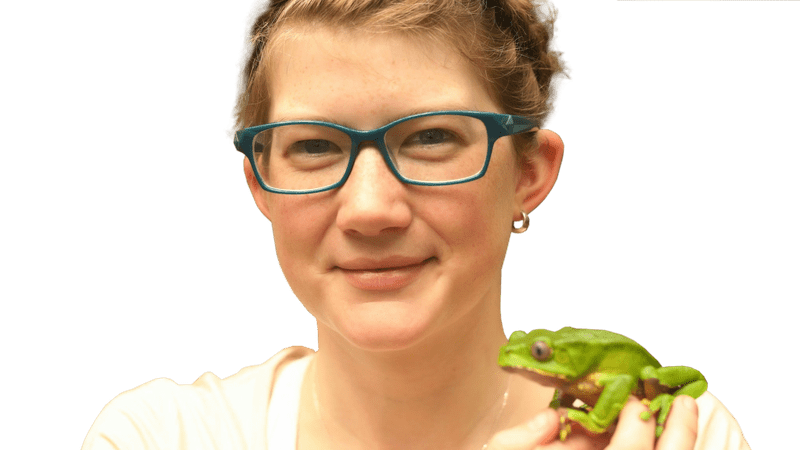
Emily Graslie is an independent science communicator and digital media producer.
Her Youtube show, The Brain Scoop, breaks down science topics for hundreds of thousands of viewers. She has worked with a number of organizations (recently including the Great Lakes chapter of the Audubon society and the state tourism board of Montana) to make engaging videos about their research, education, and conservation efforts.

What originally led you to work in the climate space?
As a non-scientist myself (I studied art and history in college), I never really felt like there was a place for me in the world of science or conservation. During the end of college I got involved with the campus natural history museum with the goal of creating artwork about the collections, but soon realized there was a major gap when it came to museums and scientists sharing their work broadly. That was a gap I was uniquely able to fill, as someone interested in being an informational conduit for others.
How have you seen things change over the past 5 to 10 years?
Well, climate-wise, it’s become incredibly apparent that our world is undergoing unprecedented and likely irreversible changes. As I’ve learned more about deep time and the many phases our planet has gone through over the last 4.56+ billion years, it’s astonishing to realize the human-influenced environmental catastrophes we’re experiencing are happening on a scale unlike anything Earth has ever before endured. So, that’s terrifying.
But on the bright side, there are also way more people involved in climate and environmental sciences, and awareness of these issues is way more pervasive than it was 10+ years ago when I started in the YouTube / digital media space. Social media gets a lot of (warranted) flack for all of its ills and detriments, but these platforms have established and facilitated incredible connections around the world. Creating and participating in online spaces is a powerful way to fight overwhelming feelings of isolation and hopelessness when it comes to facing an oftentimes daunting future.
What challenges (foreseeable and unforeseen) have you encountered in your work?
The stakes feel much higher today than they were when I started my career during the starry-eyed Obama era. I saw a meme about how we thought becoming science educators was going to be similar to Bill Nye conducting whimsical experiments — not convincing people that the world isn’t flat, it is older than 6,000 years, and climate change is real. Add on the prevalence of harassment that women content creators face, and there’s a real weariness that has culminated over the years and resulted in various stages of burnout. And yet … Nearly 15 years later, I’m still in the field, and still feeling as strongly and passionately about this work as ever.
What’s your best piece of advice for staying motivated and making a difference?
Find like-minded people and communities that leave you feeling inspired, not tired. Working in the climate / environment space can be emotionally draining, so it’s imperative to surround yourself with those who share your passion and can support you fundamentally as a person. And get a hobby completely outside of your profession. I play violin in a professional symphony orchestra outside of Chicago. It’s glorious to have a space a few hours every week where the focus is on creating something beautiful with a group of incredibly talented musicians.
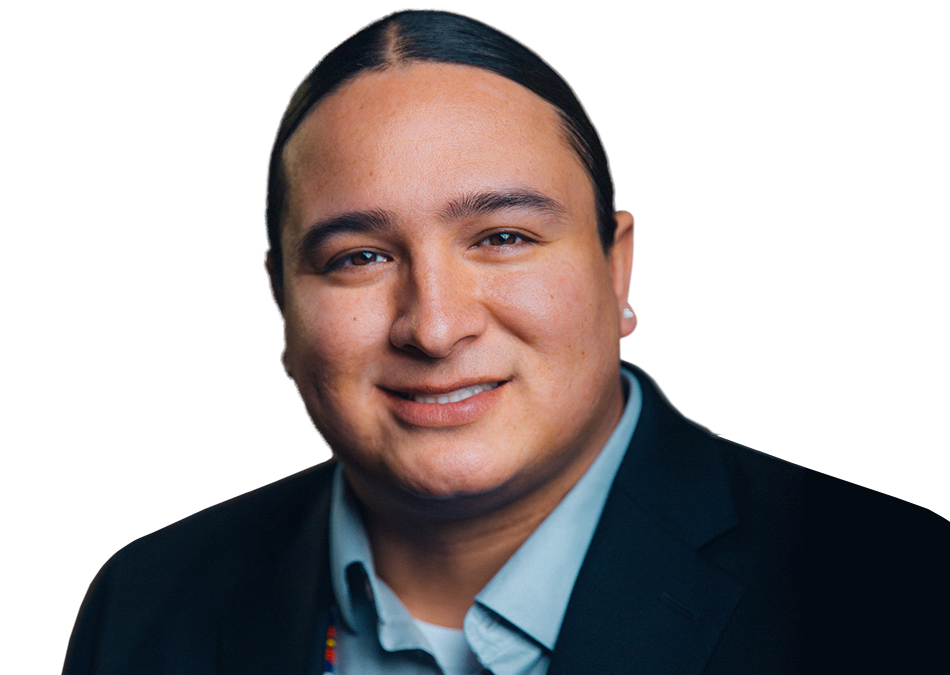
NDN Collective “bolsters the ability of Indigenous peoples, communities, and nations to exercise our inherent right to self-determination, while fostering a world that is built on a foundation of justice and equity for all people and Mother Earth.”
What originally led you to work on climate solutions?
I’ve been connected to the climate justice fight since before I was born. My parents met at the 1973 Occupation of Wounded Knee, where Native people were demanding the U.S. government stop violating their own treaties by desecrating our rightful land. Indigenous peoples have been stewarding our land sustainably for centuries, and have been fighting against environmental destruction since the U.S. government slaughtered millions of buffalo as part of their strategy to eradicate us. Our peoples hold a vast amount of traditional ecological knowledge that mainstream climate groups are finally beginning to take seriously.
Our message remains that landback is a necessary solution to the climate crisis, and should be centered in every climate organization’s mission. The more power Indigenous people have over our lands and waterways and can protect them from extractive industries, the better and safer our shared planet is for everyone.
How have you seen climate action change over the past five to 10 years? What challenges have you encountered?
While Indigenous people have been ringing the alarm on climate change for many decades, most people began understanding the urgency and importance of developing alternatives to the extractive economy within the last decade or so, once folks started seeing material impacts to their lives.
From flooding and fires in the colonized kingdom of Hawai‘i, to the disastrous rains in Alaska, wildfires sweeping the plains, smoky orange skies in California, a hurricane devastating Western North Carolina — more and more people are regularly facing climate disaster.
Under the Biden administration we saw the largest ever climate investment in history, a victory which was the result of decades of Black and brown frontline organizers working tirelessly and strategically to make the climate crisis a national priority.
When Trump took office, climate groups, programs, and efforts were totally gutted, with federal funding swiftly pulled out from under them. Many philanthropic organizations have followed suit, tightening their grip around their money rather than releasing it to the frontline organizations fighting to protect all of us. NDN Collective’s budget was rapidly cut in half.
Despite an enormous funding and resourcing gap, we will continue to fight because our great -grandchildren are asking us to. The central problem is colonialism, which manifests itself in countless daily challenges, both ongoing and still emerging. We see colonialism show up in insidious ways, even within climate justice and environmental spaces.
In the last five years alone, hundreds of Indigenous people have been killed for protecting Mother Earth — from forest defender Tortuguita in Atlanta, to Eduardo Mendúa in Ecuador, to Mãe Bernadete in Brazil, and many more. We honor their lives by continuing the work.
What’s your best piece of advice for staying motivated?
It is important to stay grounded in your purpose. We didn’t sign up to do this work because it is easy or popular. We do this work because it is necessary, because it is what the people need and what Mother Earth needs. Sometimes that means our work gets lifted up as a shining example — and other times, that means it gets attacked.
The other piece of advice I would offer is that you must have a strong belief in radical possibility. When doing this work, we need a steadfast vision — if we don’t have a vision of what is possible in the world, then it is really hard to keep fighting for a better one. So you need that vision of what you want the future to look like — and then be audacious enough to go after it.
What solutions excite you, or what gives you the most hope within your field?
Our movement is strong, and we are telling our own stories in our own way. Our youth are learning our traditions and languages, keeping our ceremonies alive, and bringing invaluable insight and energy to movement spaces. Because we maintain and use our spiritual power, we have made impossible things happen.
Indigenous people are building sustainable food systems across Turtle Island — from revitalizing buffalo corridors, to having access to spearfishing in Wisconsin, to rebuilding traditional eel harvesting practices, to running a school in South Dakota centered around our interconnectedness to everything, and more.
We have the solutions. I remain steadfast in my belief that the best days are ahead of us.

The organization emphasizes natural climate solutions, aiming to build a movement that makes it easy and fun to take action for the protection of nature.
What originally led you to work in the climate and environmental movement?
I grew up in Wisconsin, where snowy winters have become increasingly rare, invasive species have become a major issue, wildlife populations are out of balance, and ecosystems (like our prairies and the Mississippi River) have become significantly damaged. From childhood until today, I’ve watched the environment worsen in front of my eyes. Additionally, I’m an avid hiker, camper, and skier, so fighting for these places means a lot to me. As someone who has a background in politics, I thought this issue was the best way to bring Americans together again. Talking one-on-one with people across the spectrum offers great hope, as there is far more alignment than people realize.
How have you seen things change over the past 5 to 10 years?
The issue has become more polarizing than I’ve ever seen it. People feel really divided on this issue, believing it is more partisan than ever before, and understandably so. But in the hearts of most Americans, they actually largely want the same things when it comes to environmental protection, which makes this work really frustrating yet also hopeful.
As environmental advocates, there’s just so much outside our control. Between the mass media’s incentive to divide us, the ever-changing social media algorithms, and worsening global and national events (wars, the economy, etc.), focus on the environment has decreased for nearly every voter, making it difficult to rally and reach people. Additionally, the loudest voices in the country are increasingly the most hateful, which makes it hard to create a narrative.
What’s your best piece of advice for staying motivated and making a difference?
“This too shall pass.” Everything we’re seeing right now is temporary, and we need to build for when the moment is right for us again. Outside of social media and the political landscape, when I talk to everyday people from all walks of life, I’m reminded that the army of Americans who stand together on this still exists, and that we can — and will — absolutely win again. Giving up is what they want us to do. Being divided is what they want us to be. And we must be better than that. The world needs it.
What solutions excite you, or what gives you the most hope within your current field?
We’re launching entertaining, informative content like “The Firepit,” which is our YouTube show where two unlikely allies who are well-known and respected in their fields sit over a campfire to talk about environmental issues and the world at large. We want to educate and activate Americans in a way that makes environmental action engaging, uplifting, and impactful.
I think the most immediate opportunity is rallying people around nature and conservation — natural climate solutions — which is exciting, because that’s what most people’s connection to climate and the environment is. That’s what people want to fight for. Nature isn’t just the grandiose mountains out West or a lavish beach vacation — it’s the river in your town, the trees in your neighborhood, the air we breathe, and the water we drink. It’s personal to everyone, and it’s worth fighting for every time.
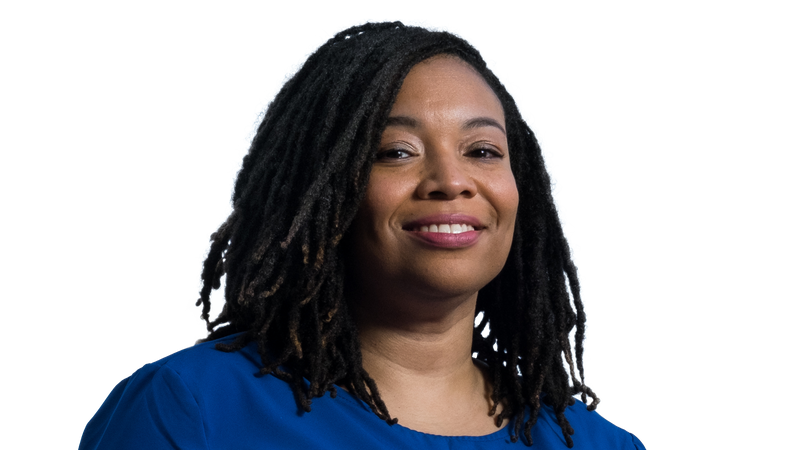
The Hive Fund supports groups working to accelerate the clean energy transition across the South — in ways that center justice, redistribute power, and create healthier, safer, and more prosperous communities.
What originally led you to work on climate solutions?
Like many people in this movement, I came to environmental justice through the lens of public health. As a young person, I got really sick and was diagnosed with a chronic illness. That eventually led me into advocacy around making sure all people could have access to health care.
Over time, it became clear that many of these challenges weren’t just about health care access. They were shaped by environmental conditions like air pollution, water quality, and housing. That realization fundamentally shifted how I understood the work. I began to see environmental issues as deeply connected not only to public health, but also to economic justice and the broader conditions that allow communities to thrive. That holistic lens has stayed with me ever since.
How have you seen things change over the past 5 to 10 years?
The last decade has shown that, when the conditions are right, even institutions many thought were immutable can change. We saw this during the early days of COVID, when funders streamlined processes to move money faster, and again in the summer of 2020, when many introduced practices centered on racial justice.
But it shouldn’t take a crisis to move organizations to operate in ways that are more equitable and work better for all of us. And the rollback of much of that progress is a reminder that shifts driven by external pressure alone rarely hold. For change to endure, it has to go deeper — not just at the level of institutional practices, but into an organization’s values and how it understands its mission.
What has also become clear is that no matter how conditions shift, frontline and grassroots groups find ways to hold the line. At the end of the day, this work is about things most people want: lower energy bills, cleaner air and water, and communities that can truly thrive.
What challenges (foreseeable and unforeseen) have you encountered in your work?
One of the most persistent challenges in this work is a mismatch between where the need and opportunity are greatest, and where resources actually flow. We’ve seen this play out in the South for decades. Southern states account for nearly 40 percent of the nation’s climate pollution, yet groups in this region receive only less than a quarter of U.S. regional climate funding.
This gap reflects longstanding assumptions in philanthropy about where change is possible and whose leadership is worth investing in. But Southern groups have shown that when they’re well resourced, they can and do win. In the past year alone, we’ve seen Hive Fund grantee partners stop polluting projects, secure major public and municipal investments in clean energy, and build coalitions that cut across partisan divides.
Yet climate philanthropy continues to underinvest in the region. If funders can close this gap, it’s one of the most powerful levers we have to slow pollution, accelerate clean energy, and build the people power needed for long-term climate progress.
What solutions excite you, or what gives you the most hope within your current field?
What’s most exciting to me right now is seeing communities get creative about meeting the need for affordable, reliable, and scalable clean energy. Supporting communities to be the architects and builders of new possibilities and new futures is something we’ve been really intentional about at Hive Fund.
Communities most impacted by climate and environmental injustice have long been forced to spend limited resources fighting harm and resisting injustice. That work is essential and will continue, but what’s often missing is support for people to not only fight, but also to imagine and create what comes next.
Photos: Gretchen Ertl; Tom McNamara; Willi White; Brad Konopa; Cornell Watson Photography

