

For decades, the playbook for saving our oceans has been relatively straightforward: draw a line on a map, declare it a Marine Protected Area (MPA), and restrict activities like commercial fishing, shipping, and industrial drilling. It sounds like a solid plan, and on paper, it looks even better. But there’s a glaring, dirty truth these ocean boundaries cannot stop.
The success of an MPA is closely tied to what happens on land. We spend immense resources managing boat traffic, enforcing fishing quotas, and patrolling blue water, yet we routinely ignore what is flowing into that water from our own coastlines.
When raw or poorly treated sewage flows into a protected zone, it doesn’t care about conservation boundaries. This raises a critical question: can we actually protect a marine habitat if we do not fix plumbing on land?
The Unseen Invader Inside Our Ocean Refuges
Recent global research has brought this issue to the surface in a big way. A landmark study revealed that nearly three-quarters of the world’s marine protected areas are exposed to wastewater pollution. Even more startling, the problem is most severe in highly biodiverse tropical regions, where up to 92% of MPAs (home to coral reefs) are heavily impacted.
Because we establish protected areas near coastlines to shield coral reefs, we inadvertently place them right in the path of coastal runoff. The issue is not just about unsightly waste on a beach. Sewage acts as an invisible destroyer of marine life in several specific ways.
Nutrient Overload
Human waste is incredibly rich in nitrogen and phosphorus. When these elements flood the sea, they trigger massive, toxic algal blooms. These blooms block out critical sunlight and suck all the oxygen out of the water as they decay, effectively suffocating fish and bottom-dwelling creatures.
Weakened Corals
Excess nitrogen alters the delicate chemistry that corals rely on to build their skeletons. It lowers their tolerance to warming waters and disease, making them far more susceptible to bleaching and slower to recover if they do survive.
See Also: 9 Game-Changing Impacts of Clean Water for Coral Reefs >
Pathogens and Toxins
Untreated wastewater introduces a cocktail of bacteria, viruses, prescription drugs, and heavy metals. Pathogens cause direct tissue infections in marine life, and chemical pollutants accumulate up the food chain, damaging the health of apex predators like dolphins.
Why Ocean Boundaries Aren’t Enough
The fundamental limitation of marine conservation policy is that it’s geographically siloed. A marine park manager has the authority to stop a fishing boat, but they have zero say over a municipal wastewater treatment plant five miles upstream.
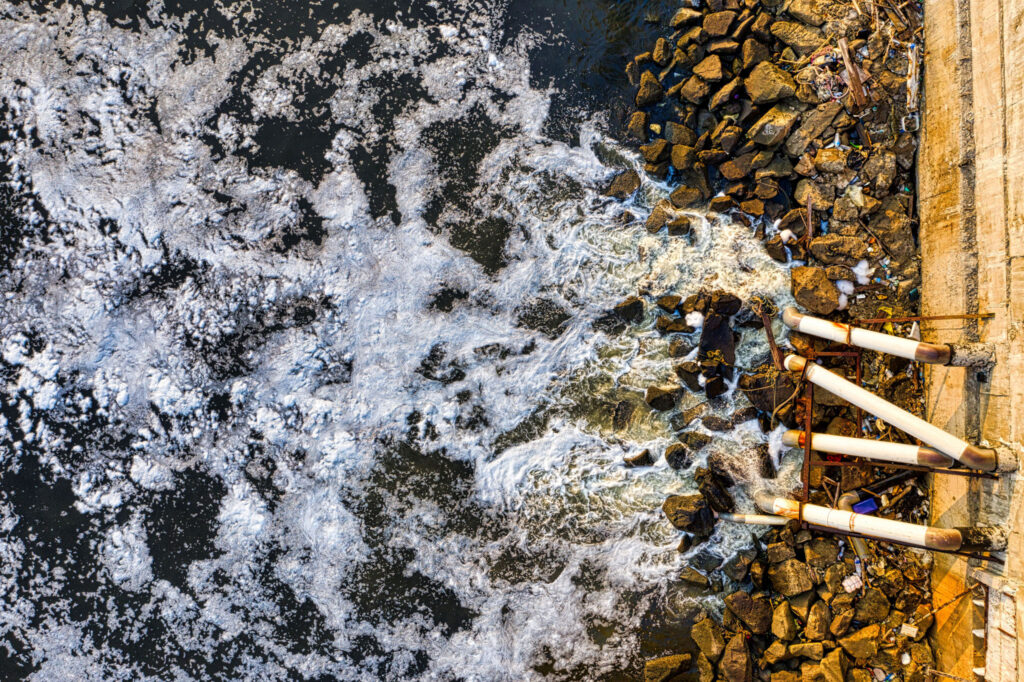
If we continue to measure conservation success solely by the square mileage of ocean we rope off, we’re setting ourselves up for a quiet disaster. We might hit global targets to protect 30% of the ocean, but if those areas are constantly bathed in nutrients and pathogens, they will exist only as “paper parks,” protected on a map, but suffering under the surface.
Redefining True Protection
When we consider the immense pressure our oceans face, it becomes clear that drawing lines on a map is not enough. At the Coral Reef Alliance, we’ve learned that corals possess a remarkable natural ability to adapt to climate change, but only if we protect them from contaminated water. If we want our Marine Protected Areas to be fully effective, we have to treat wastewater infrastructure as a foundational pillar of ocean conservation.
That’s why our team works directly with coastal communities to install and upgrade septic systems, restore natural watersheds, and stop the flow of pollution at the source. By cleaning up the water on land, we give coral reefs the breathing room they desperately need to survive.
Ocean conservation doesn’t always start at sea. It begins in our drains and pipes. Learn more in our article: The Hidden Costs of Untreated Wastewater.


